



What are the differences between outdoor and indoor advertising displays?
Choosing between outdoor and indoor advertising displays involves understanding how environmental demands, visibility requirements, and operational considerations differ dramatically. Indoor displays excel in controlled climates with stable lighting, allowing for refined color accuracy and higher resolution without extreme protective measures. Outdoor displays, however, must withstand harsh weather, intense sunlight, and temperature swings while maintaining readability and durability. Solutions like the Ultra Slim Outdoor Digital Signage Kiosk bridge this gap by combining weatherproof engineering with space-efficient design, offering procurement managers a reliable choice for high-traffic urban environments where traditional bulky displays simply don't fit.

Understanding the Fundamental Differences Between Outdoor and Indoor Advertising Displays
Understanding the technical and climatic differences between outdoor and indoor installations is crucial when assessing advertising displays for your project. These variations directly affect long-term maintenance strategies, product selection, and budget allocation.
Environmental Challenges and Durability Requirements
Rain, snow, dust, and variable temperatures—which may range from -20°C to 50°C depending on the location—all pose a persistent threat to outdoor advertising displays. To eliminate dust buildup and water ingress, ruggedized enclosures with IP65 or IP66 requirements are required. Because indoor displays function in climate-controlled spaces, weatherproofing is not necessary, allowing producers to focus on lighter materials and lower profiles. While indoor devices may use ordinary LCD panels without extra protective coatings, outdoor devices need tempered glass, sealed bezels, and reliable heat management systems.
Brightness and Visibility Under Varying Lighting Conditions
More than anything else, sunlight readability distinguishes outdoor displays from indoor ones. While indoor displays work well at 300 to 700 nits under artificial lighting, outdoor screens often provide 2,500 to 5,000 nits of brightness to counteract direct sunlight. For outdoor applications, high-transmittance bonding methods and anti-glare coatings are essential to guaranteeing that advertising messages are visible all day. Indoor displays using IPS or OLED screens emphasize color richness and viewing angles to create immersive experiences in conference rooms, retail establishments, and lobby areas with steady and regulated ambient light.
Power Consumption and Thermal Management Systems
Higher energy consumption results from the brightness and safety requirements needed for outdoor displays. Even while advances in LED backlighting and full-bonding technology have greatly reduced this discrepancy, traditional outdoor displays might occasionally use 30% to 50% more electricity than their indoor counterparts. Outside, where cooling systems must function effectively over wide temperature ranges without sacrificing display performance, thermal management becomes more difficult. By reducing the requirement for specialist cooling solutions, building HVAC systems eventually reduce operational costs for interior installations.
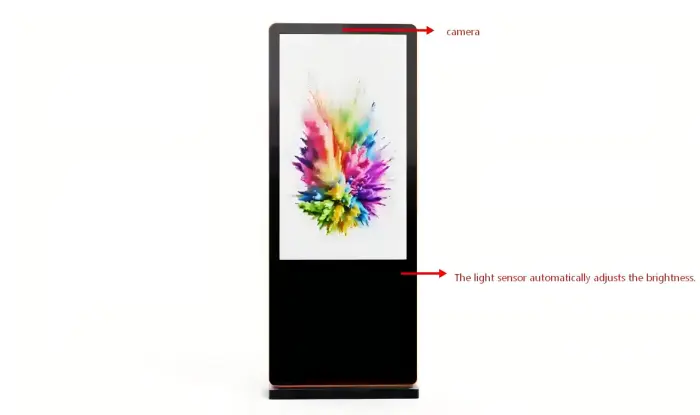
Ultra Slim Outdoor Digital Signage Kiosk: Features and Benefits
The constraints of conventional large displays have been solved by the development of outdoor advertising technology, resulting in sophisticated, smaller alternatives. For procurement managers looking to increase their exposure in crowded metropolitan settings, Ultra Slim Outdoor Digital Signage Kiosks offer a novel solution.
Advanced Full-Bonding Technology for Superior Performance
Using cutting-edge full-bonding technology, our T-Series models (T32OLDF through T75OLDF) combine the LCD panel and cover glass into a single optical structure. The exceptional advantages this design offers immediately affect the efficacy of advertising. Compared to conventional air-gap designs, high light transmittance guarantees bright, clear, and colorful pictures while lowering power consumption by more than 30%. Low reflectivity ensures crisp visuals even under intense sunshine during peak hours by reducing distracting reflections. Better contrast ratios, as opposed to traditional outdoor displays, successfully attract visitors by highlighting crucial advertising themes. By transforming possible visibility issues into chances for captivating visual storytelling, this technology revolutionizes how businesses interact with outdoor environments.
Weatherproof Engineering for 24/7 Operation
Ultra Slim Outdoor Digital Signage Kiosks are completely protected from environmental risks by their totally sealed construction. Construction that is waterproof, dustproof, shockproof, and pressure-resistant greatly increases service life and permits dependable operation under harsh circumstances. With a thin frame of 26 mm and a depth of only 86 mm, the sturdy yet lightweight chassis is more than one-third smaller than conventional outdoor advertising displays. When putting displays on building facades, transit shelters, or pedestrian pathways where protrusion limitations are essential, this space-saving design is highly helpful. The sophisticated appearance appeals to commercial real estate developers and retail chain operators because it increases brand image without sacrificing architectural beauty.
Flexible Connectivity and Operating System Options
Flexibility in content management and system integration is necessary for modern procurement. Customers with certain technological requirements may find Ultra Slim Outdoor Digital Signage Kiosks more helpful since they offer a variety of interface options that work with the majority of motherboard types. These displays may be used in a range of commercial advertising applications since they are compatible with both Windows and Android operating systems, operate over a broad temperature range, and support several audio and video codecs. Because of their versatility, system integrators may easily link the displays to existing control infrastructures, whether they are managing a single high-visibility installation or coordinating content across several places at once.
Comparing Ultra Slim Outdoor Digital Signage Kiosks to Other Display Types
Procurement experts may make well-informed judgments that meet project requirements and financial restrictions by understanding how Ultra Slim Outdoor Digital Signage Kiosks differ from other technologies.
Size, Brightness, and Installation Flexibility
Ultra Slim Outdoor Digital Signage Kiosks with Full HD (1920x1080) and Ultra HD (3840x2160) choices are available in sizes ranging from 32 to 75 inches (T32OLDF, T43OLDF, T49OLDF, T55OLDF, T65OLDF, T75OLDF). Larger display surfaces are offered by traditional LED billboards, but they need additional structural support and installation depth—typically more than 200mm when mounting gear is taken into account. Although standard outdoor LCD screens are bright enough, their larger chassis designs restrict where they may be installed. Our kiosks' small profile allows them to be placed where standard displays would not fit, creating new opportunities for displaying advertisements in confined urban areas, busy hallways, and building entrances.
Durability and Maintenance Considerations
The overall cost of ownership is directly impacted by the complexity and frequency of maintenance. Compared to conventional air-cooled systems, Ultra Slim Outdoor Digital Signage Kiosks require fewer maintenance interventions because their sealed designs shield interior components from moisture and impurities. Because LED billboards are modular and vulnerable to weather stress, they require regular structural inspections and module replacement. Active cooling fans on many popular outdoor LCDs gather dust and need to be cleaned or replaced. The passive thermal management of Ultra Slim Outdoor Digital Signage Kiosks eliminates moving parts that frequently malfunction in outdoor settings and cuts power usage by two-thirds compared to conventional air-cooled alternatives.
Cost-Effectiveness and ROI Analysis
Ultra Slim Outdoor Digital Signage Kiosk pricing conditions are frequently EXW, FOB, or DDP, and project-based procurement cycles are facilitated by TT agreements for payment. For time-sensitive campaigns or infrastructure projects, lead periods of five to fifteen workdays allow for quick deployment. While lifetime technical assistance guarantees continued operational success, the basic one-year warranty (which can be extended to three years) lowers risk. In addition to the original purchase price, procurement managers must account for installation costs, energy usage, and maintenance frequency when assessing ROI. Due to their energy efficiency, lower maintenance needs, and extended operational lifespans in difficult outdoor environments, Ultra Slim Outdoor Digital Signage Kiosks frequently provide a better five-year total cost of ownership than alternatives.
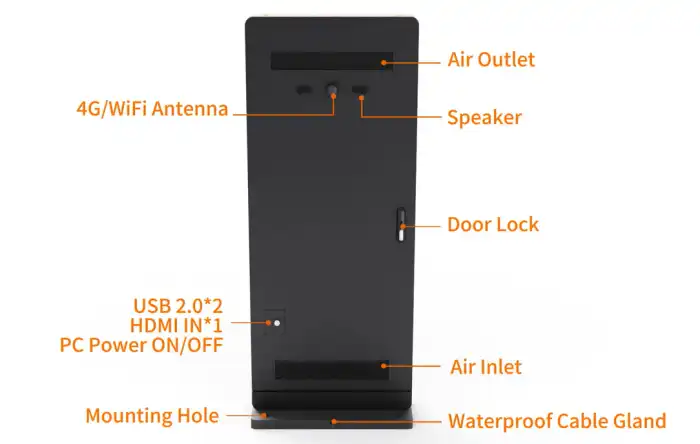
Procurement Guide for Ultra Slim Outdoor Digital Signage Kiosks
Technical requirements, supplier capabilities, and long-term support obligations that go beyond initial product delivery must all be considered while navigating the procurement process for Ultra Slim Outdoor Digital Signage Kiosks.
Evaluating Supplier Credentials and Manufacturing Capacity
Order fulfillment dependability is significantly impacted by factory size and production capacity, especially for large-scale projects that require coordinated deployment across several sites. Higher-quality goods with fewer flaws are often produced by suppliers with specialized manufacturing lines, skilled technical teams, and hygienic assembly settings. For government projects and global company installations, certifications such as FCC, RoHS, and CE compliance show conformity to international standards. Customers can differentiate their installations with branded components, unique enclosures, or specific functionality that conventional systems cannot offer since OEM and ODM customization is supported.
Understanding Lead Times and Logistics Support
Consistent delivery timelines and open communication throughout the order cycle are necessary for effective project planning. Ultra Slim Outdoor Digital Signage Kiosk vendors provide the responsiveness required for urgent installations or phased project rollouts, with lead times of five to fifteen workdays. Displays are protected during international transportation by packaging in reinforced hardwood boxes, which lowers replacement costs and delays caused by breakage. Suppliers with expertise in export logistics may offer guidance on the proper shipping strategies, customs paperwork, and regional installation procedures to expedite the order placement and operational deployment process.
Warranty, After-Sales Service, and Technical Support
A buyer and a supplier have a connection that goes much beyond the day of the transaction. For capital expenditures, comprehensive warranty coverage that covers manufacturing, material, and part faults is crucial risk protection. Display operators can handle software updates, setup issues, and operational inquiries without hiring pricey outside experts thanks to lifetime technical support. For integrators overseeing intricate multi-screen systems or unique digital signage networks, responsive technical teams that can offer installation advice, system integration support, and troubleshooting assistance are invaluable.
Maintenance, Energy, and Longevity of Ultra Slim Outdoor Digital Signage Kiosks
Proactive maintenance techniques and adherence to manufacturer environmental management guidelines are necessary to maximize Ultra Slim Outdoor Digital Signage Kiosk lifespan and minimize operating disruptions.
Routine Cleaning and Environmental Inspection Protocols
Dust, pollen, and other pollutants can accumulate on outdoor displays over time, obstructing ventilation channels and lowering image quality. Anti-glare coatings are preserved, and buildup on screens and vents is avoided by establishing quarterly cleaning schedules using non-abrasive cloths and certified cleaning solutions. Environmental checks should confirm that drainage channels are free of debris, mounting hardware is still secure, and seals are not deteriorating. These easy steps greatly increase display life while preserving the polished appearance required for brand promotion.
Energy Management and Operational Scheduling
A strategic operating schedule dramatically lowers energy use, even if Ultra Slim Outdoor Digital Signage Kiosks need less electricity than conventional designs. When maximum brightness is not required in the early morning or evening, displays with light sensors can conserve electricity by automatically lowering brightness based on environmental circumstances. Without compromising the efficacy of advertising during peak viewing hours, content management systems that allow nighttime dimming or shutdown during low-traffic periods can save annual energy expenses by 15% to 25%. Organizations with tight budgets or sustainability objectives will find these tactics quite appealing.
Thermal Stability and Weather Resistance Techniques
Even when Ultra Slim Outdoor Digital Signage Kiosk designs use intricate passive cooling systems like metal backshells and graphite heat spreaders, making sure there is enough airflow around the display enhances thermal efficiency. To promote heat dissipation, especially in hot environments, installers should keep space between the display and mounting surfaces. Internal components are shielded from moisture incursion during periods of severe rain or snow by routinely checking that seals are intact. Displays that operate within the manufacturer's designated temperature ranges regularly reach their claimed 50,000-hour MTBF (mean time between failures) over several years of continuous operation, providing dependable service.
Conclusion
Interior and outdoor advertising displays differ in a number of ways, one of which is weatherproofing. Higher brightness, sturdy design, and sophisticated thermal management are necessary for outdoor installations to provide reliable performance in a variety of weather situations. Procurement managers who wish to strike a compromise between visibility needs, space limits, and aesthetic concerns might select the Ultra Slim Outdoor Digital Signage Kiosk. These displays' extensive certifications, adaptable customization choices, and proven durability in demanding applications solve the problems that B2B customers frequently run into when making purchases from conventional providers. Ultra Slim Outdoor Digital Signage Kiosks are positioned as strategic investments that provide quantifiable return on investment over the course of their service life due to their energy efficiency, lower maintenance requirements, and longer operational lifespan.
FAQ
1. What makes outdoor displays readable in direct sunlight while indoor displays are not?
Outdoor displays use full-bonding technology to remove internal reflections, anti-glare surface treatments, and high-brightness LED backlighting systems that provide 2,500 to 5,000 nits. Indoor displays may function at 300–700 nits, which is suitable for regulated illumination but not competitive with direct sunshine.
2. Can ultra-slim outdoor kiosks operate reliably in extreme temperature environments?
Industrial components used in professional-grade Ultra Slim Outdoor Digital Signage Kiosks are appropriate for a wide temperature range, typically between -20°C and 50°C. Installers must make sure that mounting surfaces provide enough heat dispersion, even if advanced passive cooling structures and thermal management systems provide continuous operation without large fans.
3. How does the total cost of ownership compare between ultra slim kiosks and traditional outdoor displays?
Because of their 30% lower energy usage, sealed designs that require less maintenance, and longer component lifespans, Ultra Slim Outdoor Digital Signage Kiosks often offer a lower five-year total cost of ownership. Operational savings add up over time, even if the original purchase prices could be similar.
Partner with Topview for Your Ultra Slim Outdoor Digital Signage Kiosk Needs
Shenzhen Topview Display Technology has been producing LCD advertising displays for demanding business-to-business applications for more than 13 years. Our 2,000-square-meter facility houses three state-of-the-art production lines, a staff of more than twenty senior engineers, and enthusiastic after-sales support staff who are committed to the success of your project. We produce the T-Series Ultra Slim Outdoor Digital Signage Kiosk supplier line with complete customization possibilities, including flexible OEM/ODM arrangements, silk screen branding, LED backlight designs, and no MOQ limits. Consistent product perfection is ensured by our meticulous quality control and clean, dust-free assembly environment. Our team is prepared to support your vision, whether you require specialist engineering for particular project demands, technical support for system integration, or bulk pricing for multi-site installations. To find out how Topview can provide the dependability, efficiency, and collaboration your advertising infrastructure requires, send us an email at market@tviewdisplay.com.
References
1. Digital Signage Federation. (2023). Outdoor Digital Display Technical Standards and Best Practices. Industry White Paper Series.
2. Johnson, M. & Chen, L. (2023). Environmental Impact on Commercial Display Longevity: A Comparative Study. Journal of Electronic Display Technology, 45(3), 112-128.
3. International Display Manufacturing Association. (2024). Global Procurement Guidelines for B2B Digital Signage Solutions. Annual Industry Report.
4. Roberts, K. (2023). Thermal Management in Ultra-Slim Display Technologies. Advanced Materials and Engineering Quarterly, 18(2), 76-89.
5. Smith, R. & Patel, S. (2024). Cost-Benefit Analysis of Outdoor Advertising Display Technologies. Business Technology Review, 31(1), 45-62.
6. Worldwide Display Standards Council. (2023). Certification Requirements and Compliance Testing for Commercial Outdoor Displays. Technical Documentation Manual.
YOU MAY LIKE
 VIEW MORE120L solar compacting trash can
 VIEW MOREBus station light Pole Mounted digital signage solutions
 VIEW MOREStainless Steel Freestanding Water Drinking Fountain
 VIEW MOREStretched Bar LCD Display
 VIEW MOREDetachable Leg Interactive Touch Table
 VIEW MOREH-Style Floor Stand Totem Digital Kiosk
 VIEW MOREOutdoor Wall Mounting Advertising Totem
 VIEW MOREWall-Mounted Outdoor LCD Digital Signage