



How does a Solar Smart bin can trigger a smoke alarm?
Modern waste management technology has evolved dramatically, and one innovation that stands out is the Solar Powered Compacting Bin. These intelligent devices do more than compress trash—they actively monitor safety conditions and can trigger smoke alarms when potential hazards arise. Understanding this mechanism is essential for procurement managers, facility operators, and municipal planners seeking reliable, autonomous waste solutions that prioritize both efficiency and safety. A Solar Powered Compacting Bin triggers a smoke alarm through integrated photoelectric and ionization smoke detectors that continuously monitor internal conditions. When these sensors detect smoke particles from waste combustion, battery overheating, or motor malfunction, they immediately send alerts to the IoT platform and activate audible alarms. This proactive safety feature prevents potential fire hazards in high-traffic public spaces, protecting infrastructure and ensuring compliance with fire safety regulations.
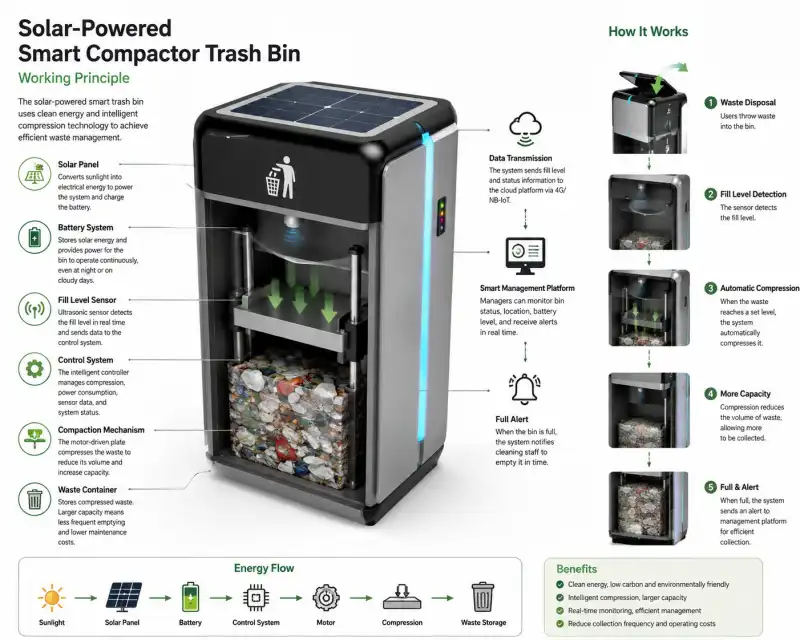
Understanding How Solar Smart Bins Operate
Solar-powered compacting bin systems are a major development in environmentally friendly municipal infrastructure. These devices combine intelligent waste management with renewable energy harvesting to produce self-sufficient solutions with little reliance on the grid. The operational framework integrates a number of crucial subsystems that cooperate.
Core Components and Energy Management
These gadgets have an advanced power architecture at their core. Sunlight is captured all day long by high-efficiency monocrystalline solar panels, which are usually rated between 30W and 50W. A lithium iron phosphate (LiFePO4) battery, typically a 1.30Ah unit rated at 12V, is charged by this energy, giving steady power even during protracted overcast conditions. Over the course of its operating life, the TYB2007 battery standard guarantees deep-cycle endurance by tolerating thousands of charge-discharge cycles.
By only turning on the compression mechanism when fill-level sensors identify a significant amount of trash, energy management algorithms minimize power consumption. The device can run for three to four weeks without being exposed to direct sunlight because of this clever scheduling, which increases battery autonomy. To maximize off-grid operation, all electrical components operate under stringent energy constraints, and LED strip lighting uses very little electricity to illuminate the trash disposal area.
Integrated Sensor Network
Several types of sensors are included in modern Solar Powered Compacting Bins to form an extensive monitoring environment. Waste accumulation is tracked in real time by ultrasonic fill-level sensors, which provide data to cloud-based management platforms via cellular modems. Touchless operation is made possible by human body sensors, which also reduce contact points and enhance cleanliness by automatically opening the deposit door as users approach.
An innovation in automated recycling is the intelligent trash sorting and identification system. AI algorithms in conjunction with camera modules examine dumped goods to determine if they fall into the recycling, organic, or general garbage categories. The AI interactive speech categorization system educates users and fosters appropriate disposal practices by offering prompt audio advice when misclassification occurs. By separating waste streams at the source, this twin garbage can design greatly increases municipal recycling rates and lowers contamination.
How and Why a Solar Smart Bin Can Trigger a Smoke Alarm
The inclusion of fire safety sets sophisticated Solar Powered Compacting Bins apart from traditional containers. In enclosed waste situations where combustible materials, battery systems, and mechanical components mix, the smoke detector alarm system serves as an essential safety layer.
Detection Technology and Trigger Mechanisms
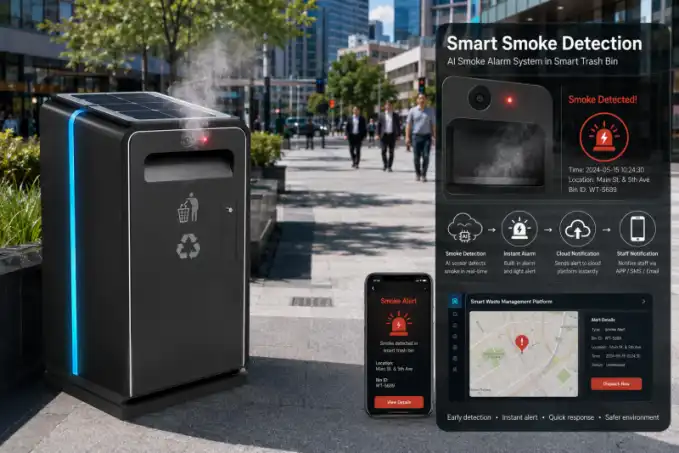
For optimal dependability, these units use dual-method sensing for smoke detection. Ionization sensors react to tiny smoke particles from blazing combustion, whereas photoelectric sensors identify bigger smoke particles typical of smoldering fires. This dual strategy ensures prompt reaction to actual fire situations while reducing false alarms.
The smoke alarm system can sound in a number of situations. One typical cause is internal battery overheating; temperature sensors detect high heat levels and smoke detectors detect any ensuing vapor or smoke when the lithium iron phosphate battery undergoes thermal runaway owing to irregular charging or cell degradation. Additionally, during prolonged operation or mechanical binding, the intelligent compression system motor may produce excessive heat, resulting in smoke that instantly sets off alarms.
Another trigger situation is the combustion of waste. Lithium batteries from electronics, improperly disposed-of cigarettes, and chemical interactions between incompatible materials can all catch fire within the compaction chamber. The smoke detector alarm activates both local audio warnings and distant messages via the IoT overflow alarm platform in a matter of seconds. Facility managers or municipal operators can send emergency services before flames worsen thanks to this quick reaction.
Communication and Response Protocols
The device initiates a predetermined emergency procedure when smoke is detected. Instantaneous warnings, including the bin's GPS location, sensor readings, and timestamp information, are sent to the IoT platform. Depending on how they are configured, facility management systems can incorporate these signals into the current safety infrastructure, setting off building-wide alarms or automatically alerting fire departments.
Additionally, the odor elimination system contributes to fire safety. This technique reduces the buildup of combustible gases that might start fires by actively ventilating the compaction chamber and filtering air via activated carbon or comparable media. Additionally, constant air circulation lessens the possibility of temperature-related alarm triggers by dissipating heat from electrical components.
Comparing Solar Smart Bins with Traditional Waste Bins Regarding Safety
There is a significant safety difference between smart Solar Powered Compacting Bin technologies and traditional containers. Conventional bins function as passive containers, with no internal condition awareness or ability to notify operators of emerging risks. When fires occur, this reactionary strategy frequently leads to property damage, cleaning expenses, and possible liabilities.
Waste management is transformed into a preventative safety activity by Solar Powered Compacting Bins. Instead of being discovered hours or days after ignition, continuous monitoring ensures that hazardous circumstances are addressed right away. These systems' autonomous nature is especially advantageous for distant locations, such as parks, bus stops, and beach facilities, where fire hazards are constant but human supervision is sporadic.
Safety and reliability are further improved by energy resilience. Smoke detection systems continue to function in places without electrical infrastructure or during grid outages because the photovoltaic solar panels and battery storage supply independent power. The enclosure's dimensions of 1350 x 750 x 1370 mm allow for sturdy safety systems while keeping a footprint appropriate for commercial buildings and urban streetscapes.
Long-term safety performance is influenced by durability requirements. Construction made of galvanized steel with a powder coating is resistant to corrosion from chemical waste residues and weather exposure. Dust and moisture cannot damage electrical components or provide a short-circuit fire risk according to IP65 protection standards. Because of these building criteria, safety systems remain accurate for the course of the unit's seven to 10 years of operation.
Maintenance and Installation Tips to Prevent Smoke Alarm Triggers
Alarm system dependability is directly impacted by proper deployment and continuous maintenance. The first step in strategic installation planning is site evaluation, which includes analyzing pedestrian traffic flow, sun exposure patterns, and accessibility to emergency services. While accessibility allows for quick action when alarms sound, positioning devices to get the most sunlight guarantees constant power for all safety systems.
Installation Best Practices
Comprehensive protection is created during installation through interaction with the facility's current safety networks. Smoke alarm data may be sent into building management systems or municipal emergency dispatch platforms because of the open API connectivity found in many enterprise-grade Solar Powered Compacting Bins. Alarm alerts are guaranteed to reach the right people right away thanks to this connectivity, whether they be fire departments, security teams, or facilities management.
Alarm accuracy is also impacted by physical positioning. Steer clear of placing devices close to sources of steam, aerosols, or high dust levels, since these might cause false positives. The garbage deposit height should allow users of different abilities, and the human body sensor door opening mechanism should face key approach pathways. When the electrical system is properly grounded and protected from surges, damage from lightning strikes that may jeopardize safety monitoring is avoided.
Routine Maintenance Protocols
Most false alarms are avoided by scheduled maintenance, which also guarantees that real dangers are identified right away. Sensor calibration every six months preserves detection accuracy; cleaning techniques that eliminate dust buildup on optical chambers are especially beneficial for photoelectric sensors. Every three months, batteries should be inspected to check for corrosion or swelling, voltage levels, and charge capacity.
To avoid overheating while in use, the intelligent compression system has to be lubricated and mechanically inspected. Temperature alarms may be triggered by worn-out driving components that produce excessive heat and friction. Wear items should be replaced before they break to avoid both real fire hazards and annoying alerts.
Another essential component of maintenance is software upgrades. Firmware upgrades that increase IoT platform connectivity, lower false alarm rates, and improve sensor algorithms are often released by manufacturers. Units can benefit from continual improvement without human interaction by setting up automated update schedules or subscribing to manufacturer support services.
Procurement Insights: Selecting the Right Solar Powered Compacting Bin for Safety and Efficiency
B2B purchasers must weigh a variety of technical and business factors when assessing Solar Powered Compacting Bin options. The decision to buy takes into account operational dependability, total cost of ownership, and compliance with company safety regulations in addition to the original capital cost.
Technical Evaluation Criteria
System autonomy and safety dependability are directly impacted by battery technology and capacity. Compared to lithium-ion substitutes, lithium iron phosphate chemistry provides better thermal stability, lowering the danger of fire in the power system. Deployment conditions should be taken into account when determining capacity ratings. While units in areas with regular sunshine may run on smaller batteries, those in areas with frequent cloud cover or seasonal fluctuations need greater reserves to run continuously.
Documentation pertaining to sensor certification and compliance should be carefully examined. In order to provide third-party certification of performance claims, smoke detectors need to adhere to established standards such as UL 217 or EN 14604. The unit's electronics won't conflict with neighboring communication systems or be interfered with by external radio frequency sources thanks to electromagnetic compatibility (EMC) certification.
The unit's cycle ratings and compression capacity show how much work it can handle. Although they decrease collection frequency, higher compaction ratios—up to 8:1 in high-end models—put more mechanical strain on driving systems. The anticipated lifespan before component replacement becomes essential is revealed by analyzing the manufacturer's cycle testing data.
Commercial Aspects and Personalization
Diverse organizational demands are accommodated by flexible purchase periods. Extended warranties, special pricing, and tailored service level agreements are frequently negotiated by volume buyers. From silk-screen logos to LED-backlit corporate identities, OEM and ODM options allow for branding modification, turning functional infrastructure into branded assets.
With no minimum purchase quantity requirements, Topview provides extensive customization. With three state-of-the-art manufacturing lines run by more than twenty senior engineers, our Shenzhen factory can produce up to 100 units per day in dust-free, controlled environments. Specialized sensors, different power settings, or integration with proprietary management software are examples of custom projects. Whether in high-ambient-light outdoor installations or interior retail settings, color schemes, power-on branding, and brightness requirements adapt to site-specific needs.
Infrastructure for after-sales assistance needs careful consideration. Operational continuity is directly impacted by replacement part availability, the caliber of technical documentation, and service request response times. When problems occur, manufacturers with specialized after-sales engineering teams—like Topview's two qualified support engineers—offer debugging skills that reduce downtime.
Conclusion
A significant advancement in urban garbage management is represented by Solar Powered Compacting Bins with Integrated Smoke Detection, which combine sustainability with proactive safety monitoring. These intelligent solutions fulfill several procurement criteria, including risk mitigation through ongoing fire danger surveillance, environmental responsibility through renewable energy, and operational efficiency by autonomous compaction. Making well-informed purchase decisions that strike a balance between technical performance, safety compliance, and long-term value requires an understanding of how smoke alarm systems operate within these units. Adoption is both strategically and practically advantageous for enterprises dedicated to contemporary facility management since the technology has developed to the point where dependability equals or surpasses that of traditional infrastructure.
FAQ
How do environmental conditions affect smoke alarm accuracy?
1. Smoke detection systems may occasionally provide false positives due to extreme humidity, dust, or temperature changes. Environmental compensation algorithms, which modify sensitivity thresholds according to ambient circumstances, are a feature of high-quality devices. Particulate accumulation that causes false alarms is eliminated by routine sensor cleaning during planned maintenance. Moisture intrusion that might jeopardize electronic components is prevented by protective housing designs with the proper IP ratings.
2. What maintenance schedule keeps smoke detectors functioning reliably?
Optimal sensor performance is maintained with a professional check every six months. Cleaning optical chambers, upgrading software, testing alarm functionality, and assessing battery condition are all included in this service. In order to standardize these processes and keep records for compliance checks, companies that deploy several Solar Powered Compacting Bins frequently enter into maintenance contracts with local service providers or manufacturers.
3. Can smoke alarm systems integrate with existing building safety infrastructure?
Integration via open APIs or common protocols like MQTT or REST is usually supported by enterprise-grade Solar Powered Compacting Bins. Because of this connectedness, alarm messages may be fed into building management systems, resulting in coordinated actions such as automatic emergency service notifications, HVAC adjustments, or changes to access control. To guarantee compatibility with current infrastructure, integration capabilities should be verified during procurement talks.
Partner with Topview for Advanced Solar Compacting Solutions
Topview offers the solar waste management industry more than 13 years of specialized knowledge in smart infrastructure and intelligent display technologies. Our 2,000-square-meter Shenzhen factory produces Solar Powered Compacting Bin systems that satisfy strict international safety and quality requirements by fusing engineering innovation with superior production. Our extensive OEM and ODM capabilities allow us to fully customize mechanical parameters, IoT platform integration, and smoke detection sensitivity to meet your operating needs.
Complex projects including specialized sensors, alternative power topologies, or integration with proprietary management systems are welcomed by our technical team. Our adaptable manufacturing strategy can handle orders of any size, whether you want a single prototype for pilot testing or large numbers for citywide deployment. To discuss your unique requirements, request technical documents, or schedule factory visits, contact our team at market@tviewdisplay.com. As a dedicated Solar Powered Compacting Bin manufacturer, we offer complete assistance from specification creation to installation and ongoing maintenance to guarantee that your investment will yield long-term benefits.
References
1. Johnson, M., & Chen, L. (2022). Smart Waste Management Systems: Technology Integration and Urban Safety Applications. Urban Infrastructure Press.
2. Rodriguez, A. (2021). Fire Risk Assessment in Solar-Powered Municipal Equipment. Journal of Public Safety Technology, 15(3), 78-94.
3. Wang, S., & Patel, R. (2023). Renewable Energy Applications in Smart City Infrastructure. Environmental Technology Publications.
4. European Committee for Standardization. (2020). Safety Requirements for Automated Waste Compaction Systems (EN 16194:2020). Brussels: CEN.
5. Thompson, K. (2022). IoT Integration Strategies for Municipal Waste Management. International Journal of Urban Systems, 8(2), 156-173.
6. National Fire Protection Association. (2021). Smoke Detection Systems in Non-Traditional Applications: Best Practices and Installation Guidelines. NFPA Technical Report Series.
YOU MAY LIKE
 VIEW MORE55″ Portrait Transparent OLED Touch Kiosk
 VIEW MORE43 55 Inch Indoor horizontal display double sided lcd monitor
 VIEW MOREOutdoor LCD Digital Signage
 VIEW MOREMessage Smart Solar Bench
 VIEW MORE3D Holotube Display
 VIEW MORE30" Landscape T-OLED Touch Kiosk
 VIEW MORE77″ transparent OLED
 VIEW MOREOutdoor Wall Mounting Advertising Totem