



What will the future of spatial displays look like with AI, spatial computing, and real-time 3D content?
The future of spatial displays is nearer than most procurement managers realize. AI-driven rendering, spatial computing platforms, and real-time 3D content pipelines are actively reshaping how commercial environments communicate with audiences. A well-specified 3D spatial signage display no longer functions as a passive screen — it reads its environment, responds to viewer behavior, and delivers depth-rich visuals without requiring glasses or external hardware. For B2B buyers sourcing commercial display solutions today, understanding this trajectory is essential for making decisions that hold value over the next five to ten years.
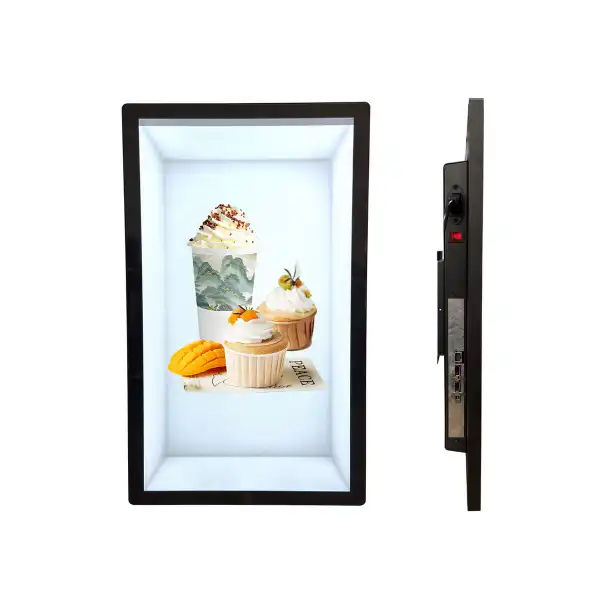
The Evolution of 3D Spatial Signage Displays: From Traditional to AI-Enhanced Solutions
For decades, static flat-panel signs did their job, but they could only talk one way. This relationship is fundamentally changed by the move toward spatial display systems with AI built in.
From Flat Panels to Depth-Aware Screens
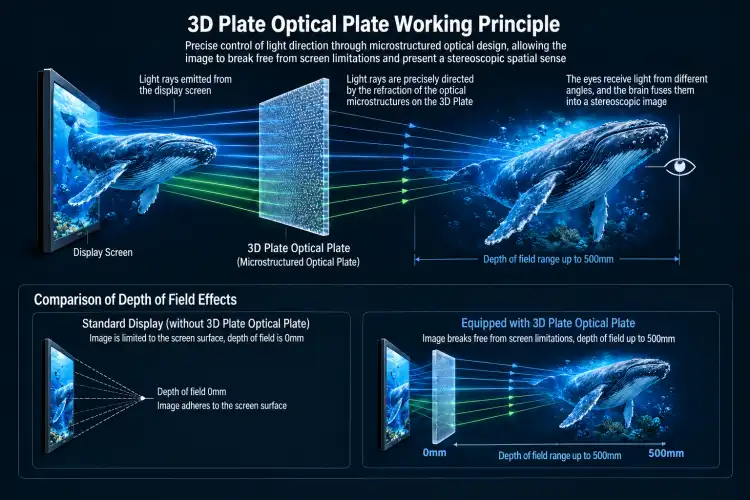
Digital signs that are used in the past show information on a single visible plane. People who watch get information, but they don't feel like they are in the space. Binocular parallax is used by glasses-free 3D display technology to show different pictures to each eye. This gives the impression of depth that flat panels can't match. This upgrade isn't just for looks; it completely changes how the brain processes the information.
AI as the Content Intelligence Layer
AI gives static content management systems the ability to change, which they don't have. Modern spatial display systems can change the material in real time based on the environment, the audience's closeness, and their dwell-time habits. For AV integrators who build whole commercial AV systems, this means the screen can be an active node in a data-responsive installation instead of a passive output screen.
Spatial Computing: The Architecture Behind the Experience
3D spatial signage display is the study of systems that can map and interact with three-dimensional surroundings. When used with a commercial glasses-free 3D display, spatial computing connects content to real-world objects, like a product on a shelf, an artifact in a museum case, or a car in a showroom. This is where the technology goes from being cool to being really useful for business-to-business uses.
Key Benefits of AI-Powered 3D Spatial Signage Displays for B2B Clients
The business case for AI-powered spatial screens is easy to see once you get past the cool look. For buying and project-based choices, these are the main benefits that matter:
- Real-time content personalization: AI-driven content systems adjust messaging based on viewer demographics, time of day, or traffic flow data. Retail brands using this approach report measurable increases in customer dwell time and product interaction rates.
- Operational efficiency through predictive maintenance: Smart display systems can flag performance degradation — brightness drop, backlight irregularity — before it causes downtime. For shopping mall operators or airport advertising managers running displays 16+ hours daily, this reduces maintenance costs significantly.
- Scalable deployment across multiple environments: The same display hardware can serve a luxury jewelry boutique, a corporate showroom, and a trade show booth. With HDMI input and optional Android/PC compatibility, content teams can push updates across locations without replacing hardware.
These benefits directly ease the workloads of digital signs project managers, AV integrators, and building managers who need installs that work well and last a long time. Over the course of a multi-year deal, the total cost of ownership goes down for displays that can adapt to new situations and record their own health.
Comparing 3D Spatial Displays with Traditional and Emerging Alternatives
There are a number of competing technologies in the commercial display market. Knowing where each one fits helps procurement teams avoid mistakes that cost a lot of money.
3D Spatial Displays vs. Standard Digital Signage
Sharp 2D images can be seen on standard LCD digital signs at reasonable prices. But they can't give you a sense of depth without extra visual gear. A glasses-free 3D spatial signage display that uses binocular parallax provides spatial depth naturally, without the need for any extra equipment. This is important in public and high-traffic shopping spaces where viewers expect to have smooth experiences.
3D Spatial Displays vs. Holographic Systems
Real holographic displays are still expensive, fragile, and hard to use in business settings. Spatial depth screens are a good compromise because they give the illusion of three-dimensionality while still being affordable and reliable enough for long-term use in businesses. This difference is important for AV technicians who are in charge of project costs.
Where AR Fits In
Augmented reality lets you see digital material on top of the real world through a mask or device screen. It works well with other technologies in controlled demo settings, but it makes devices more dependent on each other, which limits its usefulness in public-facing business apps. A spatial display that is placed on the wall or the floor can reach everyone who walks by without them having to hold a phone or wear a headset.
Procurement Insights: How to Choose and Implement a Spatial Display Solution?
It takes more than reading a spec sheet to find the right spatial display for a business project. Here are the things that expert buying managers put first:
Match Screen Size to Viewing Distance
When it comes to store settings, a 21.5-inch unit works well on a table or close by. A 55-inch or 86-inch screen with an active area of 1210.8 x 681.6 mm or 1895 x 1066 mm is best for places where people are coming in from a distance, like airport hallways, public concourses, and exhibition halls. It's important to note that Topview's 60-degree 3D depth-of-field view and 500 mm depth-of-field space are designed for commercial viewing distances, not lab conditions.
Evaluate Brightness for the Installation Environment
A standard light level of 350 cd/m² is bright enough for most shop and office settings inside. The optional 1000 cd/m² brightness upgrade is not a nice-to-have; it's a must-have for places with a lot of ambient light, like atriums, airport terminals, and displays that face the sun. It doesn't matter how good the content is on a screen that washes out in bright overhead lighting.
Confirm System Compatibility Before Committing
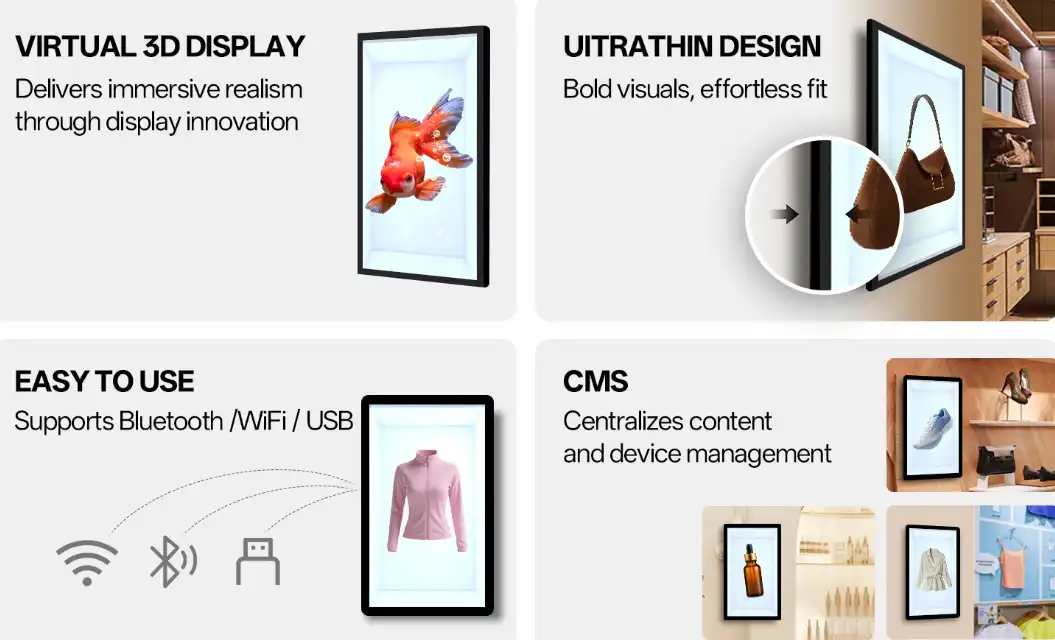
Procurement teams that are working with current AV hardware need to make sure that HDMI inputs work with the system and that their content management workflow can be integrated with either Android or PC. Topview's 3D spatial signage display comes with a normal HDMI input display board, and choices for Android and PC can be added upon request. There are both wall-mounted and floor-standing installation options, so it can be used permanently or temporarily. The AC110-220V input range meets US commercial power standards.
Future Trends and Strategic Implications for Spatial Displays in B2B Markets
Real-Time 3D Content Will Become a Standard Expectation
As tools for making content make real-time 3D rendering easier to use—game engines like Unreal Engine are already used to make business show content—clients' needs will change. No longer will static looped content make a brand activation or display piece stand out.
AI Will Drive Personalization at Scale
Procurement managers who ask for displays that can handle real-time rendered content now put their clients ahead of the curve.
OEM and Custom Solutions Will Define Competitive Differentiation
When audience measurement systems are connected to spatial display networks, DOOH operators and store media companies will be able to show material that changes based on the make-up of the viewers in real time. This is already happening in early commercial deployments, and in three to five years, it will be expected that all features will work this way.
Conclusion
There is a clear trend: the 3D spatial signage display is moving toward AI-aware, real-time responsive systems that give business audiences a real sense of depth without the need for special viewer tools. Today, you can find out about the important hardware specs, like lighting, viewing angle, resolution, system compatibility, and software options.
FAQ
Q1: What makes a glasses-free 3D display different from a standard commercial screen?
A glasses-free 3D display uses binocular parallax to project separate images to each eye, creating perceived depth without any viewer-worn equipment. Standard commercial screens present content on a single visual plane with no depth cue. The difference is perceptual — the brain processes depth-rendered content differently, which is why dwell time and recall rates improve in spatial display installations.
Q2: Can standard video content play on a 3D spatial display?
Standard video plays normally on the 2D layer of the display. However, the spatial depth effect requires content specifically authored using the "2D subject, 3D background" format. Standard videos are not automatically converted into 3D content — this is an important specification point for content teams to address before finalizing a project.
Q3: What screen sizes are available?
Topview's spatial display is available in 21.5-inch, 32-inch, 55-inch, and 86-inch configurations, covering close-proximity retail through large-format public space applications.
Q4: Is OEM customization available with no minimum order quantity?
Yes. Topview supports OEM and ODM projects with no minimum order quantity requirement for customization. Options include custom branding, logo treatment (silk screen or LED backlight), enclosure color, power-on logo, and brightness configuration.
Partner with Topview for Your Next 3D Spatial Display Project
A glasses-free 3D spatial signage display uses bilateral parallax to send different pictures to each eye. This gives the impression of depth without the need for special glasses. Most commercial screens show images on a single plane, with no indication of depth. The difference is in how we see things. Our brains process depth-rendered content in different ways, which is why dwell time and recall rates are better in spatial display installations. To get prices and details, you can email our team at market@tviewdisplay.com.
On the 2D section of the screen, normal video plays properly. But for the spatial depth effect to work, the content has to be written in the "2D subject, 3D background" format. Standard movies aren't instantly turned into 3D content. This is a key design point that content teams need to address before the project is finished.
References
1. Gartner. (2023). Emerging Technologies and Trends Impact Radar: Digital Workplace.
2. IDC. (2024). Worldwide Digital Signage and Kiosk Market Forecast, 2024–2028.
3. Display Daily. (2023). Autostereoscopic 3D Display Technology Review.
4. InfoComm International (AVIXA). (2023). AV Industry Outlook and Compensation Report.
5. Digital Signage Federation. (2022). State of the Digital Signage Industry Report.
6. McKinsey & Company. (2023). The Future of Retail: Technology, Experience, and the Physical Store.