



How does optically bonded glass improve outdoor display visibility?
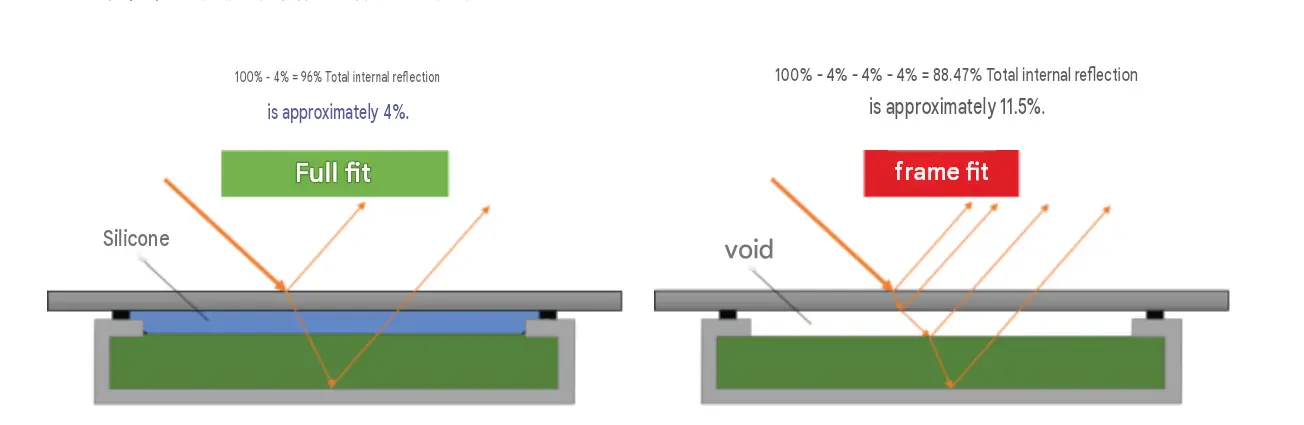
Optically bonded glass significantly improves outdoor display visibility by eliminating the air gap between the protective cover glass and the LCD panel. This gap is the primary source of internal reflections that wash out screen content in bright sunlight. By filling that space with an optical-grade adhesive, light passes through the layers with far less scattering. The result is sharper contrast, truer color, and much higher legible brightness. For procurement managers sourcing outdoor totem digital for advertising, retail, or transit applications, this technology directly reduces glare-related content failure and extends equipment service life.
Understanding Visibility Challenges in Outdoor Digital Signage
It is tougher than it looks to run a screen outside. Different types of light, moisture, dust, and changes in temperature can all hurt the performance of a display. When B2B buyers don't think about these things, they often end up with expensive field failures in the first year of operation.
Sunlight Glare and Double Reflections
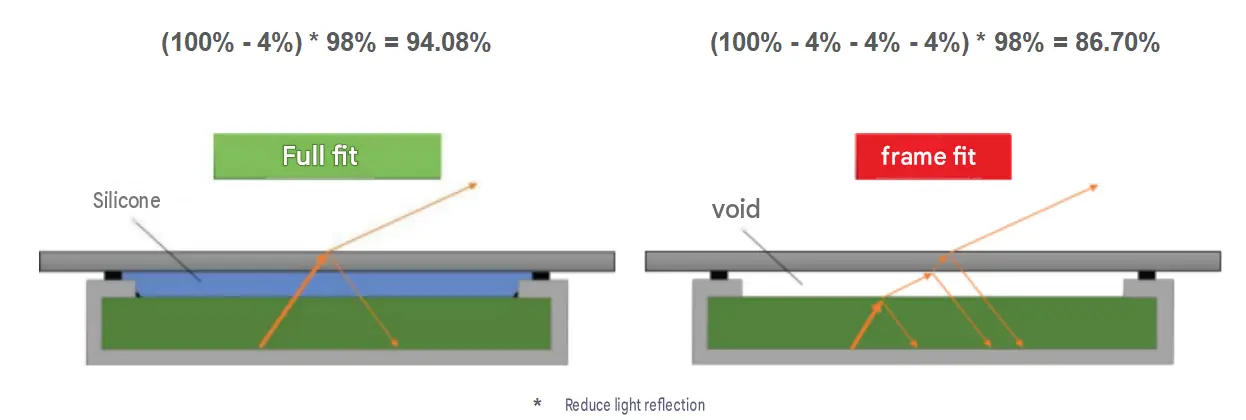
When light from the room hits an air-gap display that hasn't been treated, it bounces off two different surfaces, the cover glass and the panel face, making ghost images. A study from the Society for Information Display confirms that ambient light reflectance can make standard outdoor displays look less contrasty by more than 50%.
Moisture, Dust, and Condensation
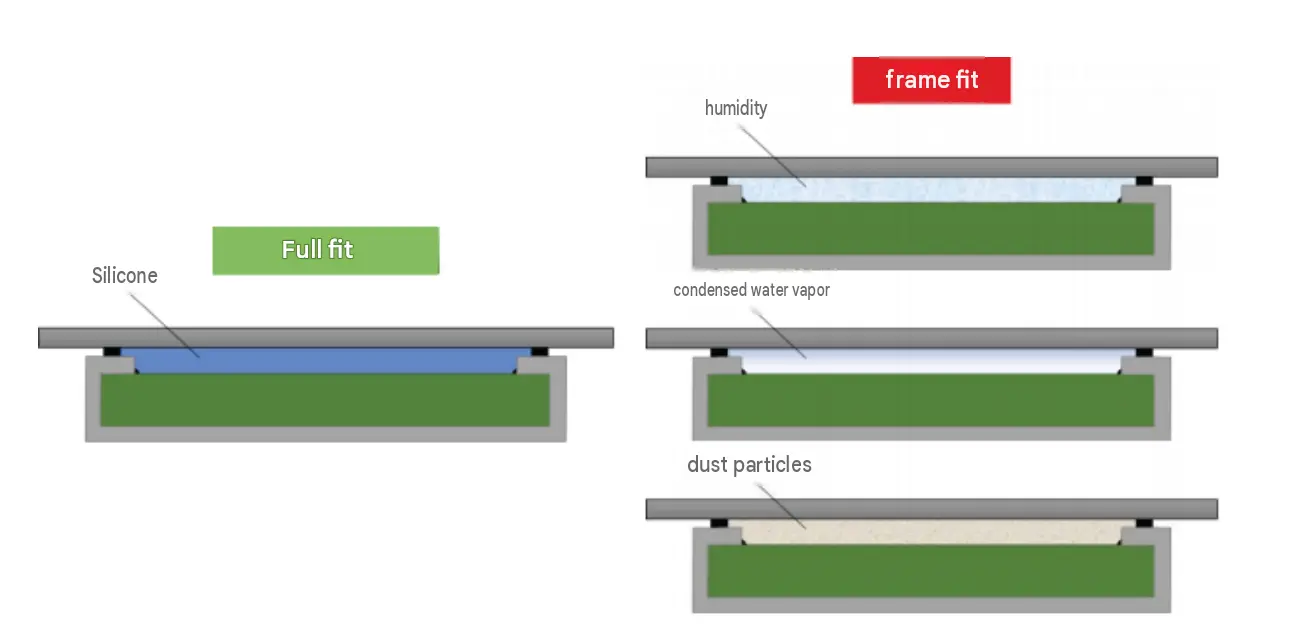
In standard systems, humidity gets into the air gap. Once inside, condensation builds on the panel's surface, which is hard to get rid of without taking the whole thing apart. When dust builds up in the same gap, it scatters backlight, making it less even and requiring more maintenance visits.
Temperature-Driven Performance Loss
For outdoor totem digital, if an LCD screen doesn't have high-Tni (high clearing point) liquid crystal substrates, it goes black when the temperature inside it goes over about 70–80°C. Direct sunlight on a screen surface that isn't shielded can quickly raise the temperature well above that level.
What Is Optically Bonded Glass and How Does It Work?
When something is made, an optical-grade glue, like a liquid LOCA (Liquid Optically Clear Adhesive) or a solid OCA (Optically Clear Adhesive) film, sticks the cover glass to the display panel and doesn't come off. There is no more space between them.
Refractive Index Matching
Glass has an index of about 1.5, while air has an index of 1.0. Light bends and scatters at every interface because of that mismatch. The optical adhesive used for bonding has the same refractive index as the glass, which means that light moves through the layers as if they were one solid medium.
Elimination of the Air Gap
According to published optical engineering data, taking away the air gap cuts internal surface reflections by about 75%. In real life, a 1500-nit panel in a bonded assembly works about the same as a 2500-nit panel in a regular air-gap unit when it comes to the weather outside.
Sealed, Unified Structure
The glass-adhesive-panel unit works as a single stable block once it is glued together. It's impossible for dust, water, and bugs to get in. This is very important for containers with an IP65 or IP66 rating, since the front optical unit is the last place where water or dust could get in.
Advantages of Optically Bonded Glass in Outdoor Digital Signage
Everyone in the supply chain is affected by the performance gains from optical bonding, from the engineer planning the installation to the buying director figuring out the five-year cost of ownership. For business use, these are the main benefits of this technology.
- Sunlight readability without a proportional brightness increase: Because internal reflections are suppressed, the display needs less raw backlight power to achieve the same perceived brightness. This means energy consumption stays lower while screen legibility improves, a direct operational cost benefit.
- Condensation and fogging prevention: The adhesive fills every micro-void between glass and panel. Even in coastal or high-humidity environments, there is no cavity for moisture to collect, which eliminates the fogging failure mode entirely.
- Shock and impact resistance: The bonded glass layer distributes mechanical stress across the whole panel face rather than concentrating it at contact points. This is critical for kiosks and wayfinding screens in high-traffic public spaces where accidental or deliberate impact is routine.
- Reduced long-term maintenance costs: Fewer cleaning cycles, no condensation remediation, and longer panel life all combine to cut the total cost of ownership over the display's operational lifespan.
For outdoor totem digital, these benefits directly lead to fewer service calls, higher uptime, and measurable improvements in return on investment (ROI). This is what procurement managers and AV integrators can show to their bosses to justify a higher per-unit purchase cost.
Optically Bonded Glass vs. Other Display Technologies for Outdoor Use
Optical bonding doesn't work as well for all screen technologies, and some budgets can't handle the higher unit cost. When buyers know where joined glass adds the most value, they can spend their money wisely.
Bonded Glass vs. Air-Gap Laminated Assemblies
Because the glass can be changed without touching the screen, air-gap systems are easier to fix and cost less to make. But they have the problems with double-reflection and condensation that we talked about earlier. When installed permanently outside in sunny places, bonded glass usually pays for itself in 18 to 24 months through lower upkeep costs.
Bonded Glass on LCD vs. LED Module Screens
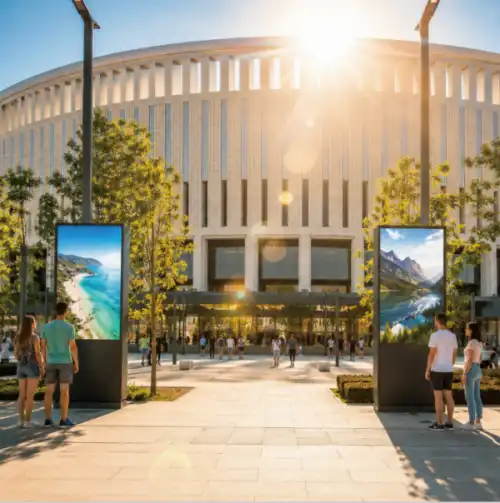
Since a top glass isn't used on direct-view LED module screens, optical bonding is only used on LCD-based outdoor displays. When tested outside, LCD screens with 1500–3000 nit backlights and bonded AR glass always do better than unbonded counterparts in terms of contrast. This makes them perfect for advertising panels, storefronts, and transit information boards.
Application-Specific Fit
Bonding works best for outdoor kiosks, drive-thru menu boards, and airport wayfinding screens, where people are close and reading the text is important for safety or making money. When LED walls the size of billboards are more than 5 meters away, they have different optical needs, and bonding is not as useful.
Practical Considerations for Procurement and Maintenance
For outdoor totem digital, it takes more than just comparing lighting specs to pick the right optically bonded display. Buyers need to look at the full information sheet and make sure that the assembly works in the area where it will be used.
Key Specifications to Verify
When looking at different providers, make sure you check the type of optical adhesive (LOCA vs. OCA), the AR coating reflectance value (goal: below 3%), the glass thickness (6–10mm is normal for outdoor uses that won't be broken), and the IP grade of the whole enclosure. For example, Topview's T32SO, T43SO, T49SO, and T55SO series use AR glass made in the US that stops 99.99% of UV radiation, lets more light through than 97% of the time, and doesn't reflect less than 3% of the time. These specs meet the strictest standards for outdoor deployment.
Installation and Handling Protocols
Standard screens are less likely to be damaged by point impacts during shipping than bonded units. Topview sends all of its products in strong wooden boxes that are designed to protect the bonded glass layer while they are in transit. Installers should not put any pressure on the glass face on-site and should follow the instructions that came with the unit.
Warranty, Support, and Long-Term Partnership
Topview comes with a standard one-year warranty that can be extended to three years. Lifetime expert help is available from the time a unit comes in, whether it is still under warranty or not. This support structure is just as important as the hardware specs for EPC companies and system developers who are in charge of rollouts across multiple sites.
Conclusion
Internal reflection from an air gap is the biggest optical problem that outdoor totem digital has to deal with. Optically bonded glass gets rid of this problem. The technology raises the contrast, keeps water out, and makes the machine last longer, all of which lower the cost of operation over time. Bonded glass is not an extra feature that procurement managers, AV installers, and project buyers should look for when looking at business displays for places that get a lot of sun. It's the minimum standard that must be met for any placement where readability of information and uptime of tools are important.
FAQ
Q1: Does optical bonding completely eliminate screen glare?
No, optical bonding gets rid of shadows inside the cover glass and the screen. At the very edge of the glass, light from the outside still bounces back. AR (anti-reflective) coatings put on that surface lower the amount of reflection from the outside to less than 3%, but it is normal for that surface to still reflect some light when it is directly overhead.
Q2: Can an optically bonded screen still support touchscreen functionality?
Yes. In most cases, optical bonding makes touch more accurate because the sticky layer lowers the parallax difference between where your finger touches the screen and the picture that is shown. It is easy for the projected sensitive touch sensors to connect to the hardware, and their performance doesn't change.
Q3: How difficult is field repair if the bonded glass breaks?
Without special tools, bonded assemblies can't be taken apart in the field. This is usually how the problem is fixed: the cover glass needs to be replaced. This is why Topview uses 6mm laminated, vandal-proof AR glass that meets IK10 impact standards: to reduce the chance of damage happening in the first place rather than making it easier to fix after the fact.
Q4: What maintenance does an optically bonded outdoor screen require?
A soft, non-abrasive cloth and a neutral detergent should be used to clean the surface on a regular basis. There is no internal gap for dust to gather, so they don't need to be cleaned as often as air-gap screens. Even if the unit is rated IP65, don't put high-pressure water directly on the seams.
Source Your Next Outdoor Digital Signage from Topview
Topview is a dedicated outdoor totem digital maker based in Shenzhen. They have been in business for 13 years and have a 2,000-square-meter factory with three professional assembly lines. The T32SO, T43SO, T49SO, and T55SO models all have 1500–2000 nit LED backlights, optically bonded AR glass, solar power, CE/FCC/RoHS approval, and a lead time of 5–15 workdays. To get specifications, bulk pricing, or information on OEM customization, email our procurement team at market@tviewdisplay.com.
References
1. Society for Information Display. Display Week Symposium Digest of Technical Papers. 2021.
2. Drzaic, P. Liquid Crystal Dispersions. World Scientific Publishing. 1995.
3. IEC 60529. Degrees of Protection Provided by Enclosures (IP Code). International Electrotechnical Commission. 2013.
4. Bhowmik, A., Li, Z., & Bos, P. Mobile Displays: Technology and Applications. Wiley. 2008.
5. SEMI D63-1109. Guide for Measurement of Optical Bonding Materials for Flat Panel Displays. SEMI Standards. 2009.
6. DisplaySearch / OMDIA. Outdoor Display Market Report: High-Brightness and Rugged Panels. 2022.