



What to Look for When Buying Commercial Solar-Powered Digital Signage
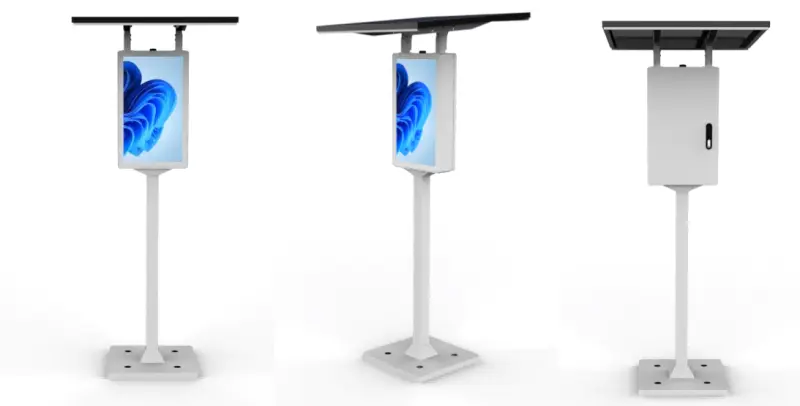
When buying commercial solar-powered digital signage, start with the site, then check six items: panel and battery sizing, screen brightness, weather protection, total cost, supplier capability, and installation support. A solar panel outdoor digital signage system combines a display, solar panels, battery storage, a charge controller, a cabinet, and a media player into one off-grid unit, so a mistake in any part affects the whole sign. We build these units at Topview in Shenzhen. This guide shows U.S. buyers how to compare quotes fairly and avoid common sizing errors.
Match the System to Your Site and Power Needs
Define the Application First
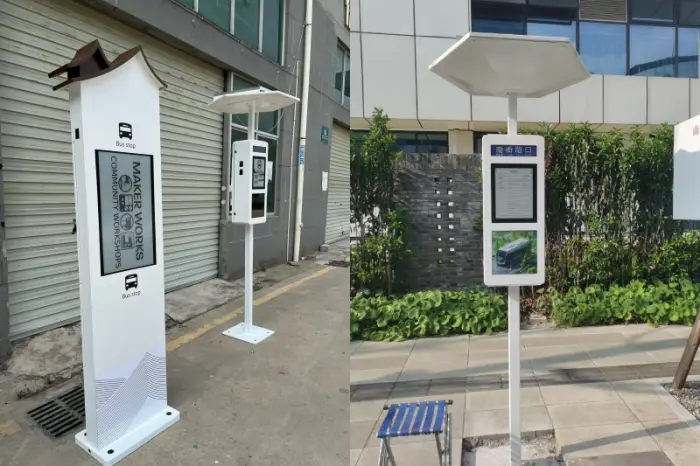
First, decide where the sign will go and what it will say. People should be able to see and not damage bus stops and parking lots. Storefronts need to be the right color. Units that are easy to move are needed on construction sites. Write down how much sun, shade, humidity, dust, snow, wind, salt exposure, and temperature changes there are. Each of these factors impacts how the cabinet is built, what batteries are used, and how often they are maintained. Next, pick the kind of material, the distance you want to see it, the screen size, the quality, and the daily hours. A sign that shows a short message for ten hours uses a lot less electricity than a video loop that plays all day. People who give you a price quote need to know these things before they give you one. Otherwise, it's just a guess.
Size the Solar Panel and Battery
The charge manager controls the energy that the solar panels collect, and the battery stores it for times when it's not sunny or at night. The screen, media player, communication parts, and cooling parts all use a lot of power every day. Add that up and then take into account the system's losses. How much sunlight and shade there is and how quickly the battery dies can also change the size of the panel and cell. Battery University says that heavy discharge makes lead-acid batteries last less long. That's why a battery bank with more space tends to last longer than one with only a few cells. Instead of asking for the nominal wattage of a panel, ask for an estimate of how much energy it will use in your area. Another free tool from the National Renewable Energy Laboratory is called PVWatts Calculator. It can help you figure out how much solar power a U.S. address can make and also check the numbers that a seller gives you.
Plan for Cloudy Days and Winter
How do you explain "autonomy"? It's how many days a sign stays up even when there isn't much or any sun. The days are shorter in the winter, the sun doesn't shine from very high up, and snow covers the panels. In other words, a unit that works well in Arizona might need more room in Minnesota. Ask each provider to explain how long they thought the autonomy would last and what factors they used to make that decision. It also saves power to turn down the light. The Topview T-series has a sensor probe that changes the screen's brightness based on how bright the room is. So, you'll use less energy and age more slowly. Make sure you know what the sign does when the battery dies, like if it dims or turns off at a certain time, so you don't get a surprise blackout.Judge the Display, Weather Protection, and Safety
Choose Brightness and Display Type
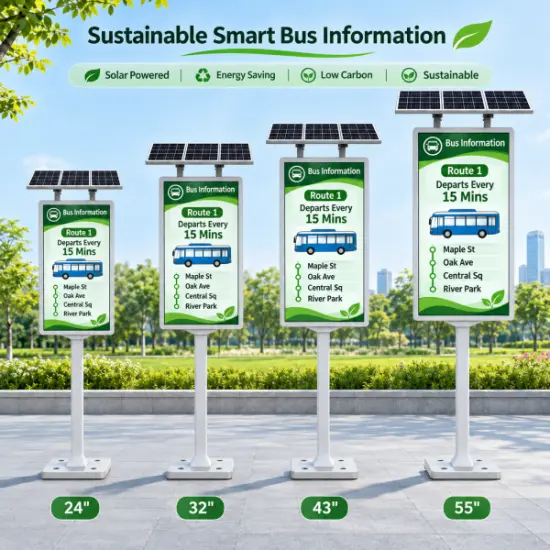
The sun is terrible for any screen outside. Text and video are easy to see up close on kiosks, menu boards, and information posts that have an LCD screen with an LED backlight. Big signs that you can see from far away often have LED panels on them. These panels use more power. Look at how much light a screen has (in nits), how it handles glare, how it can be seen, and how clear it is. In the Topview T32SO, T43SO, T49SO, and T55SO models, the LCD screen is either 1500 or 2000 nits bright and can show up to 1920 x 1080 footage, making them suitable for remote-area digital signage. Find out if a supplier's brightness number is for the basic panel or the final unit behind the glass. This is because layers of glass can block light.
Inspect the Cabinet and Glass
There are two standards used around the world that let you compare enclosures. IEC 62262 sets the IK code for protection against impact, and IEC 60529 sets the IP code for protection against dust and water. You should be able to get written ratings and test records from any supplier. It is made of 1.5 mm galvanized steel that has been powder-coated so that it can be used outside. The shell lasts more than 7 years and keeps water and dust out. The shell's color can be changed. The glass that can't be broken is 6 mm fused glass on both sides with an AR anti-glare coating. It doesn't block much light—more than 97% of it goes through. There is also 52% less heat from the sun and 99.99% less UV light.
Check Heat Management and Mounting
Heat is the main reason LCDs break outside, so pay close attention to how the cooling is made. For the T-series, military-grade heat dissipation technology is used. It has a built-in heat dissipation device, smart straight-wind temperature control, and a high-precision filter system. There is a cooling device that works in temperatures from -20°C to 45°C. It also prevents the LCD from going black in direct sunlight. The LCD screen can work in temperatures ranging from -30°C to 110°C. When you place something, you should ask about wind load, supports, theft protection, and how easy it is to get to service. Before you start the installation, make sure you meet all the permit and building code requirements by checking with your local government and a qualified professional.
Weigh Solar Against Other Options
Don't just compare prices when you compare solar panel outdoor digital signage to static signs, grid-powered screens, and portable units. Think about what the project needs. It costs less to use static signs, but you have to change them by hand when the words change. There are times when it's convenient to connect to the power grid and when the screen needs a lot of power. Moving units are handy for short-term events and construction sites. You can put solar panel outdoor digital signage in parks, parking lots, and along the side of the road, among other places, where digging holes and running wires would be too expensive or impractical. The Topview T-series is powered by the sun, so it doesn't need any wires or power connections. This means that no work on the utilities needs to be done during the installation.
Calculate Total Cost and Return
Get a quote that breaks down the price of the screen, panels, battery, controller, cabinet, mounting, software, shipping, setup, commissioning, maintenance, spare parts, and spare parts for remote-area digital signage. Then, look at the total cost of ownership, which includes things like not having to dig trenches, power bills, new batteries, and service visits. You could get your money back from ads, your cable bill could go down, and new content comes out faster. Check out the terms of the price as well. Topview gives prices in three different ways: EXW, FOB, and DDP. Under ICC Incoterms, EXW means that the buyer arranges for transportation from the factory. DDP, on the other hand, means that the seller brings the goods to the destination and pays the import duties. You can pay with T/T.
Evaluate the Supplier and OEM Capability
You shouldn't just buy screens from the supplier; work with them as a team. In Shenzhen, Topview has had a workshop that is 2,000 square meters and has three production lines for more than 13 years. There, they make LCD advertising screens. Up to 100 units can be made every day. We have two engineers who work with customers after the sale, more than 20 top engineers and assembly staff, and at least 10 people on our R&D team. We also have our own real estate business. We can add logos by silk screen or LED lighting, change colors, add logos that show up when the power is on, and make software changes. You can make OEM or ODM projects. There is no minimum order quantity (MOQ) for making changes. You can give points for things like how much energy it uses, the quality of the screen, how well it protects against the weather, the total cost, the wait time, the support, and any certificates. Then, ask for a full bill of materials.
Topview T32SO, T43SO, T49SO, and T55SO Series
Core Features
For solar panel outdoor digital signage projects that can't be wired, this line is designed. Never needs to be plugged into electricity because it gets its power from the sun. It has a built-in network player board that can handle text, pictures, and videos. It can also connect to a cable network and get data. It can also play offline files and work with software for controlling computers. You don't need to use a dynamic multi-touch screen or an industrial control computer. There is a circuit breaker, segmented timer control, and power that goes on and off by itself in the electrical control system. Places where people can get information, storefronts, and advertising sites that are far away all work well with these features.
Battery, Power, and Display Components
The sun battery lasts a long time because of the gel solution and the way it was made. It works well at high altitudes and temperatures. It can also handle deep cycling well. It also keeps you safe from overcharging and overdischarging. The screen has a size of 1920 x 1080, a 1500 cd/m² LED backlight, and an industrial-grade power source. It is made for use in factories. We don't give out a single panel wattage for the whole series because we have to do the math for each project on-site. Tell us where you are and what times you're open, and our engineers will come up with a configuration.
Terms, Delivery, and Support
It is safe to use because it meets FCC, RoHS, and CE standards. In the US, the FCC has rules for electronics in 47 CFR Part 15, and the RoHS Directive limits the use of some dangerous materials in electronics. Lead time is 5 to 15 business days, and units are sent out in sturdy wooden boxes. You can get a guarantee for up to three years, but most only last for one year. And you can get free tech support for life, even after the warranty is over. Before you hand it over, make sure it charges, is bright, and can update information remotely. Also, make sure that the panels, cabinet seals, and cables are cleaned off every so often.
Conclusion
You should buy solar panel outdoor digital signage for your business at the system level. First, the site's conditions and how it is used are looked at. Then, the size of the panel and batteries is figured out by guessing how much power that place needs, taking into account winter and cloudy days. It is important to check the cabinet, glass, and cooling to make sure they can handle the weather and that the screen is bright enough to see in the sun. You can tell when solar signs are better than grid-powered ones by looking at how much they cost to own and other factors. To rate suppliers, you should use the same list to look at their capacity, certifications, lead time, warranty, and customer service. Before you buy something, all of these checks lower the technical and business risk.
FAQ
1. How much battery capacity does a sign need?
Your ability will depend on how much energy you use every day, how long you run your business, how much sunlight you have access to, and how independent you need to be on dark days. Instead of a general rule, ask for a calculation that is based on where you are.
2. Does solar signage work in winter?
If the plan takes into account short days and snow cover, it might be possible. Make sure the panels are cleaned often and ask how long the battery lasts. The Topview T-series LCD screen can work in temperatures ranging from -30°C to 110°C.
3. What should a professional quote include?
The quote should include a full list of all the costs, including those for the screen, panels, battery, processor, case, mounting, software, shipping, warranty, wait time, and everything else.
Request a Commercial Solar Panel Outdoor Digital Signage Proposal from Topview
Are you prepared to examine various solar panel outdoor digital signage options? Send Topview the address of your site, the number of screens, the viewing distance, the screen size, and the hours that the site is open to market@tviewdisplay.com. In Shenzhen, we produce solar panel outdoor digital signage. Along with FCC, RoHS, and CE certification, we offer OEM and ODM customization. The lead time is 5 to 15 business days.
References
1. International Electrotechnical Commission, IEC 60529: Degrees of Protection Provided by Enclosures (IP Code), 2013
2. International Electrotechnical Commission, IEC 62262: Degrees of Protection Provided by Enclosures for Electrical Equipment Against External Mechanical Impacts (IK Code), 2002
3. National Renewable Energy Laboratory, PVWatts Calculator, 2023
4. Battery University, BU-403: Charging Lead Acid, 2021
5. European Parliament and Council, Directive 2011/65/EU on the Restriction of Hazardous Substances (RoHS), 2011
6. Federal Communications Commission, Title 47 CFR Part 15: Radio Frequency Devices, 2023
YOU MAY LIKE
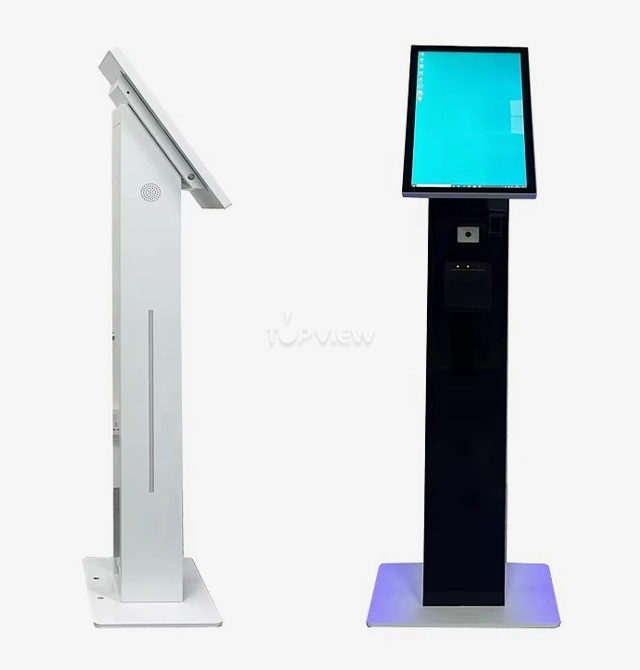 VIEW MOREFloor Stand Self-Service Touch Kiosk
 VIEW MORE55inch 3d spatial signage display
 VIEW MORE55″ Transparent OLED Display Cabinet
 VIEW MORETransparent OLED Touch Screen
 VIEW MORESingle Sided High Brightness Windows Facing Displays
 VIEW MOREHanging Double -sided Shop Windows Displays
 VIEW MOREDouble Sided Bar Lcd Monitor
 VIEW MOREElevator Advertising LCD Display