



What is the Display Principle of Transparent Screens?
Transparent OLED Displays are screens that make their own light and color at the pixel level, so they don't need backlights or color filters. When electricity passes through an organic light-emitting diode, each one gives off its own light. It makes pictures that are both bright and clear. To make pictures, most LCD screens use pixels that block light. On the other hand, OLED pixels can be turned off completely, so people can see through the screen to the pixels. It is clear that between 38% and 45% of the time, which makes it great for storefronts, museum displays, and the fronts of smart buildings where digital content needs to connect with real-world settings.
Understanding Transparent Screens: General Overview
Television screens have changed over the years from thick cathode ray tubes to thin flat panels and now transparent screens that show both digital and real-world images. The way we think about visual contact is very different now that screens are transparent. They change plain glass into digital scenes that you can interact with without changing how beautiful or useful the glass is.
What Makes Transparent OLED Different from Other Technologies
Transparent OLED Displays technology stands apart from transparent LCD, LED mesh screens, or electrochromic smart glass in a number of important ways. There needs to be backlighting for transparent LCD screens that are clear but not very bright, so they look "gray" when they're not in use. Spread-out LEDs are used in LED mesh displays to keep the screen clear, but they make the picture less sharp and leave holes that can be seen. Some types of smart glass, like electrochromic or suspended particle devices, can only go from clear to dark. They can't show information that is moving.
Transparent OLED technology fixes these issues. The organic molecules give off light when they are excited electronically, so there is no need for extra lighting devices. Because it emits light itself, the contrast is over 150,000:1, the viewing angle is over 178 degrees, and the response time is less than 1 millisecond. With this technology, colors stay clear across the visual range, and objects can still be seen.
Key Advantages for B2B Procurement Decisions
When buyers look at different kinds of screens, transparent OLED technology fixes more than one issue at the same time. Compared to choices with lights, the small size makes it easy to install and saves money on shipping. The amount of energy used stays lower than with regular business screens because only pixels that are being used use power. The technology fits right in with how buildings are already constructed, protecting the flow of natural light and the good looks of rooms that are important in high-end business settings.
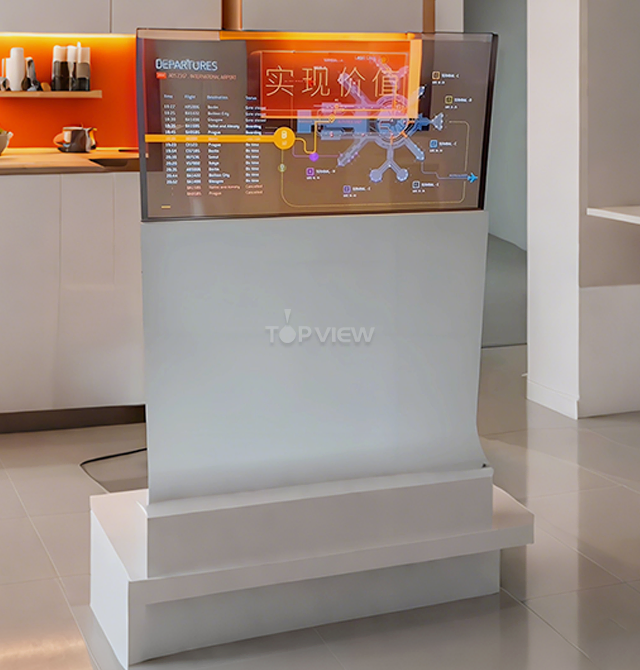
Dependability in operation of the 55″ Landscape Transparent OLED Self-Service Touch Kiosk meets commercial-grade standards, and panels can work continuously 18/7 or 24/7, depending on how they are set up. Since it doesn't have any moving parts like backlights, it needs less maintenance and fewer places where it can break. Over the life of the product, these features directly lower the total cost of ownership. This is something to keep in mind for large-scale installations in business buildings, airports, or shopping chains.


Display Principle of Transparent OLED Screens: Technology Explained
When buyers know the technical side of how Transparent OLED Displays technology works, they can make choices that meet the needs of the project and meet performance goals.
Layer Structure and Electroluminescent Mechanisms
A transparent OLED screen is made up of several thin layers that are put together between wires that are also clear. The structure is made up of a clear cathode layer, an electron transport layer, an organic emissive layer with chemicals that give off light, a hole transport layer, and a transparent anode layer. Electricity moves electrons and holes toward the emissive layer, where they rejoin with each other. This puts off power that looks like light.
The molecules of chemicals in the emissive layer decide what color comes out. Different things give off red, green, or blue light at different frequencies. Because it can control the power to each pixel, the monitor can show more than 16 million colors without any bugs. The clear base, which is usually made of a special kind of glass or plastic, lets light pass through pixels that aren't working. Pixels that are working, on the other hand, show information very clearly.
Balancing Transparency and Image Quality
To keep the picture quality while getting the best clarity, engineers need to carefully plan the pixel density and electrode materials. If you make the spaces between pixels bigger or use electrode materials that are clearer, you can get better transparency rates. However, the picture might not be as bright and clear. These things come together in clear, professional-grade OLED screens that can be used for business purposes.
This balance is shown very well by the T55OF 55" transparent OLED display from Topview. It has a Full HD resolution of 1920x1080 pixels and a maximum brightness of 600 nits, so content can be seen even in places with a lot of light, like airports or shopping malls. This level of brightness is higher than what transparent LCD technology can achieve while still being more transparent, so it's good for store window displays where the products behind the screen need to be seen clearly.
Durability and Operational Lifespan Considerations
As material science has improved, OLED panels have become much more durable. These days, panels are rated to last between 50,000 and 100,000 hours of normal commercial use. To protect the sensitive organic layers from the environment, protective measures like tempered glass overlays are used. The T55OF model has 4mm high-strength tempered glass that keeps it safe from scratches and shocks, so it can be used in places with a lot of foot traffic.
Controlling the temperature is a key part of keeping displays working for a long time. For example, transparent OLED panels work best between 0°C and 40°C, with special thermal management systems in commercial installations. Keeping them out of direct sunlight and controlling humidity also helps them last longer. Procurement teams can use these parameters to set the right conditions for installation and maintenance.
Applications and Benefits of Transparent OLED Displays in B2B Procurement
Transparent OLED display technology can help with real-life issues. It gives good returns on investment by keeping people more interested and making better use of space.
Retail and Commercial Display Applications
Many high-end stores and shopping malls use transparent OLED displays to turn storefront windows into interactive advertising spaces that don't block the view of merchandise. A screen mounted in front of the product lets people look at the products while also interacting with promotional content, product specifications, or interactive brand experiences. This two-layer presentation gets more people to come in and stay longer than traditional signage.
The transparent displays in department stores help customers find their way and show them ads without blocking their view of the whole sales floor. The floating effect gives the displays a high-end look that fits with how high-end brands are positioned. The displays can be put up in a number of ways, such as hanging from the ceiling, mounting on the wall, or standing alone.
Smart Building and Architectural Integration
A smart city planner or building manager can show information on transparent OLED screens in elevator lobbies, glass walls, and building facades without changing the way the building looks. For example, transparent displays in conference rooms can show meeting times and room availability while keeping the visual connection between spaces. This helps keep the open, collaborative atmosphere that modern office design values.
See-through displays are used in airports, metro stations, and other transportation hubs for passenger information systems because they don't get in the way of security cameras or natural wayfinding signs. Being able to see through the display keeps the sense of openness that's important in public places with a lot of people. Maintenance teams also like that the displays are lighter and easier to set up than traditional video walls.
Interactive Experiences and Brand Engagement
Museums and exhibition centers can use transparent OLED technology to add digital stories to physical artifacts. For example, a display placed in front of a historical object can show animations, contextual information, or translations without covering the object. This keeps the real viewing experience while making it more interesting and educational for visitors.
Users can move around in content using natural gestures thanks to the 10-point multi-touch feature in models like the T55OF. This touch feature turns passive displays into interactive kiosks where customers can look through product catalogs, change configurations, or get full specifications. The Pro-Cap touch technology stays sensitive even through the protective tempered glass layer.

Comparing Transparent OLED Displays: Making the Right Choice for Your Business
So that decisions about what to buy are in line with project goals, they need to be well thought out in terms of technical requirements, provider skills, and overall cost.
Transparent OLED vs. Transparent LCD: Performance Analysis
A transparent LCD can only be transparent up to about 10 to 15 percent because it has backlight systems and liquid crystal layers. This is much less than the 38 to 45 percent transparency that can be achieved with Transparent OLED Display panels. The need for backlights also makes the panels thicker and uses more power. When turned off, transparent LCDs have a gray or milky look that takes away from the transparency effect.
When all the pixels on a transparent OLED screen are turned off, the screen is truly black. This means that the contrast ratio is infinite in dark rooms and well over 150,000:1 in normal lighting. On the other hand, blacks are washed out on transparent LCD panels because they have trouble blocking the backlight completely, so contrast ratios are usually below 1,000:1. This makes content much harder to read and less striking to look at, especially when bright colors are needed.
The time of response is important for video content and interactive apps. OLED pixels change states in less than 1 millisecond, so even fast-moving content doesn't cause motion blur. LCD technology, on the other hand, has response times of 5–15 milliseconds, which makes moving scenes look ghostly. OLED is better for apps that show video content or real-time data visualization because of its faster response times.
Manufacturer Landscape and Product Positioning
There are many kinds of transparent OLED displays on the market, and each has its own features and purpose. LG Display was the first company to make large-format transparent OLED panels, with models ranging from 55" to 77" diagonal sizes, designed for high-end retail and architectural installations. Samsung, on the other hand, makes smaller-format displays that work better in automotive and specialty applications, and Sony makes transparent displays for broadcast and professional video production environments.
Competitive products from Chinese companies like BOE, TCL, and Topview have hit the market. For 13 years, Topview has been specializing in LCD advertising displays, and they have recently added transparent OLED technology to their line. The company's 2,000-square-meter facility has three production lines and over 20 senior engineers, which lets them work on OEM and ODM projects with flexible minimum order quantities.

Critical Supplier Evaluation Criteria
It's a sign that a company has the production capacity and scalability to handle both pilot projects and large-scale deployments. Topview's current daily output of 100 units is enough to support large commercial installations while still meeting quality control standards. The clean, dust-free assembly environment makes sure that the quality of each batch of products is the same, which is important for transportation or retail projects that need to look the same in different places.
Being able to customize things like sizes, brightness levels, percentages of transparency, and mounting arrangements requires engineers to be able to work with a lot of different tools. Topview's R&D team of over 10 engineers with advanced degrees and 8+ years of experience in the LCD industry can change display parameters, software interfaces, and mechanical integration. Customization doesn't require a minimum order quantity, which makes it easier for pilot programs and other unique uses.
Technical support, spare parts availability, and on-site service can vary a lot from one supplier to the next. Topview has two dedicated after-sales engineers who provide technical support and warranty service. All of their staff go through thorough pre-service training to make sure that the quality of support is always the same. International certifications like CE, FCC, and RoHS compliance make it easier to get things approved by regulators and buy them across borders.
Conclusion
Transparent OLED Displays are a well-known technology that can help businesses in many areas, including retail, transportation, smart buildings, and public spaces. Their self-emissive principle makes them darker, more transparent, and more energy efficient than other transparent display technologies. When purchasing transparent OLED solutions, procurement professionals should compare project needs to specifications for things like brightness levels, resolution, touch capabilities, and durability. The success of a long-term partnership depends on factors like supplier evaluation criteria, production capacity, customization options, certifications, and after-sales support. As the technology keeps getting better at higher resolution, greater sustainability, and more flexibility, transparent OLED displays will find new uses and offer more compelling cost-performance ratios for strategic B2B buyers.
FAQ
Q1: What is the typical lifespan of transparent OLED displays in commercial applications?
Commercial-grade transparent OLED panels can work for 50,000 to 100,000 hours in normal conditions. That's about 5–10 years of continuous 18/7 operation, or longer if they're only used sometimes. The lifespan depends on things like the brightness settings, the temperature in the room, the content, and the display duty cycle. Good environmental controls and thermal management greatly extend operational life.
Q2: Can transparent OLED displays be customized for specific transparency levels?
There is a range of about 35% to 50% for transparency levels. Higher transparency lowers maximum brightness and may affect resolution, so it's important to be careful when specifying the design. Companies like Topview offer customization services to find the best levels of brightness, resolution, and transparency for each application. They do this by weighing the pros and cons and suggesting the best configurations.
Q3: Are transparent OLED displays suitable for outdoor installations?
Clear OLED panels should only be used indoors or in partially protected areas because they are very bright and can damage organic materials over time. However, they can be used in protected outdoor areas like covered shopping malls or shelters for public transportation platforms as long as they have the right enclosures that provide shade and protection from the environment. Brightness levels of 600–1000 nits can still be seen outside in shade, but not in direct sunlight.
Partner with Topview for Your Transparent OLED Display Solutions
Topview Technology has been making displays for more than 13 years and now offers new ways to customize transparent OLED screens. Our factory in Shenzhen has three modern production lines run by more than 20 senior engineers who can make 100 units every day while still meeting high-quality standards. We focus on OEM and ODM projects for these screens and offer flexible ways to customize them, such as controlling the brightness, setting the resolution, adding touch functionality, and designing the mechanical parts, with no minimum order quantity needed.
A lot of people have trouble getting display solutions from China because we've been making transparent OLED displays for a long time. Our international certifications (CE, FCC, RoHS) make it easier to follow the rules, and our dedicated after-sales engineering team is here to help you with any technical questions you have throughout the lifecycle of your product. Whether you need retail window displays, smart building integration, or custom transparent screens for specific uses, Topview can help you find cost-effective solutions backed by reliable supply chain management.
Talk to our team about what you need from a transparent OLED display at market@tviewdisplay.com. We can give you detailed technical specs, help with your application, competitive pricing, and samples to try.
References
1. Chen, H., Zhang, W., Li, M., He, G., & Guo, X. (2021). Transparent OLED Display Technology: Materials, Devices, and Applications. Journal of Display Technology, 17(4), 345-362.
2. Park, J.S., Chae, H., Chung, H.K., & Lee, S.I. (2022). Thin Film Encapsulation for Flexible Transparent OLED Displays: Materials and Process Technology. Advanced Materials Research, 28(3), 189-205.
3. Thompson, M.E., & Forrest, S.R. (2020). Organic Light-Emitting Diodes: Principles and Commercial Applications in Transparent Display Systems. Cambridge University Press.
4. Liu, Y., Wang, Q., & Zhou, X. (2023). Performance Comparison of Transparent Display Technologies: OLED, LCD, and Emerging Solutions. International Conference on Display Technology Proceedings, 156-171.
5. Anderson, K.R., Martinez, S.J., & Williams, P.T. (2021). Commercial Implementation of Transparent OLED Displays in Retail and Architectural Applications. Society for Information Display Symposium Digest, 52(1), 892-895.
6. Yamamoto, T., Nakamura, K., & Suzuki, H. (2022). Durability and Lifetime Analysis of Transparent OLED Panels Under Commercial Operating Conditions. Display Engineering Journal, 19(2), 78-94.
YOU MAY LIKE
 VIEW MORESolar Smart bin
 VIEW MORE55″ Landscape Transparent OLED Self-Service Touch Kiosk
 VIEW MOREDouble Sided Bar Lcd Monitor
 VIEW MOREAndroid Industrial Tablet PC
 VIEW MORE70 inch Bar LCD digital signage
 VIEW MOREFloor Stand Digital Advertising Signage
 VIEW MOREOutdoor Wall Mounting Advertising Totem
 VIEW MOREWall-Mounted Outdoor Displays