



How is a 55-inch Transparent OLED Screen Spliced?
Putting together a 55-inch panel takes careful engineering to keep the Transparent OLED Displays' visual identity. Individual units are mounted on a special, high-precision frame structure that keeps the holes between the bezels as small as possible. To make sure that the picture is the same across the whole array, each panel must be adjusted so that its color and brightness are in sync. Daisy-chain technology is built in to handle connectivity, which keeps data and power stable across the display surface. Technicians use special alignment jigs to make the watching experience almost seamless. This turns multiple screens into a single, seamless digital painting for large-scale business displays.
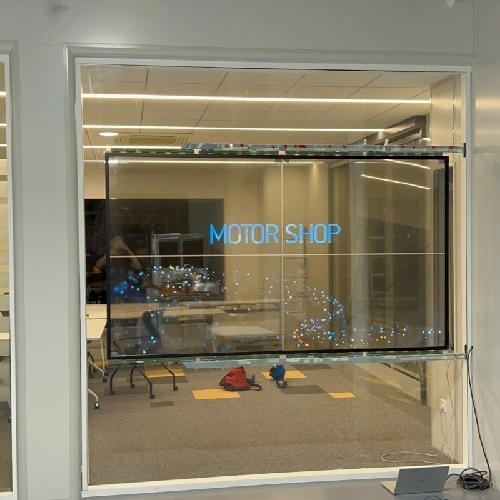
Understanding Transparent OLED Screen Structure and Splicing Challenges
Transparent OLED Displays are building wonders that balance the ability to see through with bright self-emitting light. Organic light-emitting diodes are formed on a thin, clear substrate to make these screens work. This construction gets rid of the need for heavy backlights, giving the screen a smooth, glass-like look that fits right in with current interior designs. When working with 55-inch units, the task changes to making sure that the structure is the same all the way through the assembly.
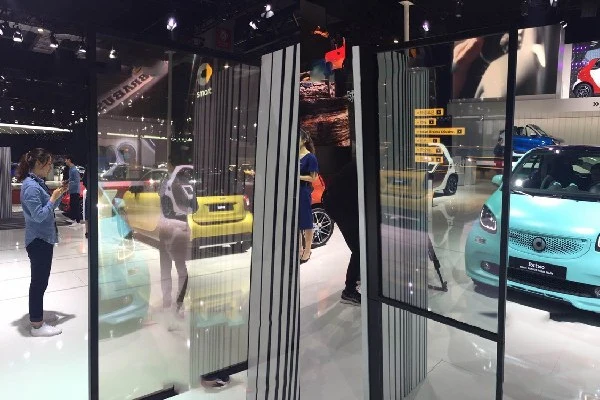
It is necessary to join these pieces together with an OLED transparent splicing screen in order to increase their visual effect in retail showrooms, high-end museum exhibits, and automobile concept shows. But the process has some technical problems that need to be solved by professionals. To keep the "floating" look of the digital material, seam exposure must be kept to a minimum. Accurately aligning the edges of the display keeps lines of sight clear, and strong electrical connections are needed to keep signals from weakening across bigger plans. Premium professional installations are different from standard business sets because they deal with these problems better.
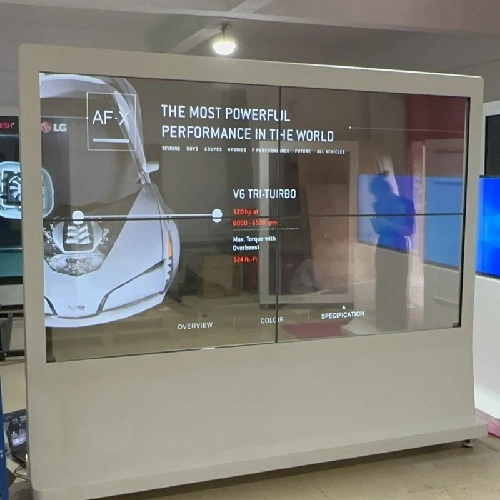
Step-by-Step Process of Splicing a 55-inch Transparent OLED Screen
A professional-level repair starts with a thorough analysis of the surroundings and careful planning. For every project, the weight-bearing ability of the support structure and the lights in the deployment area need to be checked. Specialized tools, like high-tolerance steel frames and micro-adjustment fixing systems, are ready to make sure that every screen stays level. The technology team makes small changes to the actual edges over and over to make sure that the gap between pixels doesn't stand out to the human eye.
Here are the main stages involved in the professional assembly of large-scale display matrices:
- Structural Framework Installation: The first step is to build a strong, custom-engineered mounting base. As well as holding up the heavy, hardened, high-transparency glass, this base must have tiny adjustment screws that let workers fine-tune the x, y, and z positions of each 55-inch panel. A stable frame doesn't sag or bend over time, which keeps the delicate biological layers safe from physical stress during long-term use.
- Precision Panel Alignment: Once the frame is in place, the OLED units are put in by experts. The team cuts down on the space between pixels on nearby screens by using laser alignment tools. It is very important to get sub-millimeter precision because even a small difference breaks up the flow of the visual material. For this step, you need to know the exact size of the screen's edges so that the pictures flow smoothly across the whole display area without any distortion or visible breaks.
- System Calibration and Testing: In the last step, the performance factors of each unit are synchronized. The technical team uses special software to make sure that the whole matrix's luminance and color temperature are all the same. This keeps the brightness, which reaches 600nits, even. After the monitor is installed, the team puts it through a series of tough stress tests, such as checking the brightness and heat management, to make sure it meets the highest standards of business reliability before handing it over to the client.
Comparison: Transparent OLED Splicing vs Other Display Technologies
Transparent OLED Displays technology is much better than older technologies like LED nets or clear LCDs. Instead of backlighting, which lets light leak out and makes LCDs look like "gray" boxes, these screens have a contrast ratio of 150,000:1. When the self-emissive pixels are turned off, the image becomes truly transparent. This means that viewers can see through the dark parts of an image without seeing any muddy backgrounds.
The pixel density of a 55-inch screen is much better for close watching than that of a normal LED video wall. Because of this, the technology works great for engaging store displays where people stand only a few inches away from the object. The panels are very thin, which makes it possible to place them flush, which is hard to do with regular LED modules. As a bonus, our 55-inch units come with capacitive touch functionality, which makes them even more engaging by letting users interact directly with content without covering up the actual goods behind the glass.
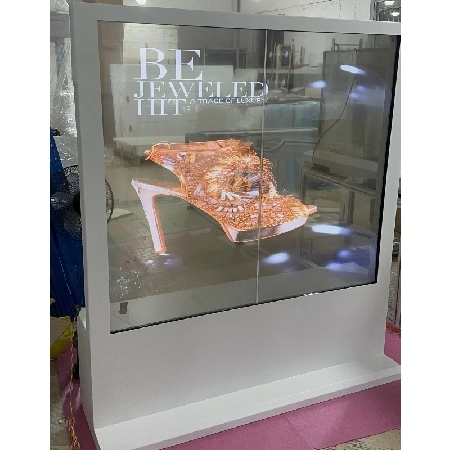
Market Trends and Future Outlook for Spliced Transparent OLED Screens
More advanced, custom-integrated options are becoming more popular in the market for large-format screens. To make AR experiences that feel more real, leaders in the field are working to raise the openness rate, which for our units is currently at 45%. Making "Smart Cabinets" where the screen is more than just a screen is becoming more popular. This works with our T55OB model, which has a 1920x1080P resolution that makes high-end product displays clear and sharp.
In the future, we expect lead times to be faster and mounting systems to be easier to customize. As project-based purchasing becomes more common, the main thing that will set B2B buyers apart is their ability to customize sizes and software platforms. As a leader in this transition, Topview is dedicated to giving our customers the technical support they need to push the limits of where these Transparent OLED Displays can be used, whether it's in smart cities, control rooms, or high-end stores.
Best Practices for Procurement and Installation of Spliced Transparent OLED Screens
When buying display technology for big projects, it's important to find suppliers that will be stable over the long term, with a 55″ Transparent OLED Display Cabinet. When looking for partners, give more weight to those who can do good research and development and offer factory-direct help. The main hub for these complicated operations is our 2,000-square-meter building in Shenzhen. We make sure that every unit goes through strict quality control because we have been doing this for 13 years. This includes tests for color consistency and temperature stability, which are very important for businesses that are open 24 hours a day, seven days a week.
We suggest that early-stage meetings with shelter needs should be held by project managers. We have our own housing workshop, so we can handle complicated 3D structure plans and make sure that the finished kiosk or wall mount fits the venue's architectural needs. Detailed paperwork and training for your integration team will also help make sure that these high-tech Transparent OLED Displays are installed correctly, building a strong relationship that will support your project from the beginning of the planning process to the end of the installation.
Conclusion
Splicing clear screens together is a technical job that needs accuracy, good hardware, and skilled integration. You can make sure your project has the best visual effect possible by using high-performance parts like our T55OB line, which has a 150,000:1 contrast ratio and 45% transparency. At Topview, we put the success of your project first by providing reliable, high-quality production and full expert support for Transparent OLED Displays. For your unique business setting, we are ready to help you create the best display solution. Contact our team for more technical help or to get a quote on a job. This will help you get started on the path to a smooth, high-performance display installation.
FAQ
Q1: How long do these displays typically last?
These screens are designed to work in professional business settings. If you make sure they have enough air flow and power, they should be able to last for a long time. In normal indoor settings, they should keep working well and stay bright for thousands of hours.
Q2: Can the brightness be synchronized across multiple panels?
Yes, our skilled control program takes care of synchronization. We make sure that all the units in an array are set to match the 600nits brightness, so there is no difference in how the screens look.
Q3: Is the touch function reactive to thick glass overlays?
The toughened high-transparency glass that comes with our capacitive touch options works best with it. They allow high-sensitivity, multi-point contact that works even when they are built into custom cabinets or containers.
Q4: Can the cabinet design be fully customized?
Of course. We are experts at building custom homes. Our R&D team can make the outside of the product exactly what your project needs, from custom mounting frames to 3D booth designs that are built in.
Partner with Topview for Superior Outdoor Display Solutions
Are you ready to take your project to the next level with Transparent OLED Displays for sale? Topview can make high-performance options that are unique to your architectural and technology needs. Our expert team helps with everything, from factory-direct production to fitting instructions. Email us at market@tviewdisplay.com to talk about what you need. Get in touch with Topview right away to get an edge in your market and make sure that your next large-scale display installation meets the highest quality standards.
References
1. Advanced Display Technology in Modern Retail Environments
2. Principles of Self-Emissive Display Integration and Structural Alignment
3. Comparative Analysis of OLED vs. LCD in Commercial Signage
4. Industrial Standards for High-Transparency Display Calibration
5. Trends in Large-Format Digital Signage for Smart Infrastructure
6. Best Practices for Professional AV System Procurement and Installation
YOU MAY LIKE
 VIEW MOREFloor Stand Self-Service Touch Kiosk
 VIEW MORESolar Panel Outdoor Digital Signage
 VIEW MOREStainless Steel Freestanding Water Drinking Fountain
 VIEW MORESolar Integrated table and chair
 VIEW MOREDesktop landscape Interactive 3D HoloBox
 VIEW MOREWifi Rotate Screen Lcd Totem Signage
 VIEW MORESelf Service payment Kiosk
 VIEW MOREFoldable LCD Digital Signage Player