



What is an OLED Transparent Touch Display Splicing Screen?
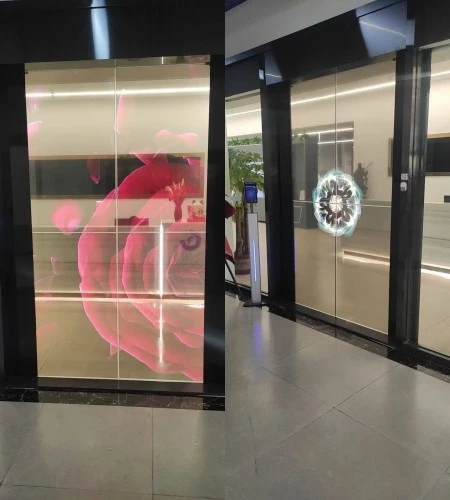
OLED Transparent Touch Display Splicing Screens combine organic light-emitting diodes' self-emissivity with interactive touch and innovative panel splicing techniques to revolutionize commercial display technology. Unlike backlit displays, Transparent OLED Displays transmit light via organic molecules, producing 38%–45% transparency while displaying rich digital information. Multiple panels can be spliced together to create giant video walls for retail stores, museums, and control centres. This invention removes the bulky "black box" look of standard displays, letting natural light and items behind the display be seen even while the screen is on.

Understanding OLED Transparent Touch Display Splicing Screens
How OLED Technology Achieves Transparency and Touch Integration
OLED screens are transparent because of their self-luminous organic ingredients. When electrical current travels through ultra-thin organic layers on transparent substrates, pixels generate light without a backlight or liquid crystal layer. This design keeps transparency while reducing thickness to 5mm. Capacitive touch sensors—usually GFF (Glass-Film-Film) or projected capacitive—enable interactive functionality without losing optical clarity. Retail kiosks and exposition displays may use our T55OL series' unique LG transparent OLED screens and 10-point capacitive touch technologies for multi-user interaction. Pixels independently govern light emission; black or inactive pixels are visible.
The Role of Advanced Splicing Methods in Multi-Screen Displays
Splicing creates large-format installations from panels. Professional clear OLED transparent splicing screen minimizes seam visible discontinuities with ultra-narrow bezels (typically less than 2mm) and precise alignment techniques. This strategy is vital for procurement managers managing large display surfaces like airport information walls or shopping centre advertising installations, where continuous content flow boosts viewer engagement. Modular splicing allows purchasers to scale from 2x2 to 3x3 or bigger arrays as project needs rise. Modern splicing controllers synchronize material over several screens, providing 4K (3840x2160) resolutions and colour consistency. Local vendors sometimes lack customized possibilities, but this flexibility solves that.
Key Distinctions Between Transparent OLEDs and Traditional Display Technologies
Transparent OLED displays outperform LCD and LED screens in numerous B2B procurement-relevant dimensions. Traditional transparent LCDs have bulky backlight modules that decrease transparency to below 15%, while transparent OLEDs reach 43%-45% light transmission with ultra-slim form factors. Dynamic advertising material in high-traffic retail areas requires response times < 1ms to eliminate motion blur. Advertising firms and media groups want better colours and more brightness from 108% NTSC panels. OLED panels are visible in well-lit rooms, unlike projection-based transparent systems, which drown out ambient light. These technical benefits decrease installation complexity and energy consumption, lowering the total cost of ownership and meeting procurement directors' cost-performance ratio priorities.

Core Benefits and Use Cases of Transparent OLED Touch Display Splicing Screens
Superior Image Quality and Space-Saving Design Through Splicing
Transparent OLED splicing displays improve brand impression and consumer interaction with stunning visuals. Self-emissive nature creates "augmented reality" without wearing electronics with limitless contrast ratios and translucent genuine blacks. This is essential for premium retail displays that balance product visibility behind the screen with digital narrative. Advertising and media companies want precise brand colour reproduction, which the 108% broad colour gamut provides. Multiple panels on video walls enhance display real estate while keeping architectural openness—a 3x3 layout of 55-inch panels offers a robust 165-inch diagonal display surface with minimum depth. AV system integrators enjoy the engineering efficiency; the 5mm panel thickness enables installation in glass barriers and storefront windows when space limits signage alternatives.
Diverse Industry Applications Demonstrating Versatility
Transparent OLED touch splicing displays thrive in several business settings that match our target consumer profiles:
- Fashion stores display items in transparent OLED windows with pricing, advertising movies, and interactive product catalogues. Without covering the item, customers use the 10-point touch interface to browse inventory. Dual-layer merchandising boosts foot traffic conversions while retaining shop aesthetics.
- Museums & Exhibition Halls: Transparent OLED displays overlay artifacts and exhibitions with contextual information. Visitors touch the screen to explore multimedia, historical timelines, and 3D reconstructions while still seeing the original items. The 4mm protective tempered glass addresses long-term dependability problems in high-traffic public settings.
- Transportation Hubs and Control Centres: Airports and metro stations use transparent OLED video walls for ticketing and passenger information. The device shows airline schedules and navigation maps without obscuring sunlight. Spliced transparent screens provide real-time data streams and allow control room personnel to see neighbouring operating spaces.
- Corporate Reception and Conference Centres: Reception desks and conference room dividers with transparent OLED touch panels. Receptionists use touch interfaces to communicate with visitor management systems while viewing lobby spaces. Annotating presentations on huge transparent walls combines digital cooperation with spatial openness.
These examples illustrate how transparent OLED splicing meets global corporate procurement managers' operational objectives for customer experience enhancement and architectural integrity.
Real-World Performance and Reliability Considerations
Continuous dependability and technical support are important to B2B transparent OLED splicing screen purchasers. Commercial panels last over 50,000 hours before luminance drops to 50% of initial brightness and offer 18/7 or 24/7 operation. This durability parameter is crucial for EPC contractors operating government digital signs projects with limited maintenance access. Tempered glass with 7H+ hardness prevents scratches and impacts in public spaces, lowering warranty claims. Our engineers give detailed technical documentation on power consumption profiles (150-250W per 55-inch screen), thermal management, and third-party control system integration. Regional distributors appreciate the steady supply chain and high quality throughout production batches, guaranteeing visual homogeneity across multi-phase installations for repeat orders. Remote diagnostics and on-site technical help solve buyer worries about post-shipment service gaps.
Technical Specifications and Installation Guidance
Critical Metrics for Informed Procurement Decisions
To evaluate transparent OLED splicing screens, you must grasp technological aspects that affect project feasibility and cost:
- Resolution and Pixel Density: Our 55-inch T55OL panels have 1920x1080 Full HD resolution, which is suitable for showing product details and text at 1-3 meters. To guarantee content management system compatibility, 4K buyers should specify bespoke settings before procurement.
- The 43%-45% transparency grade indicates light transmission when showing dark or inactive material. This criterion is crucial for retail applications where interior merchandise visibility influences sales. In shopping mall atriums and exhibition areas, 178 degrees horizontal and vertical viewing angles provide content legibility from numerous approach vectors.
- Power Consumption and Thermal Management: Large spliced arrays require a controllable electrical infrastructure because each panel consumes 150W. Efficient thermal design removes active cooling fans in climate-controlled areas, minimizing noise and maintenance. Based on average U.S. power rates, procurement managers planning operating expenses should estimate $0.12-0.18 per panel per day.
- For interactive public projects, the 4mm tempered glass layer resists scratches. IP40 ingress protection ratings make panels suitable for indoor use but require housing for semi-outdoor or high-humidity settings. System integrators contemplating airport or stadium installations should contact engineering teams regarding customizable environments.
Technical directors can evaluate compliance with current infrastructure and project-specific needs using these criteria, simplifying procurement review.
Practical Installation Roadmap and System Integration
Clear OLED splicing installations need careful planning and coordination between procurement, technical, and installation teams. Site studies assess structural support capabilities, electrical service availability, and ambient illumination. Mounting mechanisms must suit the panel's lightweight shape and provide accurate alignment—deviations over 0.5mm cause obvious seams that break visual continuity. Architectural integration is supported by our technical support team's AutoCAD designs and load calculations.
Integrators of AV systems must consider content management solutions. To meet different control infrastructures, our T55OL series includes plug-and-play, Android, Windows PC, and monitor combinations. AV control platform buyers using Crestron, Extron, or similar platforms should check protocol compatibility during purchase. USB-connected capacitive touch interface supports standard HID drivers for simple interaction with interactive software. Remote content updates and diagnostics reduce on-site service visits with network connectivity.
Maintenance Best Practices and Warranty Considerations
In specific environmental conditions, transparent OLED screens require minimal routine maintenance. The protective glass should be cleaned quarterly with non-abrasive microfiber cloths and pH-neutral chemicals, not ammonia, which can harm anti-reflective coatings. Our after-sales engineers usually remotely calibrate touch sensors yearly or when alignment drifts.
Panel problems, touch sensor failures, and component malfunctions are covered for 24-36 months, depending on contract conditions. Extended warranties safeguard mission-critical installations like control room video walls and government information screens. International standards (ISO 9241-307) set commercial display defect levels; buyers should confirm warranty conditions for pixel fault tolerances. Built-in diagnostics detect deterioration patterns early, enabling preventative maintenance before noticeable concerns appear. This method reduces downtime and maintains the display investment during its lifespan, supporting procurement managers' long-term supplier partnership goals.
Future Trends and Innovation in Transparent OLED Touch Display Technology
Emerging Advancements in Transparency and Resolution
Transparent OLEDs are becoming more transparent and have better pixel density. Research aims to attain 70%–80% transparency using refined organic materials and enhanced electrode designs, similar to glass. Automotive windshields, architectural glass, and safety walls with low transparency will benefit from such advances. Prototype 8K transparent OLED panels (7680x4320) provide ultra-fine detail reproduction for medical imaging displays and high-end retail contexts. These advances will force procurement teams to evaluate technology refresh cycles and upgrade channels when choosing vendors for multi-year deployments.
AI-Driven Interactive Features and Smart Integration
Transparent OLED displays become sophisticated interaction platforms with artificial intelligence. Display controllers using computer vision systems can determine audience demographics, attention patterns, and gesture commands without touch. Retailers may optimize engagement and conversion by dynamically adjusting content depending on audience attributes. Information kiosks and reception systems with voice recognition and a clear Transparent OLED Touch Screen are easy to use and require little training. Transparent OLED panels can detect ambient light and alter content brightness automatically to maximize visibility and save energy usage in smart buildings. System integrators and AV solution providers should assess vendors' AI feature compatibility and software development kit roadmaps for platform longevity.
Market Growth Dynamics and B2B Procurement Strategy
Due to retail digitization and smart infrastructure expenditures, experts expect the transparent display market to increase over 30% annually through 2028. This development pattern suggests supplier competition may lower transparent OLED technology cost premiums. Procurement managers can use this market development to negotiate bulk purchase agreements and preferred vendor partnerships for pricing stability and priority allocation during capacity limitations. Large supply cycles from Asian manufacturers will be alleviated by regional distribution network growth, improving lead time dependability and after-sales service accessibility.
B2B buyers should prioritize supplier partnerships above transactional buying. Long-term agreements with yearly volume objectives sometimes offer preferential pricing, engineering assistance, and co-development for bespoke solutions. Distributors joining the transparent OLED industry should negotiate flexible minimum order quantities and private labelling to establish brands and optimize margins. Suppliers who provide compliance certifications, technical specifications, and installation instructions help EPC contractors prepare bidding responses for federal and municipal projects. Strategic partnerships with manufacturers who lead in technology, production scalability, and customer success are rewarded in the transparent OLED landscape.

Conclusion
For business spaces that need digital content and physical visibility, transparent OLED touch display splicing panels are revolutionary. The combination of self-emissive display technology, multi-touch interactivity, and seamless splicing meets important retail, transit, corporate, and cultural objectives. B2B procurement teams assessing these systems should select providers with original manufacturer panels, extensive technical support, and proven project delivery. Understanding transparency rates, resolution, power consumption, and durability characteristics helps compare systems and meet project requirements. Strategic supplier alliances are vital for customers seeking long-term value and competitive advantage in the transparent OLED industry, which is improving performance and accessibility.
FAQ
Q1: What transparency levels can transparent OLED splicing screens achieve?
Commercial transparent OLED panels currently achieve 38%-45% light transmittance, with premium models reaching the upper end of this range. Our T55OL series delivers 43% transparency, allowing clear views of objects and environments behind the display while presenting vibrant digital content. This performance significantly exceeds traditional transparent LCD technology, which typically achieves only 10%-15% transparency due to backlight and polarizer requirements.
Q2: How does splicing affect the visual continuity of transparent OLED displays?
Professional splicing systems minimize visual interruptions through ultra-narrow bezels (less than 2mm) and precision alignment mechanisms. While seams remain technically visible upon close inspection, proper content design and viewer distances of 1.5 meters or greater create the perception of continuous display surfaces. The splicing controllers synchronize content across panels, maintaining colour uniformity and timing alignment essential for video wall applications.
Q3: What is the expected lifespan of transparent OLED touch displays in commercial environments?
Transparent OLED panels rated for commercial use typically deliver 50,000+ hours of operation before luminance degrades to 50% of initial brightness. Operating at 18/7 schedules, this translates to approximately 6-7 years of service life. Panels incorporating protective tempered glass and proper thermal management extend operational longevity and reduce maintenance frequency, supporting total cost of ownership objectives for long-term deployments.
Partner with a Trusted, Transparent OLED Displays Manufacturer
Topview Technology has specialized in commercial display solutions for over 13 years, operating from our 2,000-square-meter facility in Shenzhen, equipped with three modern production lines and a team of 20+ senior engineers. As an experienced transparent OLED displays supplier, we provide OEM and ODM customization without minimum order quantity restrictions, enabling project-specific configurations that address your unique requirements. Our T55OL transparent OLED touch splicing screens utilize original LG panels with 43% transparency, 10-point capacitive touch, and protective tempered glass—combining cutting-edge technology with proven reliability. We support global procurement teams with comprehensive technical documentation, international certifications, and dedicated after-sales service delivered by our professional engineering staff. Contact us at market@tviewdisplay.com to discuss your transparent OLED project requirements and discover how our manufacturing expertise and customer-focused approach can deliver the competitive advantages your business demands.
References
1. Chen, J., & Liu, H. (2023). Transparent OLED Display Technology: Principles and Commercial Applications. Display Engineering Press.
2. International Display Standards Committee. (2024). Commercial Transparent Display Specifications and Testing Protocols. Technical Report Series 2024-03.
3. Nakamura, T., Yoshida, K., & Park, S. (2023). Advances in Self-Emissive Transparent Display Technologies for Retail Environments. Journal of Display Technology, 19(4), 287-301.
4. Rodriguez, M., & Thompson, A. (2024). Total Cost of Ownership Analysis for Transparent Display Systems in Commercial Infrastructure. Building Technology Publishing.
5. Wang, L., Zhang, Q., & Kim, D. (2023). Touch Integration Methods for Transparent OLED Panels: Performance and Durability Considerations. International Journal of Human-Computer Interaction, 39(8), 1654-1668.
6. Wilson, R. (2024). The Commercial Transparent Display Market: Technology Trends and Procurement Strategies 2024-2028. Global Display Industry Research Institute.
YOU MAY LIKE
 VIEW MOREFree Design Good Quality Solar Bus Shelter
 VIEW MORESolar Integrated table and chair
 VIEW MORENewspaper Rack Indoor Advertising Digital Signage
 VIEW MOREInteractive touch tables
 VIEW MOREUltra Slim Double-sided Floorstand Kiosk
 VIEW MOREInteractive K-type Interactive Touch Kiosk
 VIEW MOREWall-Mounted Outdoor Displays
 VIEW MORESlim outdoor digital totem