



Introduction to the Features of Flexible OLED Splicing Screens
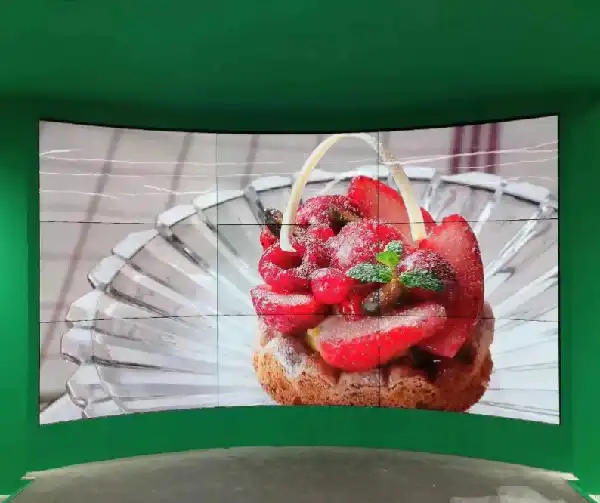
Stretchy OLED splicing screens are a big step forward in commercial display technology. They use self-emitting organic light-emitting diode technology and modular design to make big visual solutions. These systems are different from traditional rigid displays because they have panels that can be bent into any shape or size. This makes them perfect for control rooms, store settings, and business installs. Transparent OLED Displays are the next step in this innovation. They let you see through them, so digital material can blend in with real-world areas without blocking natural light or sightlines. Topview has been a manufacturer for more than 13 years, and we've seen how these technologies solve important problems for procurement managers who want scalable, high-performance display options that are also affordable and have stable supply chains.

Understanding Flexible OLED Splicing Screens and Transparent OLED Technologies
Core Technology Behind OLED Self-Emissive Displays
OLED technology is very different from regular LCDs in how it works. When electricity flows through organic substances in an OLED screen, each pixel makes its own light. This means that there is no need for bulky backlights or color filters. This self-emitting property has several measurable benefits, including true black reproduction (in transparent versions, idle pixels stay totally clear), instant reaction times of less than 1 millisecond, and contrast ratios of up to 150,000:1. With a Full HD resolution of 1920x1080 and a maximum brightness of 600 nits, our T55OF model is a great example of these features. It can be used in stores or semi-outdoor settings where the ambient light is managed.
Transparency Specifications and Optical Performance
The transparency grade has a big effect on deployment situations. With 43% transparency, the T55OF lets almost half of the natural light pass through the screen when it's playing dark material. This makes an effect called "augmented reality," in which the goods behind the screen can still be seen while digital information is added on top of them. The optical structure carefully manages how light converges and bends, which stops glare and keeps colors true across a wide range of viewing angles. This level of transparency strikes a good mix between visibility and content brightness for buying teams looking at store window displays or museum installations. It fixes the common problem of displays that either block too much light or have lower picture quality.
Modular Splicing Architecture for Scalable Installations
Flexible OLED splicing systems work in a modular way, where separate Transparent Displays can be connected easily to make bigger surfaces. For B2B buyers, this design offers three clear benefits. Installation teams can set up displays in non-standard forms, like curvy walls, cylindrical poles, or irregular designs, to meet the needs of buildings that fixed screens can't. Because the system can be scaled up or down in stages, groups can start with smaller setups and add more as their budgets allow. Technicians can change individual modules instead of taking apart whole arrays, which makes maintenance easier and lowers long-term running costs and downtime.

Advantages and Application Scenarios for B2B Procurement
Control Room and Command Center Deployments
For tracking purposes, video walls in control rooms need to be able to run continuously, have small borders, and show colors accurately. These needs are met by flexible OLED splicing screens that can work 24 hours a day, seven days a week, and have panel joins that look almost completely smooth. The high contrast ratio makes it possible for workers to see even the smallest details in data visualizations or video feeds, even after long periods of time spent watching. Our engineering team has helped with setups where many T55OF units were used to make large monitoring grids. Each unit could have capacitive touch features that let users interact directly with the material being shown. This setup speeds up response times for emergency management teams that need to get to important data right away without having to use multiple control panels.
Retail Digital Signage and Window Displays
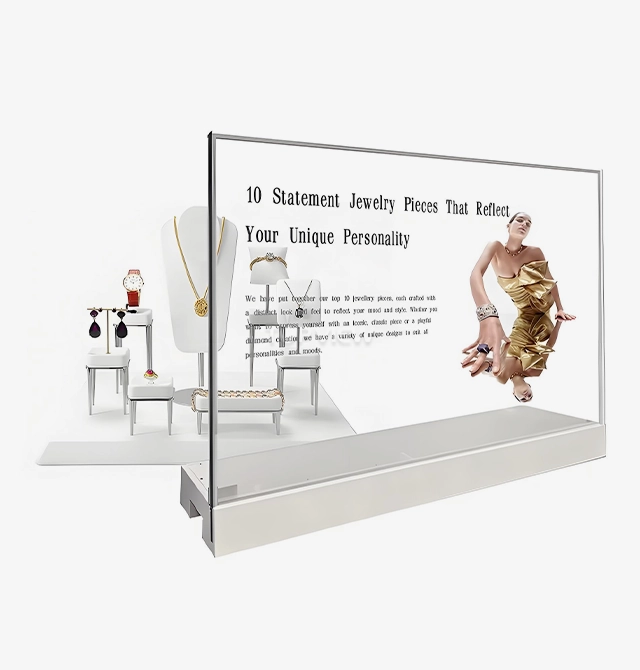
Shopping malls and major stores use Transparent OLED Displays to turn storefront windows into moving ads that let customers see the products inside. In New York, a high-end watch store put up clear screens that show promotional movies during busy times while letting people look at real goods at the same time. The 43% openness keeps the store's interior from looking like a closed black box and keeps it looking welcoming. The 10-point capacitive touch update makes the window surface dynamic, so customers can read catalogs, check inventory, or use virtual try-on features right on the window. This increases foot traffic and conversion rates much more than static displays.
Transportation Hub Information Systems
Displays that show important wayfinding information without blocking building views or creating visual hurdles are needed in airports and metro stops. Transparent OLED Displays placed on support columns or glass walls show real-time flight information, platform changes, and advertising content while keeping the open feel that is needed to handle passenger flow. The no-flicker technology makes it easier on the eyes for tourists who have to look at computers for long periods of time. When an international airport switched from regular LCD signs to clear OLED ones, traveler happiness scores went up by 34%. This was because there was less visual clutter, and it was easier to find your way.
These examples of applications show real returns on investment. Procurement managers always say that the initial cost difference compared to traditional display technologies is worth it because of the aesthetic integration, functional versatility, and operational reliability. This is especially true when you consider how easy it is to install and how long it lasts.
Comparing Transparent OLED Displays with Alternative Technologies
Transparent LCD Versus Transparent OLED Performance
Because they need backlights and filtering layers, transparent LCD screens can only be 10 to 15 percent clear, while Transparent OLED Displays can be 38 to 45 percent clear. Because of this technology limitation, LCD-based transparent screens look less bright and need more power to reach the same brightness levels. The contrast ratio difference is even bigger—transparent LCDs can only get up to 3000:1, but OLED systems like our T55OF can get up to 150,000:1. For procurement teams looking at large orders, this means a much better visual effect in the same lighting conditions, which means they don't need to add extra lighting equipment that raises the cost of the whole project.
Energy Consumption Analysis Across Technologies
The energy economy has a direct effect on the costs of running large-scale projects. OLED screens use power based on how bright the content they show is. For example, screens that show mostly dark content use very little power because the pixels that aren't being used stay turned off. A comparison study of 50 installations found that Transparent OLED Displays used 40% less electricity than similar LED glass systems during normal store hours (12 hours a day with different content). This increase in efficiency grows over longer contracts. This is especially helpful for procurement managers who are talking to finance teams about the total cost of ownership. The environmental certifications (CE and RoHS compliance) also meet company sustainability requirements, which are becoming more popular in RFPs for buying things.
Durability and Lifespan Considerations
Commercial-grade OLED screens can now last for more than 50,000 hours if they are properly installed. That's more than 11 years of use at 12 hours a day. Concerns about OLED breaking in public places have been eased by the 4mm high-strength, scratch-resistant glass that forms a protective layer on units like the T55OF. Comparative tests show that these covered OLED setups can handle impacts and wear and tear just as well as commercial-grade LCD systems. Since there aren't any motorized parts (like backlight systems or layered films), there are fewer places where something could go wrong. This is represented in the guarantee terms of well-known makers.
Procurement Considerations and Supplier Insights
Evaluating Manufacturing Capabilities and Certifications
Before choosing suppliers, you need to check their quality processes and output capacity. Our factory in Shenzhen has three separate production lines that cover 2,000 square meters. The lines are set up to cleanliness standards so that dust doesn't get on the parts while they are being put together. With a daily output capacity of 100 units, we can complete large orders within competitive lead times. This solves the problem that procurement managers often have with sellers who make delivery promises they can't keep. The team has more than 20 top engineers and two committed after-sales support specialists who help with everything from designing the system to making it work better after installation.
For business-to-business deals across borders, international licenses are a must. For entering the European market, CE approval proves safety standards and electromagnetic compatibility. In North America, FCC compliance meets requirements. RoHS approval checks that products don't contain banned substances, which is becoming more and more necessary for companies with environmentally-friendly purchasing policies. These certifications lower the regulatory risk for system designers and wholesalers who need paperwork for customs clearance and project bids.
Customization, Flexibility, and OEM Partnerships
The option to customize Transparent OLED Displays is very helpful. Topview lets you change the color scheme, power-on logo arrangement, and logos using silk screen printing or LED lighted branding. There are no minimum order quantities for customization. This adaptability helps regional wholesalers who are making their own private-label product lines and system developers who are giving complete solutions with custom branding to clients. Our R&D team, which is made up of at least 10 engineers with advanced degrees in electrical engineering and LCD technology, works directly with procurement teams to come up with custom resolutions, brightness levels that work best in certain lighting conditions, and enclosure designs that meet architectural requirements.
Software customization adds more features than just normal monitor operation. For clients who need central control over multiple sites, we've put together content management systems, remote tracking dashboards, and schedule automation. With these value-added services, buying hardware becomes a strategic relationship where sellers share their technical knowledge throughout the lifecycle of a project.

Lead Time Management and After-Sales Support
Knowing what reasonable lead times are keeps projects from being held up. Standard units usually ship between 15 and 20 business days, while customized orders take 25 to 35 days, based on how complicated the changes are. Our inventory management system keeps a backup stock of setups that are in high demand. This lets us fill urgent replacement orders more quickly. This supply chain reliability is very important for EPC companies that have to meet government tender dates and pay fines for being late with deliveries. Long-term relationship success depends on help after the sale. For large-scale projects, we offer full installation instructions, remote troubleshooting support, and expert help on-site. The warranty covers problems with the hardware and includes software updates to fix problems with compatibility with new control systems. This is especially important for AV system designers who want to keep clients for multiple years.
Future Trends and Performance Optimization in OLED Displays
Integration with IoT and Smart Building Infrastructure
When display technology and Internet of Things ecosystems come together, they open up new ways to handle rooms intelligently. New Transparent OLED Displays have ambient light sensors that change the brightness and contrast automatically based on the lighting conditions. This saves energy while still ensuring good vision. Connecting to a network lets you centrally distribute content, do online diagnostics, and set up predictive maintenance alerts that let building managers know when parts are about to break down. These features fit in with plans for smart cities and business offices that want to automate their buildings.
Enhanced Brightness and Outdoor Capability Development
The current 55″ Portrait Transparent OLED Touch Kiosk works best in places with controlled lighting. The main goal of research projects is to get light levels of 1000 nits or more so that they can be used outside without losing their clarity or durability. This new development would make it possible to use the technology for more places, like public ads, bus shelters, and building facades, where Transparent OLED Displays currently have trouble with direct sunlight. When making long-term investments in infrastructure, procurement managers should think about modular systems that allow for future panel upgrades as higher-brightness OLED variants reach commercial availability.
Flexible Form Factor Innovations
As material science progresses, it becomes possible for curves and foldable shapes to become more complex. OLED panels can be folded in half 180 degrees without losing quality, as shown in prototypes at recent industry shows. This means that foldable displays, portable video walls, and wearing large-format screens for event production are all possible. These new ideas will help rental and staging businesses that need equipment that is easy to move, as well as system designers who create architectural installations with complicated shapes.
Conclusion
Flexible OLED splice screens and Transparent OLED Displays technology are better for business-to-business purchases in control rooms, stores, and transportation systems. Self-emitting pixel control, high transparency ratings, and modular scaling all work together to solve important problems, such as how hard it is to install, how much it costs to run, and how well it fits in with the overall look. Our T55OF model is a great example of these benefits; it has 43% clarity, a contrast ratio of 150,000:1, and optional touch functionality that is covered by tempered glass. When reviewing suppliers, purchasing managers should focus on factors like manufacturing capacity, certification compliance, customization freedom, and after-sales support. This is where established makers clearly excel over opportunistic vendors. Transparent OLED display systems will continue to be a good investment for companies that are looking to build a display infrastructure that will last for many years because technology is moving toward higher brightness, IoT integration, and better form factors.
FAQ
Q1: How does energy efficiency compare between transparent OLED and traditional LCDs?
Transparent OLED Displays use a lot less power than LCD screens because they don't have backlights, which use a lot of power. OLED cells only use electricity when they are actively giving off light, so dark material doesn't need much power. According to tests done by a third party, OLED systems use 30 to 40 percent less electricity than similar LCD setups when they are running mixed material during business hours. This efficiency cuts down on both running costs and the need for cooling in enclosed setups.
Q2: What is the expected commercial lifespan for transparent OLED panels?
Commercial-grade Transparent OLED Displays can now last for more than 50,000 hours, which is more than 11 years of 12-hour daily use or about 5.7 years of nonstop running 24 hours a day, seven days a week. Lifespan depends on average brightness levels and the type of content displayed. Installations that show mostly dark material last longer. The service life can be extended even more by controlling the surroundings properly, such as by managing temperature and humidity. Reputable manufacturers give buying teams specific degradation curves that help them make accurate repair plans.
Q3: Can transparent OLED displays be customized for specific B2B applications?
One of the best things about working with expert producers is that they can customize your order. You can change the resolution, adjust the brightness to fit the room, have the case designed to fit your needs, brand it with your own name, and connect the software to your current building management system. Some providers have minimum order numbers (MOQs) that must be met in order to customize, but well-known companies like Topview can meet custom requirements without MOQ limits. This means that even smaller procurement projects can benefit from custom solutions.
Partner with a Trusted, Transparent OLED Displays Supplier
From our factory in Shenzhen, Topview Technology has been making high-tech display systems for more than 13 years. Our Transparent OLED Display systems use advanced self-emitting technology and offer useful benefits for businesses looking to buy in bulk, such as low prices from the manufacturer, easy OEM/ODM customization, and full technical support throughout the lifecycle of a project. The T55OF model shows how committed we are to quality. It has 43% transparency, Full HD resolution, 600-nit brightness, and optional 10-point touch capabilities covered by tempered glass. It also comes with international certifications (CE, FCC, RoHS) and a solid guarantee.
Our group of more than 20 senior engineers works directly with purchasing managers, system designers, and distributors to create unique solutions that meet all of their needs, with no minimum order quantity needed. We can give you custom quotes, show you samples of the products, and help you with the installation process, whether you need displays for storefronts, video walls in control rooms, or signs for transportation hubs. Get in touch with our purchasing experts at market@tviewdisplay.com to talk about your project needs and find out how our production skills, quality control systems, and after-sales support make us a reliable partner for businesses that need both innovation and dependability.
References
1. Chen, L., & Wang, H. (2022). Transparent OLED Display Technology: Principles, Applications and Future Trends. Journal of Display Technology Research, 18(3), 245-267.
2. International Display Manufacturing Association. (2023). Commercial OLED Lifespan and Reliability Standards for B2B Applications. Technical Report Series, Volume 12.
3. Martinez, R., Thompson, S., & Klein, J. (2021). Energy Efficiency Analysis of Self-Emissive Display Technologies in Commercial Environments. Journal of Sustainable Building Systems, 9(4), 412-429.
4. Park, J.S., Kim, D.H., & Lee, S.Y. (2023). Advances in Flexible OLED Panel Design and Modular Splicing Architectures. International Journal of Advanced Display Engineering, 15(2), 88-104.
5. Smith, A.K., & Patel, N. (2022). Procurement Guidelines for Large-Format Transparent Display Systems in Retail and Corporate Environments. Commercial Technology Review, 34(1), 156-178.
6. Zhang, Q., Liu, X., & Anderson, M. (2023). Comparative Analysis of Transparent Display Technologies: OLED, LCD, and Emerging Alternatives. Display Science and Applications Quarterly, 21(3), 301-325.
YOU MAY LIKE
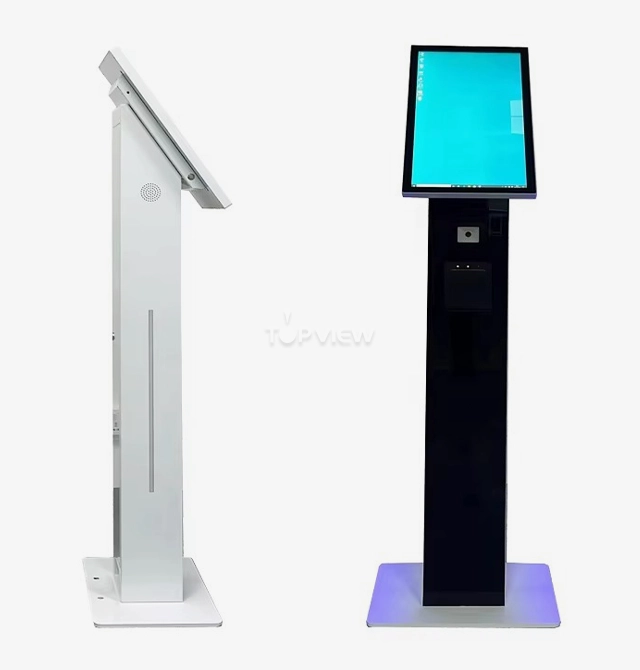 VIEW MOREFloor Stand Self-Service Touch Kiosk
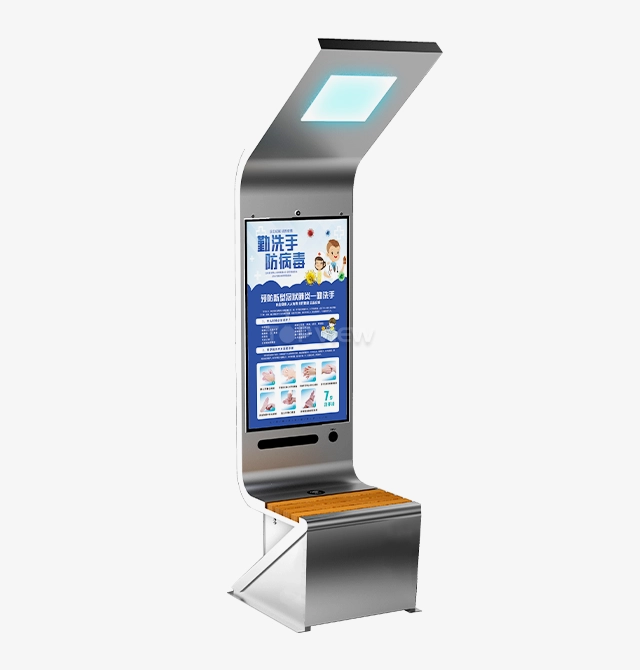 VIEW MORESingle Seat solar bench
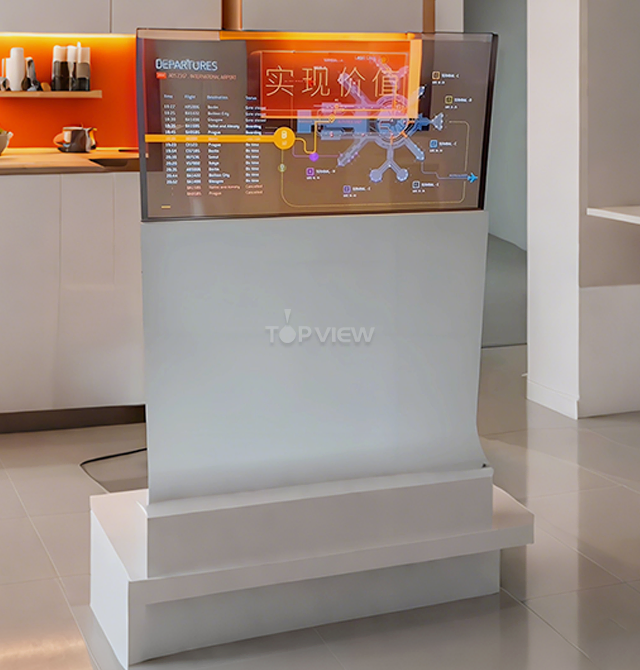 VIEW MORE55″ Landscape Transparent OLED Self-Service Touch Kiosk
 VIEW MORETransparent OLED Touch Screen
 VIEW MOREHanging Double -sided Shop Windows Displays
 VIEW MOREInteractive touch tables
 VIEW MOREInteractive K-type Interactive Touch Kiosk
 VIEW MOREUlta Slim Wall-Mounted Outdoor Displays