



What are the core technical features of outdoor advertising displays?
Outdoor advertising displays have become vital communication tools for shopping malls, transportation hubs, stadiums, and public spaces worldwide. The core technical features center on robust environmental protection, optical clarity under direct sunlight, and reliable thermal management systems. Air-Conditioner Outdoor Digital Signage, in particular, addresses extreme temperature challenges through integrated cooling mechanisms that maintain stable internal climates, preventing component failure and screen blackening caused by solar overheating. These displays also incorporate IP65/IP66-rated enclosures, high-brightness panels exceeding 2,500 nits, and industrial-grade power systems designed for continuous 24/7 operation across temperature ranges from -40°C to +55°C.
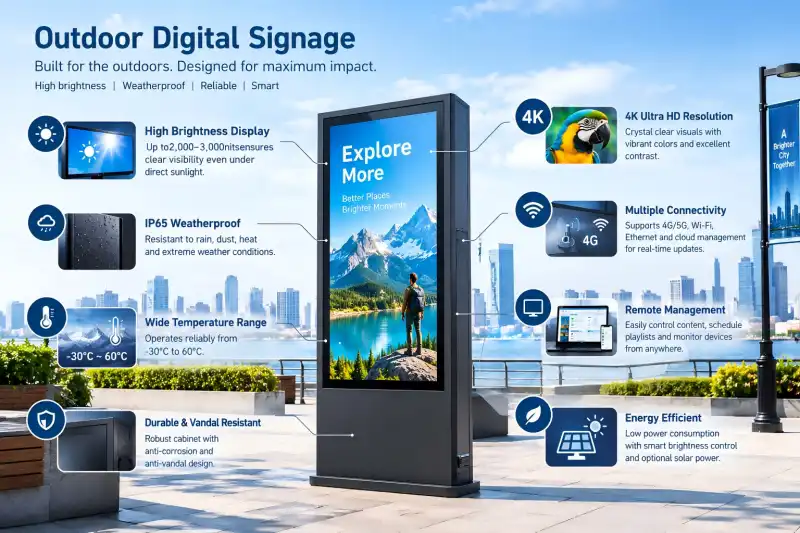
Understanding Outdoor Advertising Displays: Core Technical Overview
Digital signs outside are used in conditions that would destroy consumer-grade screens in just a few weeks. Rain, dust, temperature changes of more than 60°C between day and night, and direct UV rays make the climate hostile and require special engineering solutions.
Environmental Challenges and Protection Standards
In today's world, public displays are required to simultaneously address a number of different dangers. It is possible for circuit boards to corrode and short-circuit if moisture is allowed to enter the system. Additionally, particulate matter has the potential to block ventilation systems and damage optical surfaces. Temperatures that are really high provide the greatest threat. An excessive amount of heat causes the molecules of liquid crystal to lose their ordered structure, which results in the appearance of black spots on the screen that cannot be removed. This phenomenon is referred to as isotropic failure.
In order to protect themselves against these dangers, manufacturers use IP rating systems that are based on the standards established by IEC 60529. The protection it provides against dust and water jets coming from any direction is contingent upon the fact that it has an IP65 classification. If the product has a grade of IP66, it will provide protection against powerful water jets. Typically, galvanized steel or marine-grade aluminum with a powder coating that satisfies the specifications set out by ISO 12944 for corrosion protection in industrial and coastal environments is used for the enclosure. Tempered glass panels, which are typically 6 millimeters thick and contain anti-reflective coatings, are used to protect the screen while ensuring that its brightness is maintained.

The Critical Role of Thermal Management Systems
LCD panels generate a significant amount of heat while they are operating, and the temperature may reach up to 55 degrees Celsius when exposed to the sun. It is possible for temperatures within to rapidly increase beyond 80 degrees Celsius in the absence of active cooling, which may cause damage to lighting LEDs, bend circuit boards, and shatter the liquid crystal layer. Because of this, temperature control is the most significant technological characteristic that differentiates professional outdoor screens from those that are not as good as they might be.
Built-in cooling systems maintain the temperature of the inside of a device within the range of 20 degrees Celsius to 40 degrees Celsius, which is suitable for maintaining the normal functioning of electrical components and LCD panels. There is a clear correlation between the display's longevity and the temperature stability of the display. According to information gathered from major deployment locations, units that are effectively cooled often continue to function for a period of five to seven years, but badly chilled systems fail to function efficiently after 18 to 24 months.
Air-Conditioned Outdoor Digital Signage: Technology and Functionality
Outdoor signs that are air-conditioned use refrigeration technology that is similar to that used in home air conditioners, but it is designed for heavy use in businesses and small integration into display enclosures.
How Integrated Cooling Systems Work
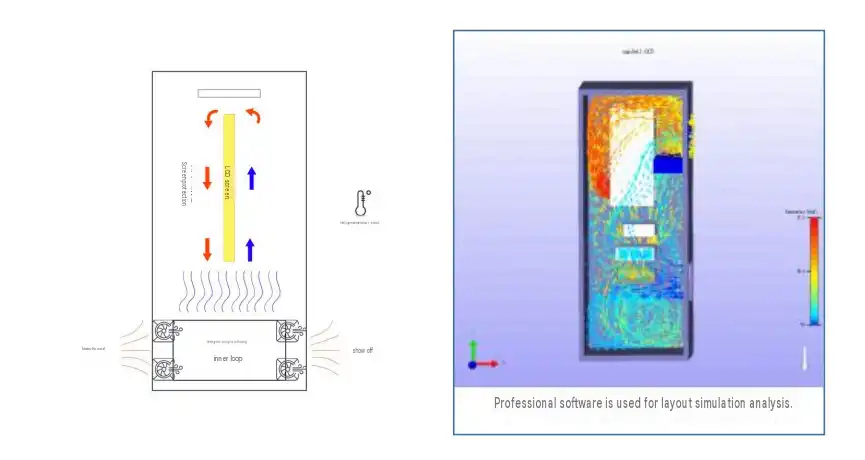
A closed-loop refrigerant channel is at the heart of the cooling system. A compressor raises the pressure of refrigerant gas, which makes it hotter. The hot, high-pressure gas moves through a condenser, which is a heat exchanger on the outside of the enclosure. The air around the condenser absorbs heat, which turns the refrigerant into a liquid. The pressure and temperature of the liquid refrigerant drop very quickly as it goes through an expansion valve. This cold refrigerant goes into an evaporator coil inside the display case and soaks up heat from the LCD panel and other parts inside. The cycle is complete when the refrigerant turns into gas and goes back to the compressor.
Centrifugal fans made for industrial use move air across the evaporator coils and push warm air away from parts that make heat, like the power source and media player. Temperature sensors constantly check the inside of the unit, changing the speed of the compressor and the operation of the fans to maintain the goal temperatures. This smart temperature control stops both too much heating and too much cooling, which can lead to condensation.
Component Design and Operating Parameters
Quality outdoor displays use compressors that are rated to run for 50,000 hours or more and environmentally friendly coolants like R410A or R134A. The evaporator and condenser coils have aluminum fins that don't rust and are coated with hydrophilic materials that help water drain when it's humid outside.
Even when the outside temperature reaches 55°C, the device keeps the temperature inside between 15°C and 35°C. When it's cold outside, heating elements turn on to keep LCD viscosity from rising, which would slow response times and lower image quality. This dual climate control lets it work all year in a variety of temperature zones without having to shut down during the winter or summer.
Weather Protection and Sealed Enclosure Design
Engineers have to work hard to make sure that cooling works well while still being waterproof for an Air-Conditioner Outdoor Digital Signage system. Openings are needed for airflow, but water and dust shouldn't be able to get in. This problem is solved by manufacturers using carefully planned ventilation pathways with labyrinth seals. These pathways direct airflow in a winding way that keeps water drops and particles out while still letting air move. Around access panels and wire entry points, tension seals are made with rubber gaskets and foam weatherstripping.
Comparing Cooling Solutions: Air-Conditioned vs. Non-Air-Conditioned Outdoor Signage
When procurement professionals look at outdoor display choices, they come across three main thermal management methods. Each has its own performance traits and cost effects.
Active Refrigeration Systems
When it comes to controlling temperature, air conditioning systems are the best. They keep indoor temperatures fixed no matter what the outside weather is like. Their main benefit is that they can handle displays with more than 3,000 nits of brightness and dense electronic setups that produce a lot of heat. Other methods fail in harsh conditions like deserts and tropical areas, but these techniques can be used there.
The downsides are higher initial costs (usually 40% to 60% more than passive options) and higher power needs (usually 200 to 400 watts more than passive options). Compressor-based systems also have moving parts that need to be serviced on a regular basis, but good industrial units are very reliable when they are serviced properly.
Heat Pipe and Fan Cooling
Active cooling that doesn't use air conditioning uses heat pipes and forced-air fans. Heat pipes are sealed tubes that contain a working fluid that transfers heat through evaporation and condensation cycles. This method is better for moderate temperatures and setups with limited funds because it uses less power and costs less than refrigerated systems.
When the temperature is high, performance problems become clear. When temperatures outside of heat pipe systems go above 40°C, they have trouble getting rid of enough thermal energy. This causes high temperatures inside the systems, which shortens the life of parts and increase the risk of screen damage. These systems can usually handle lower light levels (1,500 to 2,000 nits) and work best in shady places or warm places.
Passive Cooling and Ventilation
Passive systems don't have any active cooling parts. Instead, they use convection airflow, thermal mass, and heat sinks. Their benefits include not needing to maintain the cooling system, using the least amount of power, and running quietly. Passive cooling, on the other hand, severely limits deployment environments and display specifications.
Installing these screens in a covered area is required; they won't work consistently if the temperature outside is higher than 35°C; and they usually get brightest at 1,200 to 1,500 nits, which is too dim for many uses in direct sunlight. Passive cooling suits covered walkways, building overhangs, and installations that face north, but they don't work in open areas where most outdoor advertising happens.
Procurement Considerations for Air-Conditioned Outdoor Digital Signage
To make sure the project is successful in the long run, people who make decisions about outdoor displays need to compare technology specs to distribution needs and supplier capabilities.
Technical Specifications and Compatibility
Screen size is the first thing that needs to be decided. Topview has a range of products from 32 to 75 inches (T32OLDF to T75OLDF models), so they can be used in a variety of settings and at different viewing distances. Full HD (1920x1080) resolution is normal on the displays, and Ultra HD (3840x2160) resolution is offered for tasks that need to see fine details.
Power needs depend on the screen size and the load on the cooling system. For example, a 32-inch model will need 350 watts of power, while a 75-inch unit with air conditioning will need 800 watts or more. The requirements for the purchase should make sure that the current electrical infrastructure can handle these needs, and they should also take startup surge currents into account.
Connectivity choices for an Air-Conditioner Outdoor Digital Signage system affect how flexibly a system can be integrated. Connecting to Android or Windows is easy thanks to the many interface choices that work with most media player platforms. These include HDMI, DVI, VGA, and USB inputs. Connecting to a network over Ethernet or optional 4G/5G modules lets you handle material and check for problems remotely, which is very important for multi-site deployments.
Supplier Reliability and Manufacturing Capabilities
In addition to product specifications, suppliers are also judged on their ability to make the product and their support infrastructure. Topview has a 2,000-square-meter factory in Shenzhen with three dedicated production lines that can make 100 units every day. This production capacity makes sure that there is a steady supply for both large sales and project-based purchases, without having to wait longer for delivery.
Certifications prove that a product meets quality standards and legal requirements. FCC, RoHS, and CE approvals show that screens meet international safety and environmental standards needed to work legally in most markets. This gets rid of compliance risks that can slow down projects or require expensive upgrades.
Customization, Lead Times, and Warranty
OEM and ODM capabilities let brands be customized by adding logos via silk screen or LED backlit technology, choosing custom housing colors, and making power-on graphics that are just right for those who work with brands. This is very important for distributors and system integrators who work with brands. Topview is unusually flexible in the manufacturing industry because it doesn't have a minimum order quantity for customization projects.
Lead times of 5 to 15 working days allow for flexible project scheduling, and shipping choices such as EXW, FOB, and DDP terms suit a range of logistics needs and Incoterms standards. Telegraphic transfer (TT) is a common way for businesses to pay each other.
The coverage of the warranty has a big effect on the total cost of ownership. Standard warranties cover flaws in the materials and the way they were made for one year. You can extend the warranty to three years if you want to lower your risk. Lifetime technical support makes sure that customers can get help with problems even after the warranty period is over. This solves a common problem where companies leave customers hanging after they buy something
Maintenance and Longevity Tips for Air-Conditioned Outdoor Digital Signage
If you follow the right care steps, your outdoor displays will last as long as they were meant to, or break down before their time. This is why structured service plans are so important for protecting capital investments.
Routine Cleaning and System Inspection
External cleaning every three months gets rid of dust, pollen, and other pollutants that have built up on screen surfaces and ventilation grilles. Household cleaners with ammonia or alcohol can damage anti-reflective coatings, so use microfiber brushes and pH-neutral cleaning products made just for glass displays. Do not use rough materials that can scratch glass.
In dusty places, air conditioner condensers need to be checked and cleaned once a month, but in normal places, they only need to be done every three months. When condenser fins get clogged, they lose a lot of their ability to remove heat, which makes fans run all the time and raises the temperatures inside. Gently brush off the dirt, and then use compressed air to get rid of any other dirt that's still in the fin spaces. This easy maintenance task can often double the life of a cooling system.
Every six months, check weatherproof seals for cracks, holes, or tension set. When gaskets break down, water can get in and damage electronics long before any visible signs show up. Replace damaged seals right away—it's much cheaper to replace a gasket than to fix water damage.
Troubleshooting Common Cooling Issues
Temperature alarms let you know about possible problems with the cooling system that need to be fixed right away. The main cause of most breakdowns is poor airflow, not broken parts. Make sure that the intake and exit vents are still clear of any trash, plants, or other physical obstacles. Make sure that the internal fans work when the display is turned on. Fan failure can be caused by bearing wear that doesn't show any obvious signs.
Leaks of refrigerant show up as cooling performance slowly decreasing. Certified techs are needed to recharge the refrigerant, but an eye check can find obvious leak sources like condenser coils that are broken or fittings that are loose. Fix leaks right away—using too little refrigerant hurts motors and voids warranties.
Energy Optimization Strategies
Scheduling brightness cuts down on power use and increases the life of the backlight without affecting visibility. Ambient light sensors change the screen's brightness instantly based on the amount of light around it. Full brightness during the day, and lower output in the evening when lower levels are still easy to read. Compared to operating at a fixed maximum brightness, this adaptive method saves 20% to 35% of energy.
When manufacturers release regular firmware updates, they often include improvements to power management and thermal control. Keeping software versions up to date makes sure that displays can benefit from engineering improvements made by thousands of units being used in the field.
Conclusion
Outdoor advertising screens, like the Air-Conditioner Outdoor Digital Signage system's most important technical features are their ability to protect the environment, their optical performance, and their advanced heat management. Air-conditioned cooling systems are the best option because they work reliably in a wide range of temperatures and can support high-brightness panels that are needed for reading in direct sunlight. Buying things requires weighing the initial investment against the total cost of ownership, taking into account things like the climate where the items will be used, the brightness levels that are needed, the need for customization, and the supplier's ability to provide support. Topview's engineering approach meets these needs with full-bonding LCD technology, IP65/IP66 enclosures, clever climate control, and flexible customization. They also offer scalable production capacity and full technical support throughout the lifetime of each product.
FAQ
1. What temperature range can air-conditioned outdoor displays operate within?
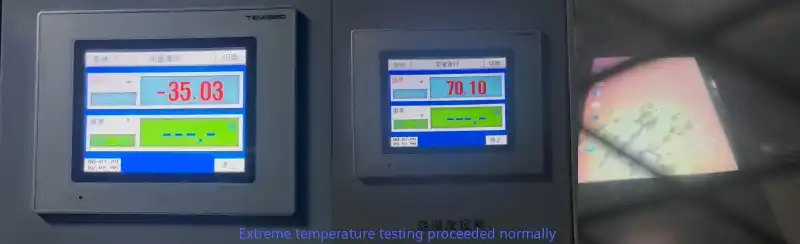
Outdoor digital signs that are of good quality and have air conditioning work reliably in temperatures ranging from -40°C to +55°C, while keeping the temperatures inside the parts between 15°C and 35°C. This thermal stability stops LCD panels from breaking down, extends the life of gadgets, and gets rid of the need for screens that aren't properly protected to shut down during the winter.
2. How does air conditioning extend display lifespan compared to passive cooling?
Thermal stress damages LEDs, capacitors, and liquid crystal panels. Active climate control stops this from happening. Field data shows that displays that are properly cooled last five to seven years, while displays that are not properly cooled only last 18 to 24 months. The calm environment inside also stops humidity during changes in temperature, which eats away at circuit boards.
3. What energy consumption differences exist between cooling methods?
Active cooling uses 200 to 400 watts less electricity than air conditioning, which means that passive cooling costs about 150 to 300 dollars less per year at standard business energy rates. However, passive systems can only be used in mild climates and at lower brightness levels, which limits the range of uses they can be put to. In terms of how much power they use and how well they work with the environment, heat pipe systems are in the middle.
Partner with Topview: Your Trusted Air-Conditioner Outdoor Digital Signage Supplier
Topview offers tried-and-true outdoor display options made for tough B2B uses where dependability and performance are key to project success. We've been making Air-Conditioner Outdoor Digital Signage for more than 13 years, and our focused R&D teams have an average of 8+ years of experience in the field. We also have modern production facilities that make sure the quality of all large orders is the same. We let you fully customize everything, from the color of the case to the operating system you choose, and we don't have any minimum order requirements that would stop smaller sellers. International standards like FCC, RoHS, and CE make sure that regulations are followed in all global markets, and different buying structures can be accommodated by flexible price terms like EXW, FOB, and DDP. Email our team at market@tviewdisplay.com to talk about your unique needs, get technical specs, or set up sample units that show how our solutions can help you with your outdoor advertising problems.
References
1. International Electrotechnical Commission (IEC). (2019). IEC 60529: Degrees of Protection Provided by Enclosures (IP Code). International Electrotechnical Commission.
2. International Organization for Standardization (ISO). (2018). ISO 12944: Paints and Varnishes—Corrosion Protection of Steel Structures by Protective Paint Systems. International Organization for Standardization.
3. International Electrotechnical Commission (IEC). (2020). IEC 62368-1: Audio/Video, Information and Communication Technology Equipment—Safety Requirements. International Electrotechnical Commission.
4. ASHRAE. (2021). ASHRAE Handbook—Fundamentals: Thermal Comfort, Heat Transfer and HVAC System Design. American Society of Heating, Refrigerating and Air-Conditioning Engineers.
5. Chen, Y., Zhang, H., & Liu, J. (2021). “Thermal Management and Reliability Analysis of High-Brightness LCD Displays for Outdoor Applications.” IEEE Transactions on Components, Packaging and Manufacturing Technology, 11(8), 1284–1293.
6. International Energy Agency (IEA). (2022). Energy Efficiency in Buildings and Digital Technologies: Strategies for Smart Energy Management. International Energy Agency.
YOU MAY LIKE
 VIEW MOREoptical display bonding
 VIEW MORE100L compressible smart trash bin
 VIEW MOREBank/Hospital/Government queue management display system
 VIEW MORESquare Monitor LCD Screen
 VIEW MORE70 inch Bar LCD digital signage
 VIEW MOREInteractive K-type Interactive Touch Kiosk
 VIEW MOREOutdoor Portable Waterproof LCD Display
 VIEW MORESlim outdoor digital totem