



PV benches vs. standard concrete benches: A "green upgrade" for urban furniture
When we talk about improving urban settings, we always come back to issues of ecology and getting people involved. A modern solar bench is more than just a place to sit; it's a sign of how green energy technology is being integrated into everyday city infrastructure. Photovoltaic-powered seating, on the other hand, turns public spaces into energy hubs that can do more than just sit there. It can charge devices, provide lighting, and monitor the environment while lowering the carbon footprint of cities and the costs of running them for procurement managers around the world.
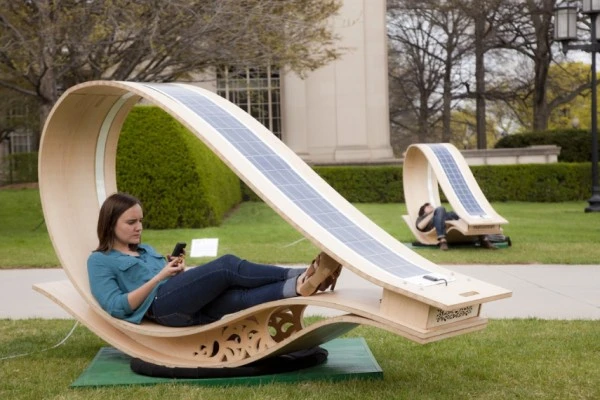
Understanding the Key Differences Between PV Benches and Standard Concrete Benches
When we switch from traditional street furniture to smart urban amenities, it's a big change in how we design public spaces. Standard concrete benches have been popular in parks, plazas, and transit areas for many years because they last a long time and don't need much upkeep. Still, they are mostly inactive because they only provide basic seats while adding to urban heat islands and needing energy-intensive concrete production methods that cause about 8% of the world's CO₂ emissions.
From Passive Seating to Active Infrastructure
Modern solar benches completely change what can be done with outdoor furniture. Built around built-in solar panels that usually range from 40W to 100W and have conversion rates higher than 21%, these units collect sunlight all day and store it in deep-cycle Gel or LiFePO4 batteries with ratings between 55Ah and 65Ah. This saved power runs a number of services for users without using electricity from the city's grids.
The structural approach is also very different. In contrast to concrete, which needs to be put into molds and left to cure for a long time, modern solar benches have frames made of galvanised steel or marine-grade aluminium that are powder-coated to meet ISO 12944 C4/C5 rust resistance standards. This modular design makes it easier to move and set up things faster, which is very important for procurement managers who are in charge of coordinating big urban renewal projects that take place in many places.
Energy Generation Meets User Experience
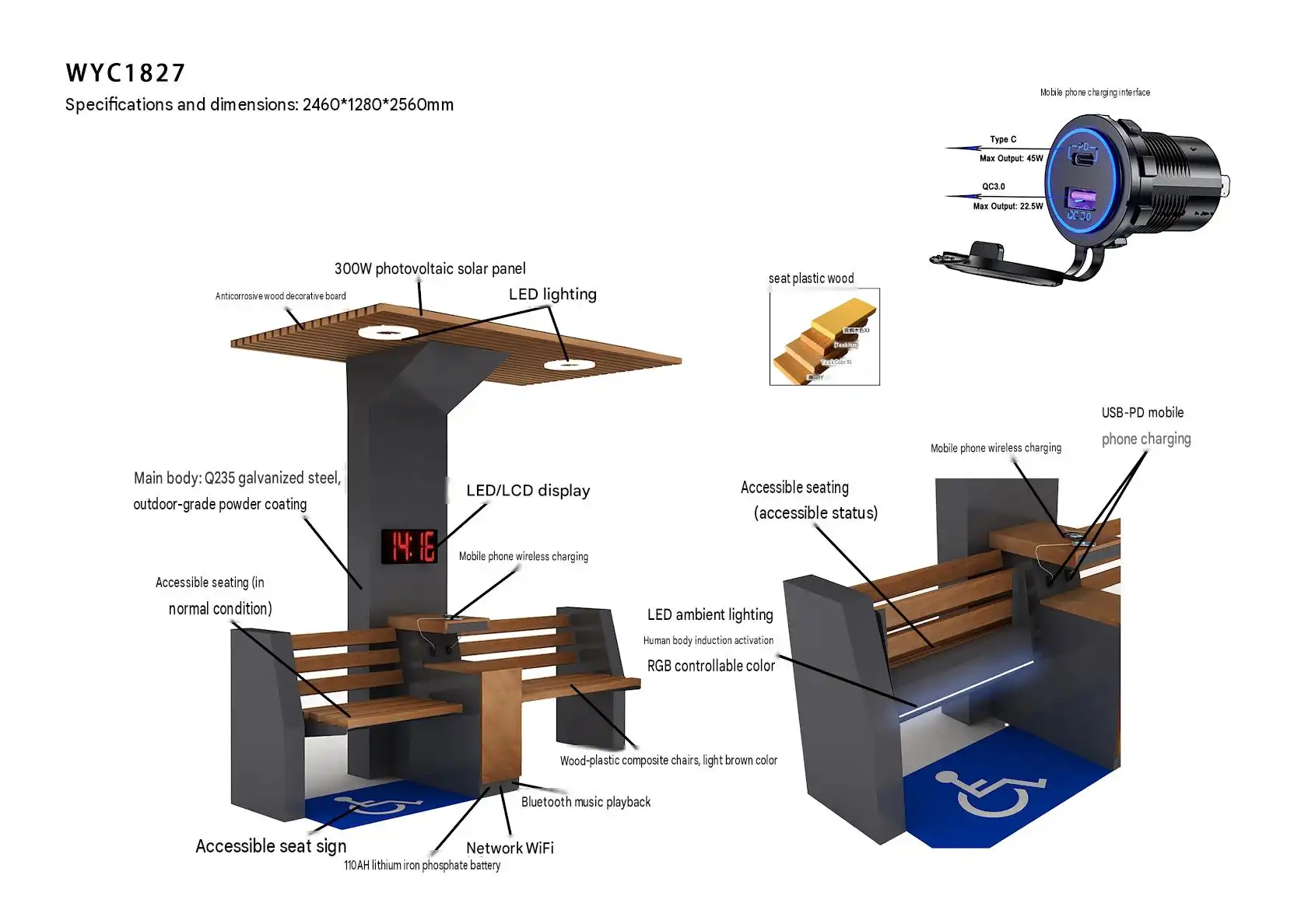
Traditional benches are only good for sitting on. On the other hand, modern solar benches work as micro-grid stations. Because they have four USB ports that can output up to 5V/2A, they meet the need for charging mobile devices in public places. Longer models come with Qi wireless charging pads that get rid of the need for cables completely. When the sun goes down, built-in LED lighting systems turn on automatically, making parks and walking areas safer without having to dig holes for electrical connections.
The ability to watch the environment is another change from concrete options. Built-in air quality monitors measure the amount of PM2.5 particles in the air, as well as the temperature and humidity. They send this information to city hubs via 4G or 5G connections. This turns benches into nodes that watch the environment in many places. This is useful equipment for smart city projects that want to keep track of pollution trends and weather conditions in different city areas.
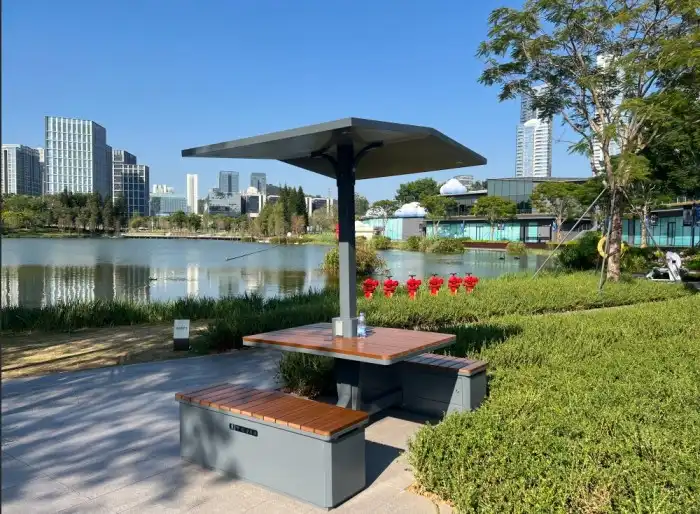
Evaluating the Benefits of PV Benches Over Standard Concrete Benches
Making concrete is still one of the most carbon-intensive ways to make things in the world. About 900 kg of CO₂ are produced for every tonne of cement. When cities and towns put in hundreds of concrete chairs in parks, transit hubs, and business areas, the environmental damage is big over time. This impact is lessened by modern solar benches, which are made of eco-friendly materials and actively offset carbon emissions by producing green energy.
Environmental Impact and Carbon Reduction
Depending on where it is placed and how much sun it gets, the average modern solar bench makes 50 to 150 kWh per year. This adds up to 750–2,250 kWh of clean energy over a 15-year service life, which is the same as removing 530–1,587 kg of CO₂ emissions based on the average carbon content of grid power. The deep-discharge batteries use gel technology and have built-in safety systems that stop harm from overcharging. This means that they can work without the grid for three to five days when it's cloudy.
Choosing the right materials also helps the environment. Powder-coated aluminum and steel frames are just as durable as concrete, but they weigh a lot less, which means they produce fewer emissions during delivery and installation. The lack of embodied carbon tied to cement is good for the environment right from the start of the project.
Enhanced Functionality Driving User Engagement
When purchasing furniture for cities, purchasing managers are giving more weight to features that encourage people to use public spaces. Integrated technology in modern solar benches makes people more interested in using them. USB charging stands solve the problem of device batteries dying, which makes people stay in parks and plazas longer. This is especially helpful for shopping mall owners and store groups that want to get customers to stay longer and be happier.
The three bike stands built right into the structure of the bench fill in gaps in micro-mobility infrastructure. Cities encourage people to ride bikes to cut down on traffic, and putting safe bike parking next to rest areas makes multi-modal transportation networks that work together smoothly. This form serves two purposes, which makes the best use of space, which is very important in crowded cities where land prices limit the growth of infrastructure.
People feel safer when they see intelligent lighting at night. After dark, LED systems that are driven by stored solar energy light up sitting areas. This keeps people from destroying public spaces and makes them feel more friendly, which makes people more likely to use them at night. Motion sensors can change the amount of light, which saves battery life while still allowing people to see.
Cost-Performance Analysis for Long-Term Value
When you first buy them, modern solar benches cost more than concrete benches—usually between $2,800 and $5,500 per unit, depending on features—while standard concrete benches cost between $800 and $1,500. However, a full-lifecycle study shows that the costs are not the same. Concrete benches need to have cracks fixed, graffiti removed, and eventually replaced because the structure is breaking down. The modular form of the parts in modern solar benches lets you fix or improve specific parts without having to change the whole thing.
Over time, operational savings add up. Cities and towns get rid of the costs of digging electricity trenches, paying for lights, and paying people to check on the environment by hand. The built-in connection allows for remote diagnostics, which lets support teams know about problems with the battery or a component before they affect users' service. This method of predictive repair cuts down on downtime and increases the useful life of assets.
When making a purchase decision, warranty issues are very important for any modern solar bench. Solar panels, batteries, and electrical parts from reputable makers come with full warranties that last between 2 and 5 years. Battery performance guarantees ensure that 80% of the battery's capacity is retained after 2,000 charge cycles. These safeguards lower the risk of buying and help make accurate total cost of ownership estimates, which are necessary for budget approval processes.
Technical Insights and Design Innovations Behind Modern PV Benches
Modern solar benches combine several types of technology into one weatherproof package. Knowing these technical details helps people who buy things compare different options and make sure they will work with current systems.
Solar Technology and Energy Storage Systems
Because they are more efficient—usually 21-23% compared to 15-17% for polycrystalline options—monocrystalline silicon solar cells are used in most high-quality setups. These panels are protected by tempered glass with an IK10 rating, which means they won't get broken by vandals or hail. The photovoltaic array fits perfectly into bench canopy structures, keeping the structures' good looks while making the most of the sun's exposure.
Battery technology choices have a direct effect on how well they work and how often they need to be serviced. Gel batteries can withstand heavy discharge very well and work reliably in temperatures ranging from -20°C to +60°C, which is important for sites that are in places with different climates. LiFePO₄ alternatives cost more than gel but have higher energy densities and last longer (more than 3,000 cycles). Maximum Power Point Tracking controls improve the efficiency of charging and get up to 30% more energy from solar panels than older PWM technology.
Modular Design Supporting Customization
Modern solar bench designs use modules, which make them adaptable to different deployment situations. Core charging and lighting functions are built into base designs. Longer versions add wireless charging, environmental sensors, and internet modules. This scalability lets buying managers change the specs to fit the needs of each site and the budget, without having to do full custom engineering.
Customizing colors helps them look good with the building and landscaping around them. Because powder coating can be used on almost any RAL color, the benches will match the color schemes used in existing urban design projects. Adding logos through silk screen printing or LED-lit branding panels helps commercial owners and developers strengthen their visual identity while adding useful features.
Another big benefit is that installation is flexible. Anchor bolt holes make it possible to securely connect to concrete pads or pavement, and paperwork for dirt preparation and assembly makes it easier for contractors to work together. External single-phase power lines that are available as options allow hybrid operation, which adds to solar generation in the winter or in places with a lot of shade where photovoltaic output might not be enough for year-round self-operation.
Smart City Integration and IoT Connectivity
More and more, modern designs use connection features that link chairs to larger smart city platforms. Built-in 4G/5G modems send data about usage, battery life, and the environment to cloud-based management systems. This lets city workers keep an eye on whole networks of benches from one central dashboard, making maintenance schedules more efficient and learning more about how people use public spaces.
The modern solar bench can be made longer by adding LEV charging stations with access control systems. This will help the growing market for electric micro-mobility, which includes scooters and e-bikes. By adding bike repair stations with built-in tool sets, chairs can be turned into full-on riding support hubs. These features can be added on to make investments more secure for the future, letting features be added gradually as urban travel settings change.
Conclusion
Changing from regular concrete benches to ones that are powered by photovoltaics is a useful step toward making urban infrastructure more environmentally friendly. Modern solar benches are good for the environment because they use green energy and leave smaller carbon footprints. They also make public areas better by providing charging stations, lights, and ways to connect with others. Even though the initial costs are higher than other options, they are worth it in the long run because they save money on operations, last longer, and fit with smart city goals. When purchasing managers look at these systems, they should give more weight to suppliers who offer strong warranties, the ability to make changes, and expert help. As cities and businesses look for structures that can do more than one thing, modern solar benches are a tried-and-true way to meet both environmental requirements and user experience standards.
FAQ
1. How does solar bench technology work in cloudy climates?
Modern solar benches use monocrystalline panels with high efficiency that can collect diffuse sunlight even when it's cloudy outside. Deep-cycle gel batteries with a 65 Ah rating can store enough power for three to five days of use without being exposed to direct sunlight. MPPT controllers get up to 30% more power from batteries than older methods, making charging more efficient. For installations in northern latitudes or areas that get a lot of clouds, you can choose larger battery capacities or hybrid setups with possible external power links that make the system reliable all year.
2. What maintenance requirements do solar benches have compared to concrete alternatives?
Modern solar benches don't need much regular upkeep. The solar panels just need to be cleaned every so often to get rid of dust and other waste that builds up and lowers their efficiency. Electronic parts have IP65 waterproof grades that keep water damage from happening, and powder-coated frames don't rust and don't need to be painted. Batteries usually last between 5 and 7 years before they need to be replaced, which is a simple modular swap. Concrete chairs need to have cracks fixed, graffiti cleaned off, and eventually the whole structure replaced. Connected modern solar benches with remote diagnostics allow for predictive repair, which lets workers know about problems before they break down.
3. Can solar benches be customized for specific project branding or requirements?
A lot of customization choices let you meet a wide range of branding and useful needs. Through powder coating processes, color specifications are based on RAL standards. Silk screen printing or LED-backlit designs are used for logo integration. The feature sets range from simple ones like charging and lights to more complex ones with wireless Qi chargers, environmental monitors, bike repair stations, and LEV charging points. OEMs like Topview don't require a minimum order for customization, so they can meet the specific needs of each project without pushing customers to commit to big volumes that aren't good for pilot programs or specialized installs.
Partner with Topview for Your Modern Solar Bench Solutions
Topview is a company in Shenzhen that has been making smart displays and modern solar bench solutions for over 13 years. They are ready to help you with your green infrastructure projects. Our 2,000-square-meter facility has three professional production lines that can make 100 units per day. Twenty or more senior engineers and dedicated after-sales specialists are on hand to help with any project. As a modern solar bench maker that offers full OEM/ODM capabilities, we don't have minimum order amounts for customization. This means that pilot programs and phased deployments can happen without having to worry about how to pay for them. Our solutions come with 65Ah Gel batteries, four USB charging ports, built-in bike stands, and the option of tracking the air quality. All of these features are approved to meet international standards. Email our team at market@tviewdisplay.com to talk about pricing for large orders, technical details, and assembly help that is suited to your needs.
References
1. International Energy Agency. (2023). "Renewable Energy Integration in Urban Infrastructure: Global Trends and Policy Frameworks." IEA Publications.
2. American Society of Landscape Architects. (2022). "Sustainable Site Furniture: Material Selection and Lifecycle Assessment Guidelines." ASLA Professional Practice Resources.
3. European Committee for Standardization. (2021). "EN 12767: Passive Safety of Support Structures for Road Equipment - Requirements and Test Methods." CEN Standards.
4. National Renewable Energy Laboratory. (2023). "Photovoltaic System Performance in Urban Applications: Technical Report on Distributed Solar Infrastructure." NREL Technical Reports.
5. Smart Cities Council. (2022). "IoT-Enabled Urban Furniture: Implementation Guide for Municipal Procurement Officers. "Smart Cities Council Research Series.
6. Journal of Urban Technology. (2023). "Carbon Footprint Analysis of Traditional vs. Solar-Powered Street Furniture: A Comparative Study." Volume 30, Issue 2, pp. 47-68.
YOU MAY LIKE
 VIEW MORELCD Full Screen Indoor Digital Signage
 VIEW MORE55 Inch 500nits High Brightness OLED Video Flexible Self LED Backlit
 VIEW MORE3D Holotube Display
 VIEW MORE55″ Landscape Transparent OLED Self-Service Touch Kiosk
 VIEW MOREStretched Bar LCD Display
 VIEW MOREH-Style Floor Stand Totem Digital Kiosk
 VIEW MOREUlta Slim Wall-Mounted Outdoor Displays
 VIEW MOREOutdoor Durable Prefabricated Smart Public Bus Stop Shelter