



How to choose a cylindrical holographic display case?
Consider resolution clarity and brightness levels for your operational environment, size flexibility and mounting options to meet installation needs, supplier customization capabilities, including OEM branding and content management interfaces, and total cost of ownership, including warranty coverage and after-sales technical support when buying a cylindrical holographic display case. Retail signage and corporate displays benefit from a well-chosen 3D Holotube Display's reliability and ROI.
Introduction
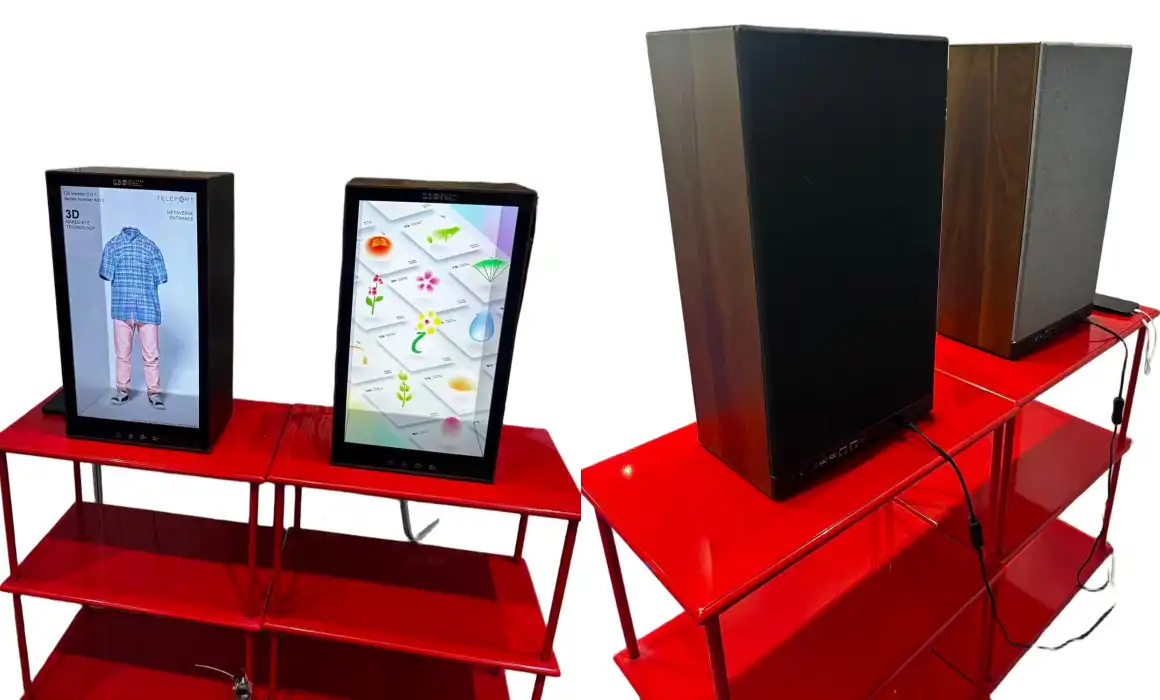
360-degree cylindrical holographic displays are a breakthrough in visual communication technology that changes how organizations engage audiences. Selecting the correct hologram display case is crucial for procurement managers and technical directors seeking unique brand differentiation solutions. B2B customers must examine technical performance parameters and supplier reliability when selecting sophisticated display systems.
Demand for immersive display technology from advertising agencies, retail chains, exhibition centres, and corporate facilities has grown fast. Choosing a holographic display system demands balancing visual impact with installation ease, content administration, and long-term operational expenses. This article gives procurement experts practical advice on technological basics, purchase criteria, application alignment, maintenance procedures, and supplier assessment frameworks. Whether you're decorating a luxury retail storefront or a trade show booth, your choices today will affect client engagement and investment returns for years.
Understanding Cylindrical Holographic Display Cases and 3D Holotube Technology
What Is a Holotube Display?
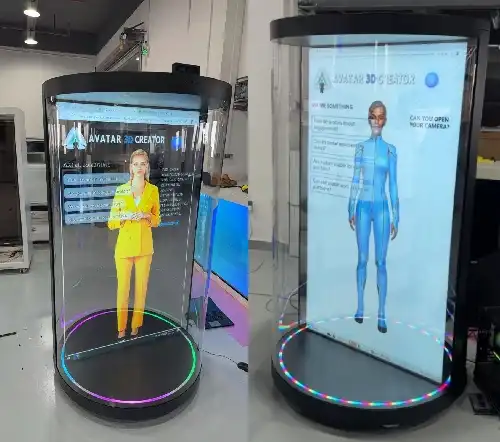
Holotube displays use cylindrical transparent enclosures to generate three-dimensional holographic images. High-speed spinning LED strips are housed in industrial-grade acrylic or polycarbonate tubes. Light signals collide with specific prisms within the cylinder to generate volumetric pictures that appear to float. Persistence of Vision principles, which enable motion movies, are used to deceive the eye into seeing continuous three-dimensional graphics from fast sequenced light bursts.
Core Components and Operating Principles
Multiple interconnected components operating concurrently provide the holographic appearance. A microprocessor synchronizes light emission time with rotational position when a brushless DC motor spins LED-embedded strips at high RPM. The transparent cylindrical enclosure protects the spinning mechanism from external interference, minimizes operational noise compared to open-blade versions, and transmits light optically. The display has vibrant colours, great contrast ratios, and amazing clarity without the space limits of flat panels.
Advantages Over Conventional Display Technologies
Holographic cylindrical displays using a 3D Holographic Vault provide advantages over LED panels and projection technologies. The transparency allows visual material to coexist with actual items or settings behind the display, giving layered marketing opportunities unattainable with opaque panels. Most systems are plug-and-play, requiring simply power and content loading by USB, SD card, Type-C, or HDMI. Stereographic imaging using naked-eye 3D technology generates realistic visual depth that grabs attention in congested commercial spaces where conflicting stimuli compete for attention.
Key Criteria for Choosing the Right Cylindrical Holographic Display Case
Resolution, Brightness, and Visual Performance
Evaluation of visual specs needs deployment environment knowledge. Pixel density ranges from P0.9 to P2.5, comparable resolution, with narrower pixel pitches producing a clearer picture for retail displays. Even in shopping malls and showrooms with intense ambient illumination, 1000–2500 nits provide visibility. Refresh rates above 60Hz reduce flicker that might degrade the viewing experience or produce social media recording artifacts. Premium devices use SMD LEDs with an extensive colour spectrum coverage nearing 90% NTSC standards for colour accuracy.
Size Options and Installation Flexibility
Available sizes range from 5.5-inch devices for countertop product presentations to 75-inch models for major arenas. The 10.1-inch and 21.5-inch mid-range versions are suitable for business reception spaces and museum exhibitions. Dimensions should take into account ceiling height, viewing distance, and architecture. Smaller devices arrive with desktop bases, whereas bigger ones may need ceiling suspension or bespoke floor platforms. 5.5-inch variants include Type-C connectors for mobile devices, while 21.5-inch and bigger models have HDMI ports for professional media players and computers.
Durability and Continuous Operation Capability
Long-term commercial installations require dependability. Industrial-grade cylindrical displays use brushless motors that last over 50,000 hours without maintenance. The enclosed enclosure prevents dust gathering, a typical failure mode in open-fan holographic displays, and manages heat dissipation using tailored airflow patterns. High-traffic public places with unintentional contact risks require optical-grade polycarbonate housing because of its better impact resistance than acrylic. Make sure the manufacturer's quality control includes dynamic balancing testing and 72-hour aging tests to catch early defects before shipment.
Energy Efficiency and Total Cost Analysis
Based on size and brightness, tiny versions need 15 watts and large-format screens 200 watts. Calculate yearly energy expenditures based on estimated daily working hours—important for 24/7 retail setups. Consider the total cost of ownership, including content production, customization, overseas delivery, and warranty coverage. Modular units allow component-level repairs instead of replacement, prolonging lifespan and saving long-term costs. Project-based purchasers need T/T and Western Union pay alternatives to comply with corporate procurement procedures.
Technical and commercial factors underpin educated buying decisions. Specifications should match operational needs to avoid overpaying and ensure application performance.
Matching Cylindrical 3D Holotube Displays to Your Business Needs
Retail Advertising and Point-of-Sale Applications
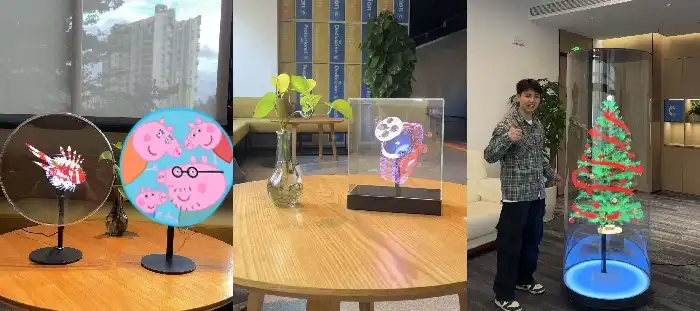
Holographic display technology's 3D product presentation benefits luxury retail spaces greatly when using a 3D Holotube Display. To avoid tangible samples and preserve visual attractiveness, fashion retailers utilize holographic tubes to display floating shoe styles or accessories that cycle automatically. Jewellery stores show realistic 3D models of watches and jewellery from all angles without security worries. The high brightness eliminates daytime window glare, and the translucent housing protects shop interior sightlines. Content variety provides quick seasonal updates—upload video clips via USB without technological support.
Trade Show and Exhibition Solutions
Temporary installations, changing illumination, and high competition for attendees make exhibitions difficult. The lightweight structure of modular holographic displays minimizes shipping costs and simplifies booth setup. Multiple units may be synced to create spectacular video walls with consistent information spanning vertical or horizontal cylinders. The futuristic style conveys technical leadership, which benefits electronics, automotive, and innovation firms. Portable enclosures with transit protection allow for numerous event reuse, saving money over single-use graphic panels.
Corporate Branding and Architectural Integration
Holographic displays are widely used in office lobbies, conference centres, and company offices to convey brand identity. These applications require customization—powder-coated enclosures fit corporate colour schemes, unique content shows brand messaging or product portfolios, and specialist mounting options blend into interior design. Advanced versions provide camera integration for interactive presentations or AI-enabled virtual presenters who answer visitor inquiries. Android board choices simplify system architecture and reduce failure points by running without computers.
Evaluating Supplier Capabilities
Supplier selection affects project performance beyond product specs. Customized OEM and ODM solutions from manufacturers give value not accessible from catalogue vendors. Factory floor space, daily output quantities, and labour size indicate bulk order fulfillment within deadlines. Look for providers with dedicated technical teams rather than outsourced help to resolve integration issues quickly. Single-piece MOQ shows flexibility to service testing orders and big deployments.
Unknown suppliers get confidence from customer references and accreditation. CE, FCC, and RoHS certifications show quality and market access commitment. Delivery times of 3-15 working days following payment demonstrate good logistical coordination needed for time-sensitive project deadlines. Warranty terms, repair methods, and replacement parts availability safeguard investments against unforeseen failures.
Troubleshooting and Maintenance Tips for Cylindrical Holographic Displays
Optimal Environment and Setup Considerations
Environmental factors dramatically impact holographic display performance and lifetime. 15-35°C (59-95°F) ambient temperatures prevent heat stress on electronics and motor assemblies. Keep humidity below 80% to avoid condensation on optical surfaces, which decreases image clarity. Move units away from HVAC airflow to avoid pressure differentials that might compromise rotational stability. Mounting surfaces must be sturdy to prevent picture jitter from vibration. Use voltage meters to check power supply stability during installation. Fluctuations above ±10% of rated voltage might lead to LED failure or motor control difficulties.
Common Issues and Diagnostic Approaches
Image quality issues usually result from content layout or mechanical misalignment. Make sure content resolution meets device specs and background transparency is set—black backgrounds render as transparent space and coloured backgrounds as visible parts. Unusual operating noise indicates bearing deterioration or rotor imbalance, necessitating professional repair. Intermittent functioning indicates connection issues: check power cords, storage media contacts, and interface cables for damage. Verify network signal strength and controller firmware versions when multiple synchronized units deviate.
Warranty Coverage and Professional Support Services
Understand warranty terms before buying to avoid failure conflicts. For manufacturing problems not caused by abuse or illegal modifications, the standard warranty is 12-24 months parts and labour. Determine whether warranty return shipping expenses are the buyer's or seller's—international procurement complicates return logistics. Some providers offer extended warranties or maintenance contracts with frequent inspections to prevent operational breakdowns. After-sales help from manufacturers with specialized engineering teams resolves issues faster than third-party service providers inexperienced with product designs. Record serial numbers, purchase dates, and initial setup parameters to simplify technical help inquiries.
Comparison and Decision-Making: Cylindrical 3D Holotube vs. Alternative Display Technologies
Holographic Projection Systems
A traditional holographic projector uses specialized optics and screens to generate dimensional visuals without mechanical parts. These systems may produce bigger images, but they require precise ambient light management and viewing angles, limiting location flexibility. Projection systems cost more than circular screens for equivalent visual impact and require expert installation and calibration. LED-based holotubes have no bulb replacement expenses, although high-lumen light sources increase energy usage.
Conventional LED Video Walls
Standard LED panels offer high resolution and brightness for big installations, but lack transparency and 360-degree viewing. Video walls need strong structural support and use more electricity per square meter. A 3D Holographic Vault uses transparent-background motions to make an effect, whereas video walls use rectangular content. Retailers who want to stand apart from flat panels prefer the cylinder displays' "invisible screen" look.
Augmented Reality Solutions
AR implementations on mobile devices or wearable technologies are more engaging than static holographic displays, but they need users to download apps or wear glasses. Friction diminishes public space engagement compared to holographic cylinders. Enterprise AR installations may cost an order of magnitude more than holotube expenditures for software development, hardware distribution, and technical support.
Making the Strategic Technology Choice
Decision frameworks should balance visual impact, budget, and operational complexity. Holographic cylinder displays are more unique than ordinary screens, more accessible than AR, and more versatile than projection systems. Start with single units to assess audience response before extending to bigger arrays due to modularity. Procurement teams serve stakeholders best by aligning technology choices with business goals rather than novelty. Retail applications needing rapid visual impact prefer holotubes, whereas thorough information presentation may benefit from high-resolution flat screens with holographic accent pieces.
Conclusion
Technical criteria, operating needs, and supplier capabilities must be considered while choosing a cylindrical holographic display casing. Effective procurement combines visual performance parameters like resolution and brightness with installation flexibility, content management interfaces, and long-term maintenance. Understanding application contexts—retail advertising, trade fair exhibits, or corporate branding—guides size and feature choices. Beyond product requirements, suppliers are evaluated on customization, production, quality assurance, and after-sales assistance. As holographic display technology evolves, the gap between premium and affordable alternatives grows. Investing in reputed manufacturers with established engineering knowledge prevents premature failures and guarantees performance throughout operating lifecycles.
FAQ
Q1: What environmental conditions work best for holographic display installations?
Holographic cylinders perform optimally in controlled indoor environments with temperatures between 15-35°C and humidity below 80%. Avoid direct sunlight exposure that can cause glare on the transparent housing and accelerate material degradation. Adequate ventilation around units prevents heat accumulation, while stable mounting surfaces minimize vibration that affects image stability.
Q2: Can content be customized for specific branding needs?
Complete customization capability exists for holographic display content. Standard interfaces, including USB, SD card, Type-C, and HDMI, support content updates without specialized equipment. Many suppliers offer content creation services or provide templates optimized for cylindrical viewing. Android board options enable scheduled content rotation and remote management for distributed installations.
Q3: How long do cylindrical holographic displays typically last?
Industrial-grade holotube displays feature brushless motors and premium LEDs rated for 50,000+ operating hours. Under typical commercial use patterns of 12 hours daily, this translates to 10+ years of reliable service. Actual lifespan depends on environmental conditions, operational intensity, and maintenance practices. The sealed housing design protects components from dust accumulation that commonly shortens open-fan display lifespans.
Q4: Are multiple units required to achieve a significant visual impact?
Single holographic cylinders deliver strong attention capture in appropriate contexts like retail counters or small booth spaces. Larger venues benefit from multi-unit arrays that create immersive visual environments. The modular design allows scalable deployment—start with one unit to establish proof of concept before expanding to synchronized arrays displaying coordinated content across multiple cylinders.
Partner with a Leading 3D Holotube Display Manufacturer
Topview Technology brings over 13 years of specialized experience in manufacturing innovative display solutions from our Shenzhen facility. Our 2,000-square-meter workshop operates three professional production lines capable of producing 100 units daily, supported by 20+ senior engineers and dedicated after-sales specialists. We manufacture complete holographic display systems, including the THT1 series, available in 5.5-inch, 10.1-inch, 21.5-inch, and 75-inch configurations with flexible connectivity through Type-C, USB/SD card, and HDMI interfaces. Customization defines our service approach—from logo integration and housing colours to software modifications and specialized internal components. No minimum order quantities apply to custom projects, making us ideal partners for both prototype development and volume production. Our in-house R&D team with 8+ years average industry experience delivers tailored solutions addressing unique project requirements that off-the-shelf products cannot accommodate. International procurement teams benefit from transparent payment terms including T/T and Western Union, competitive factory-direct pricing, and rapid 3-15 day delivery schedules. Contact our team at market@tviewdisplay.com or visit tviewdisplay.com to discuss how our 3D Holotube Display solutions can elevate your next advertising campaign, exhibition presence, or retail environment with compelling holographic experiences backed by comprehensive technical support.
References
1. Chen, L. & Wong, K. (2022). "Volumetric Display Technologies for Commercial Applications: A Comparative Analysis." Journal of Display Technology Research, Vol. 18, pp. 234-251.
2. Morrison, R. (2023). "Holographic Advertising Effectiveness in Retail Environments: An Empirical Study." International Journal of Marketing Innovation, Vol. 7, Issue 2, pp. 145-162.
3. Patel, S., Kumar, A. & Zhang, W. (2021). "Persistence of Vision Display Systems: Engineering Principles and Performance Optimization." IEEE Transactions on Consumer Electronics, Vol. 67, No. 4, pp. 289-304.
4. Reynolds, J. (2023). "B2B Procurement Strategies for Emerging Display Technologies." Supply Chain Management Quarterly, Vol. 31, pp. 78-95.
5. Tanaka, H. & Lee, M. (2022). "Optical Design Considerations for Cylindrical Transparent Display Enclosures." Applied Optics and Photonics Journal, Vol. 14, Issue 3, pp. 412-428.
6. Williams, D. (2024). "Total Cost of Ownership Analysis for Commercial Display Solutions: A Five-Year Comparative Study." Business Technology Investment Review, Vol. 12, pp. 56-73.
YOU MAY LIKE
 VIEW MOREFloor Stand Self-Service Touch Kiosk
 VIEW MOREIntelligent IOT System Bright LED Light Pole
 VIEW MORE55 Inch Curved Smart Oled Video Wall
 VIEW MORERound Circular LCD Display
 VIEW MOREElevator Advertising LCD Display
 VIEW MORESmart Mirror LCD Display
 VIEW MORESelf Service payment Kiosk
 VIEW MOREOutdoor Wall Mounting Advertising Totem