



How does outdoor IP66 digital signage perform under extreme temperatures?
Outdoor IP66 outdoor lcd display performs with consistent reliability across a wide temperature range, typically from -30°C to +55°C, depending on the engineering design. The IP66 rating guarantees full dust protection and resistance to powerful water jets, but temperature performance goes further — it depends on the LCD panel grade, thermal management system, and enclosure materials. High-quality outdoor lcd display units, like Topview's T-series displays, use High-Tni LCD substrates, military-grade heat dissipation, and intelligent cooling to keep internal temperatures between 5°C and 25°C even during direct solar exposure or freezing conditions.

Understanding Outdoor IP66 Digital Signage and Its Temperature Resistance
Before you can choose the right outdoor display, you need to know what IP66 protection means and how temperature engineering keeps screens working all year.
What Does IP66 Mean in Practice?
IEC 60529 guidelines spell out IP66. The number "6" in the beginning shows that there is no dust getting in. The number "6" in the second place proves that strong water jets from any direction can't damage it. This means that the sealed case keeps the electronics inside safe from rain, dust storms, and high-pressure cleaning, all of which are common in places like transportation hubs, stadiums, and roadside advertising sites across the US.
Temperature Ranges That Outdoor Displays Must Handle
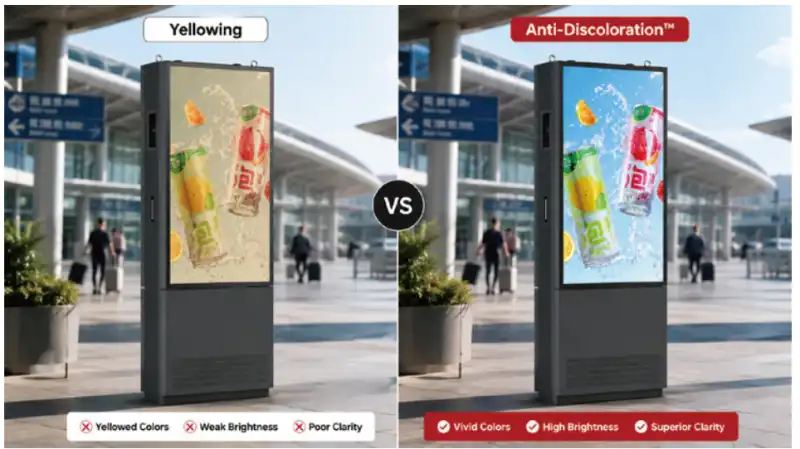
In the U.S., winter temps can drop to -40°F (-40°C) in the northern states and rise to over 120°F (49°C) in hot states like Arizona. When put up in Chicago, a show is put under very different heat stress than when put up in Las Vegas. Consumer-grade LCD panels experience "isotropic failure," also known as "blackening," when they get hotter than 70°C if they don't have the right thermal engineering.
Why Standard Displays Fail Outdoors
For outdoor lcd display, indoor screens made for consumers and businesses are not made to handle changes in temperature outside. The LCD substrates in them don't have high Tni (nematic-isotropic transition) limits, and they don't have any active thermal control. During cold nights, condensation forms inside enclosures, which causes parts to short-circuit. If you don't use IP-rated security and industrial-grade design, the screen will break within months of being used outside.
Technical Principles Behind Temperature Performance of IP66 Outdoor Digital Signage
There isn't just one piece of engineering that makes temperature performance reliable; there are many technologies that work together as a system.
High-Tni LCD Panels and AR Glass
For the T32SO, T43SO, T49SO, and T55SO types from Topview, a special LCD base that can work in temperatures from -30°C to 110°C is used. Under direct sun load, this High-Tni screen keeps it from turning black. AR (anti-reflective) glass, 6–10 mm thick and made in the U.S., covers the screens. This glass blocks 99.99% of UV radiation and 52% of solar radiation heat from getting through to the display surface. More than 97% of light passes through, and less than 3% of light bounces back.
Military-Grade Heat Dissipation Technology
In outdoor settings, heat is the main reason why displays fail early. The T-series from Topview has military-grade heat absorption technology and a high-efficiency thermal control device built right in. No matter what the weather is like outside, the clever cooling system keeps the temperature inside the box between 5°C and 25°C. The system works well in temperatures between -20°C and 45°C, and it uses precision-filtered airflow to keep dust from building up on its internal parts.
Intelligent Thermal and Brightness Control
An automatic photosensitive probe checks the temperature and light in the room in real time and changes the brightness of the screen as needed. This keeps the LCD lighting from having to work too hard at night or when there isn't much light, which slows down the aging process. The result is a steady 1500–2000 nit brightness output that can be seen clearly in direct sunlight while using only the power needed at the moment.
Panel material, active cooling, and smart sensors are the three main parts of an IP66-rated outdoor display that keep the screen at a good temperature.
Performance Comparison: Outdoor IP66 Digital Signage vs Alternative Solutions
Knowing how IP66 screens stack up against other choices helps purchasing managers make smart choices that don't break the bank.
IP66 Rated vs. Non-IP-Rated Outdoor Displays
For outdoor lcd display, displays that aren't IP-rated may be cheaper at first, but their long-term costs tell a different story. Without sealed casings, dust and moisture can easily get in and break down gear faster. In places that get a lot of regular rain or sandstorms in the desert, non-rated units usually need to be replaced every 12 to 18 months. Topview's IP66-rated units, on the other hand, have stainless steel housings that have been proven to last for over seven years and vandal-proof 6mm double-sided laminated glass.
LED vs. LCD Technology for Temperature-Sensitive Environments
LED-backlit LCD panels, like the ones in Topview's T-series, let you fine-tune the brightness and put out less heat than older CCFL backlights. Full LED screens are very bright, but they use more power and generate more heat at the motor level. When working on projects that need a 1920x1080 resolution and color accuracy that stays the same at all temperatures, industrial-grade power supplies and high-brightness LED-backlit LCD displays are the best way to go.
IP66 Digital Signage vs. Traditional Static Signage
Printing things that don't change has no practical cost, but it can't adapt to new information, campaign updates, or emergency messages. One IP66 outdoor digital signage unit can show video, images, and text, and can be updated from afar using built-in network systems. It can run 24 hours a day, seven days a week. When compared to print replacement cycles, advertising groups, store chains, and government projects can see a return on their investment in dynamic screens within the first year of use.
These examples show that screens with an IP66 rating are the most useful and long-lasting for most business outdoor uses.

Best Practices for Installation and Maintenance of IP66 Outdoor Digital Signage in Extreme Environments
If you don't set up or take care of your display properly, even the best-designed one won't work as well.
Strategic Placement and Mounting
If you can, put displays so that they don't get too much direct sunlight in the middle of the afternoon. If you live near the coast or in an area that gets a lot of storms, make sure that the hanging structures meet the local wind load standards. The T-series units from Topview come in a reinforced wooden case, and with all the technical information you need to install them correctly. The powder-coated galvanized steel shell of the shelter can be changed to any color to fit the look of the site.
Routine Inspection and Cleaning Protocols
Set up regular checks to see if the seal is still in good shape, clean the AR glass surface with non-abrasive materials, and make sure that airflow channels are still clear. The smart cooling system has a fine screen that needs to be checked every three months in dusty places. The enclosure's sealed design reduces the risk of condensation, but it's still a good idea to check the seal's condition after bad weather to make the unit last as long as possible.
Software-Based Performance Monitoring
Topview's embedded network information release system lets you control and monitor material from afar. The electric control system has automatic power switching, divided timer controls, and circuit breakers for safety. Teams can check on the state of displays, plan content changes, and react to system alerts without having to go to each location in person. This is a big organizational benefit for large-scale deployments in many places.
Following these installation and maintenance steps from the start will protect your purchase investment and lower the amount of unplanned downtime that happens over the product's lifetime.
Procurement Considerations for Outdoor IP66 Digital Signage Under Extreme Temperature Conditions
When buying outdoor signs, you need to look at more than just prices; you also need to look at the whole relationship with the supplier.
Certifications and Compliance
The T32SO, T43SO, T49SO, and T55SO outdoor lcd display models from Topview have been certified by CE, FCC, and RoHS, which means they meet the standards for both U.S. and international project bids. People who buy government projects and EPC companies can be sure that these certificates will be included in the bid documents. Electrical safety rules say that industrial-grade power supplies and leakage protection switches must be used in public places.
Warranty, Customization, and Supply Terms
The standard guarantee lasts for one year, but you can get one that lasts up to three years. Topview offers expert help for life, even after the warranty period is over. The company works with both OEM and ODM projects, and there is no minimum order number for unique builds. You can pay with TT or EXW, FOB, or DDP, depending on the price terms. Lead times range from 5 to 15 working days, based on the details of the order.
Total Cost of Ownership Evaluation
The initial unit cost should be weighed against how much energy it uses, how often it needs upkeep, and how long the display lasts. Topview's solar-powered T-series models work nonstop on solar energy and don't need to be wired in. This means that there are no costs for electrical installation, which is a big plus for remote sites or places where connecting to the grid isn't possible. Total cost of ownership is higher for purpose-built industrial displays than for lower-specification options when you consider fewer maintenance visits, longer shelf life, and energy savings.
Conclusion
IP66-rated outdoor lcd display engineered for temperature extremes is not a premium option — they are the baseline requirement for any serious outdoor deployment. From the High-Tni LCD substrate to military-grade thermal management and intelligent brightness control, every component in Topview's T-series is selected for durability in real-world conditions. Whether you are sourcing for a retail chain, a government infrastructure project, or a stadium installation, the right display investment starts with understanding what the hardware can withstand. Topview's 13 years of manufacturing experience, in-house R&D team, and global certification credentials provide the foundation for a supply relationship built on verified performance rather than specification sheets alone.
FAQ
Q1: What operating temperature range can IP66 outdoor displays handle?
Topview's T-series displays operate across a panel temperature range of -30°C to 110°C. The active cooling system maintains internal cabinet temperatures between 5°C and 25°C under ambient conditions from -20°C to 45°C.
Q2: How does the display prevent overheating in direct sunlight?
The combination of High-Tni LCD panels, U.S.-made UV and infrared-resistant AR glass, and military-grade heat dissipation technology prevents thermal failure. The intelligent photosensitive probe also reduces backlight output during lower-load periods.
Q3: What happens to an IP66 display in freezing temperatures?
The wide-temperature LCD substrate ensures fast startup and clear image rendering even in sub-zero conditions. The enclosure sealing prevents moisture ingress that could otherwise cause condensation damage to internal electronics during cold starts.
Q4: Do these units require wiring or external power connections?
The solar-powered T-series models are entirely self-sufficient. They run 24/7 on solar energy using high-capacity deep-cycle gel batteries, with no wiring or electrical connections required on-site.
Partner With a Trusted Outdoor Digital Signage Manufacturer — Get a Quote From Topview
Looking for reliable outdoor lcd display for retail, transportation, stadiums, government infrastructure, or other demanding outdoor environments? Topview provides IP66-rated displays engineered for wide temperature ranges, with High-Tni LCD panels, intelligent thermal management, high-brightness performance, and durable outdoor enclosures. OEM and ODM solutions are available for project-specific sizes, configurations, and installation requirements. Contact Topview at market@tviewdisplay.com to discuss your project specifications, request a quotation, or explore customized outdoor display solutions.
References
1. IEC 60529 — Degrees of Protection Provided by Enclosures (IP Code), International Electrotechnical Commission, 2013.
2. Grand View Research — Digital Signage Market Size, Share & Trends Analysis Report, 2023.
3. Journal of the Society for Information Display — "Thermal Management in High-Brightness LCD Systems for Outdoor Applications," 2021.
4. UL Standards & Engagement — UL 60950-1: Safety of Information Technology Equipment, 2014.
5. Display Technology Review — "High-Tni Liquid Crystal Panels and Solar Radiation Resistance in Outdoor Displays," 2022.
6. IHS Markit (now S&P Global) — Commercial Display Technology & Market Intelligence Report, 2022.
YOU MAY LIKE
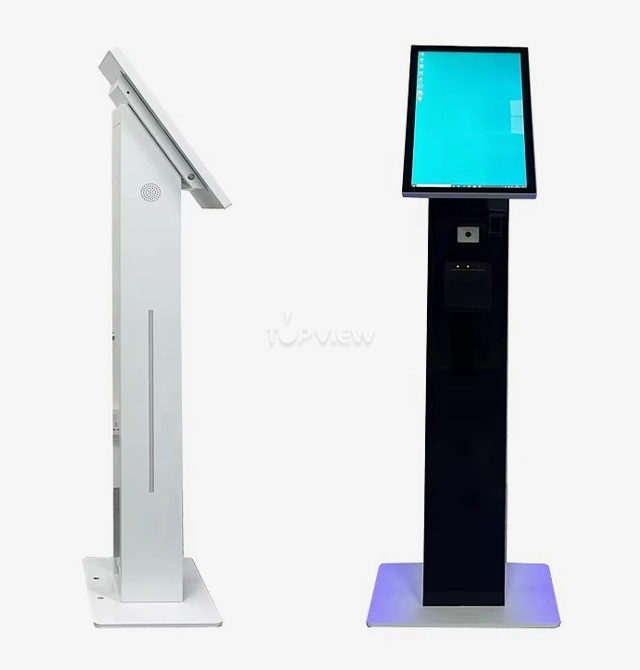 VIEW MOREFloor Stand Self-Service Touch Kiosk
 VIEW MOREOutdoor airconditioned Totem Signage
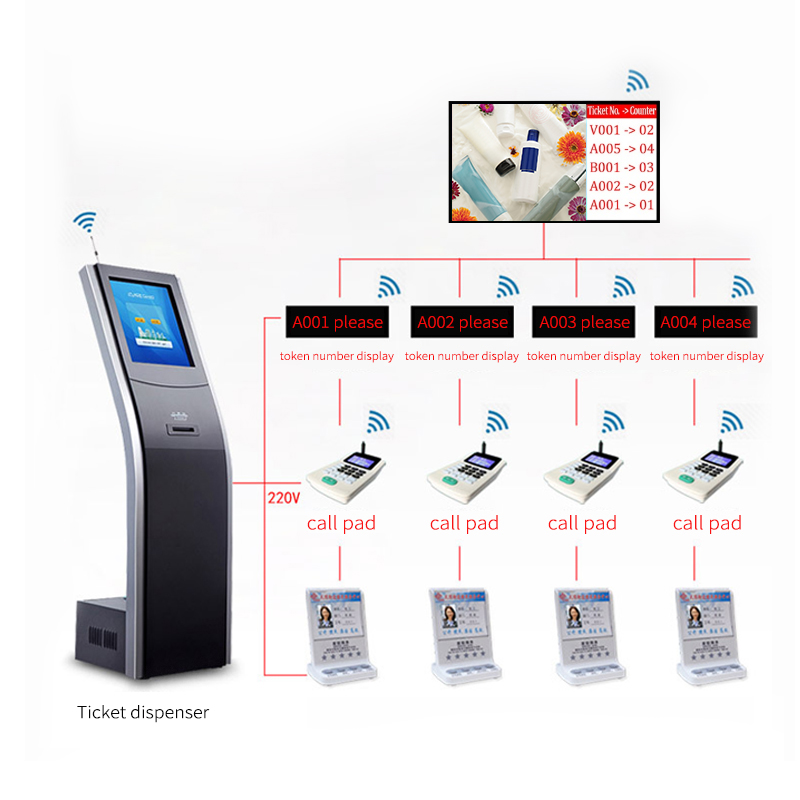 VIEW MOREBank/Hospital/Government queue management display system
 VIEW MOREOutdoor LCD Digital Signage
 VIEW MORENewspaper Rack Indoor Advertising Digital Signage
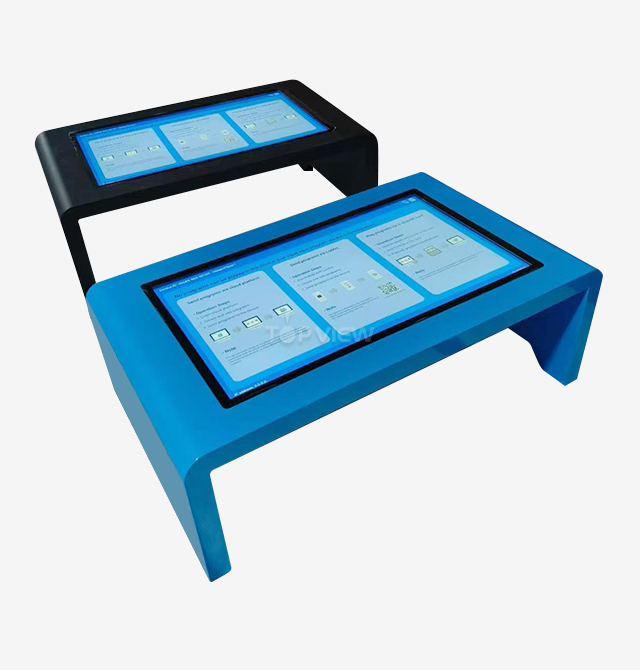 VIEW MOREInteractive touch tables
 VIEW MOREUltra Slim Double-sided Floorstand Kiosk
 VIEW MOREoutdoor ev charging kiosk