



Can IP66 outdoor digital signage withstand rain, dust, and harsh weather conditions?
IP66 outdoor LCD display is specifically engineered to operate in demanding environmental conditions. The IP66 rating, defined by IEC 60529, certifies complete protection against dust ingress (first digit "6") and resistance to powerful water jets from any direction (second digit "6"). This means a properly rated outdoor display will continue running through heavy rain, sandstorms, coastal humidity, and temperature swings without hardware failure. For procurement managers sourcing display solutions for advertising, retail, or public infrastructure, IP66 certification provides a measurable, standardized benchmark for weatherproof performance.
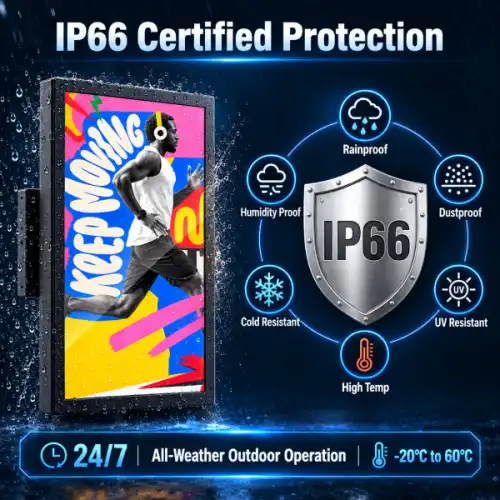
Understanding the IP66 Rating and Its Significance for Outdoor Digital Signage
What Does IP66 Actually Mean?
"Ingress Protection," or IP, is a rating system that is based on the worldwide standard IEC 60529. The first number (6) shows that the barrier is completely dust-tight; no particle of any size can get in. The second number, 6, shows that the material is resistant to high-pressure water jets coming from any direction. IP66-rated displays are good for places where both airborne particles and water exposure are a constant worry, like seaside promenades, open-air transit hubs, and business zones next to building sites.
How IP66 Compares to IP65 and IP54
IP65 protects against dust just like IP65, but it also protects against low-pressure water streams. IP54 provides some dust protection and splash resistance, which is good for covered outdoor areas but not for direct rain exposure. IP66 is better than both of them, which is why it's the best choice for installations where weather changes can really affect operations. IP66 should be the base standard that procurement teams use when choosing equipment for infrastructure for public advertising or government projects in cities.
International Standards and Certification Compliance
Responsible manufacturers back up their products with certifications that are recognized around the world, in addition to IP ratings. The T32SO, T43SO, T49SO, and T55SO solar-powered outdoor LCD display units from Topview are approved by CE, FCC, and RoHS. These credentials show that the product is safe for electromagnetic fields, electrical systems, and the environment. These are important requirements for procurement directors who handle cross-border purchases and project tender paperwork.
Core Technologies Behind IP66 Outdoor Digital Signage Durability
The fact that IP66 certification was achieved is not a coincidence. It shows that engineers carefully chose the enclosure, optical system, and thermal management layers. These are the main tools that make this level of security possible in real life.
- Galvanized steel enclosure with outdoor powder coating: Topview's T-series units use 1.5mm galvanized steel panels finished with outdoor-grade powder coating, giving the shell a rated lifespan of over seven years. The construction resists corrosion in humid or coastal environments.
- 6mm double-sided laminated AR glass: The vandal-resistant glass blocks 99.99% of UV radiation and reduces solar radiation heat by 52%. Light transmission exceeds 97%, while surface reflectivity stays below 3%, keeping content visible under direct sunlight without glare interference.
- Military-grade heat dissipation: An intelligent cooling system maintains the internal operating temperature between 5°C and 25°C even when ambient temperatures reach 45°C. This prevents the isotropic failure (panel blackening) that commonly damages LCD screens under sustained solar load.
- 1,500–2,000 nit LED-backlit display: The industrial-grade LCD panel operates across a temperature range of -30°C to 110°C. Combined with an automatic photosensitive probe, brightness adjusts continuously based on ambient light conditions — conserving energy and extending component lifespan.
When these technologies are used together, they protect display performance in situations where consumer-grade or entry-level business screens would not work. The end result is a system that procurement managers can trust to work around the clock without needing to be hacked often.
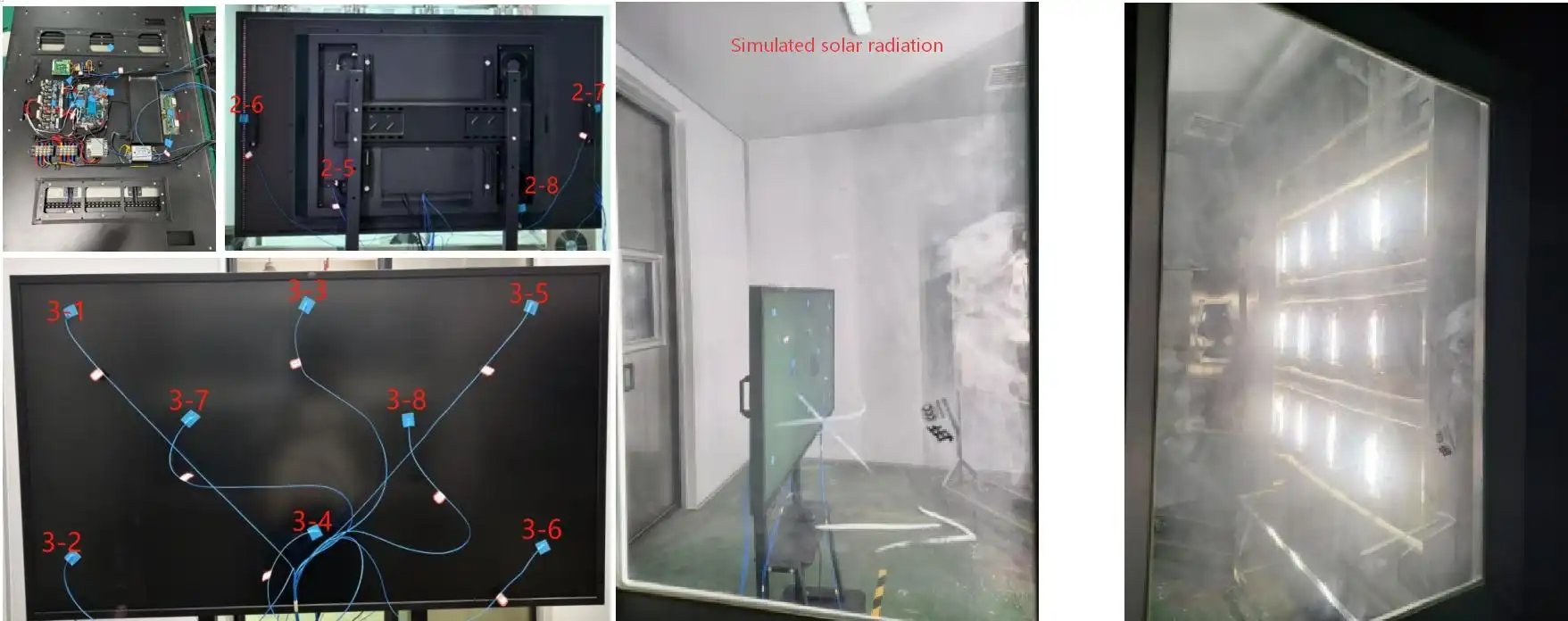
Comparing IP66 Outdoor Digital Signage to Other Outdoor and Indoor Solutions
IP66-Rated vs. Indoor Digital Signage
Indoor displays aren't made to handle humidity, dust in the air, or big changes in temperature. They will fail soon if you put them in open areas, even if they are partially covered. Outdoor units with the IP66 rating have sealed housings, stronger glass, and temperature-controlled interiors that indoor screens don't have. The difference in how long indoor and outdoor units with an IP66 rating last in open areas is big and is usually measured in years instead of months.
IP66 Displays vs. Static Billboards
Traditional static signs need to have their content changed by hand, can't be programmed, and can't change their messages based on the time of day or the people who see them. IP66-rated outdoor LCD display can show moving pictures, videos, and text that can be controlled from afar using a built-in network player. This means that advertising groups and retail chains can make material more flexible and campaigns more sensitive without having to pay more to run their businesses.
LED vs. LCD for Outdoor Applications
Large-format displays such as stadium screens and highway signs can benefit from LED-based outdoor displays that are brighter and use less energy. Topview's T-series LCD-based IP66 units work best for mid-sized business signs like storefronts, transit stops, and outdoor stands that need high-resolution content (1920x1080) and clear text. Each technology is best used in certain situations, and the best one depends on the viewing distance, the amount of light in the room, and the type of content being shown.
Maintenance and Longevity Tips for IP66 Outdoor Digital Signage
Routine Inspection Schedule
For most outdoor setups, it's best to have them checked every three months. Check the seals and gaskets on the box for cracks or signs of compression fatigue. Seals that are worn down are the most common way for water to get in. Check the surface of the AR glass for tiny scratches or buildup that could make it less clear. To keep the cooling system's airflow working well, keep the ventilation screens clean.
Managing UV Exposure and Heat Accumulation
UV light can break down gasket materials over time, even if they are protected by IP66. The seal assembly lasts longer when you use a display with imported, UV-resistant AR glass, like the ones in Topview's T-series units. The smart temperature control system takes care of the fan speed and heat removal on its own, but you should still clean the filters by hand every so often.
Leveraging Warranty and Technical Support
Topview's outdoor display range comes with a basic one-year warranty, but you can choose an extended guarantee that lasts up to three years. From the moment of delivery, there is lifetime technical support, which covers both the warranty period and any time after the warranty term. This long-term support framework lowers the risk of extended downtime and unexpected upkeep costs for AV installers and EPC contractors who are in charge of big installations.
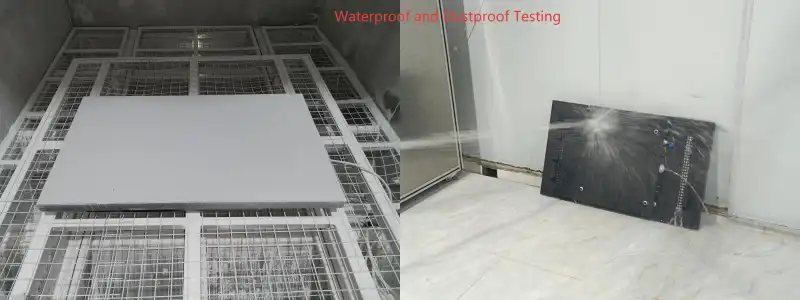
Procurement Considerations: Buying IP66 Outdoor Digital Signage for Harsh Environments
Evaluating Environmental Conditions Before Specifying
Before deciding on the final display specification for outdoor LCD display, procurement teams should look at the usual weather patterns, temperature range, level of dust exposure, and risk of physical impact at the installation site. Coastal sites need enclosures that don't rust. Wide temperature differences are needed in places like high altitudes or deserts. It is possible for Topview's T-series panels to work with LCD substrate temperatures ranging from -30°C to 110°C. This range covers most climate zones in the continental United States and beyond.
Customization Options for Project-Based Procurement
Topview can handle both OEM and ODM orders, and there are no minimum order quantities for customization. You can change the built-in software, the power-on logo, the brightness level, and the shell color to fit your needs. This makes it easier for regional wholesalers or EPC companies who are in charge of government or local bids to match product configurations with specification needs.
Logistics, Lead Time, and Pricing Terms
Topview sends units in strong wooden cases to keep them from getting damaged in transport. The normal lead time is between 5 and 15 business days. There are three types of pricing terms: EXW, FOB, and DDP. This gives international buyers choices based on how they plan to handle logistics. Payment can be made with TT. When purchasing managers compare factory-direct China buying to local dealer prices, these terms usually lead to a big cost-per-unit advantage at the same or higher standard levels.
Conclusion
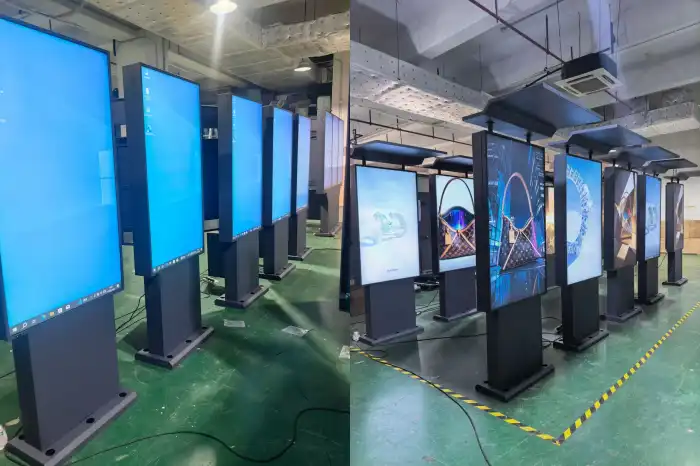
Outdoor LCD display with an IP66 rating is not just a waterproof version of regular screens. Every part of these systems, from the stainless steel shell to the high-Tni LCD panel, was chosen based on how well it will perform in harsh environments. The IP66 standard is a good starting point for business-to-business buyers who need displays for advertising, retail, public transit, or government projects. Topview's T32SO, T43SO, T49SO, and T55SO units meet this standard and come with CE/FCC/RoHS certification, lifetime technical support, and the ability to use solar power. This package answers the most common worries about buying electronics, such as cost, dependability, and trust in their long-term use.
FAQ
Q1: Can IP66 displays operate continuously in extreme cold?
Yes. Topview's T-series units use a specialized LCD substrate rated for operating temperatures as low as -30°C. The intelligent heating function activates automatically during cold starts, ensuring clear image output without delay. This makes them appropriate for installations in northern U.S. states, Canada, and other cold-climate markets.
Q2: How often should gaskets and seals be replaced?
Under normal conditions, gasket integrity should be checked every 12 months. Replacement is typically needed every two to three years, depending on UV exposure and thermal cycling frequency. Using displays with UV-resistant glass, as in Topview's T-series, slows gasket degradation significantly.
Q3: Is IP66 sufficient for coastal salt-spray environments?
IP66 protects against water ingress but does not specifically test for salt-spray corrosion. For coastal deployments, buyers should also confirm that the enclosure material meets corrosion resistance standards. Topview's galvanized steel enclosures with outdoor powder coating provide appropriate corrosion resistance for most coastal commercial applications.
Q4: Does the solar power system work in cloudy climates?
Topview's T-series solar battery uses gel electrolyte with deep cycling capability and overcharge/over-discharge protection. The battery system stores enough charge to maintain operation during periods of low sunlight, making it functional across a wide range of climates rather than only in high-solar-irradiance regions.
Get a Quote from Topview — Trusted Outdoor Digital Signage Manufacturer
From its factory in Shenzhen, Topview has been making business displays for more than 13 years. Our tech team can make a solution that fits your exact needs, whether you need IP66-rated solar-powered screens for a single site or a large-scale project with multiple sites. For your next IP66 Outdoor LCD display project, you can email us at market@tviewdisplay.com to get product specifications, bulk pricing, or an OEM consultation.
References
1. International Electrotechnical Commission. IEC 60529: Degrees of Protection Provided by Enclosures (IP Code). IEC, 2013.
2. Digital Signage Federation. Digital Signage Best Practices Guide. DSF, 2022.
3. Society of Information Display. Display Technology Review: Outdoor Visibility and High-Brightness Panels. SID, 2021.
4. AVIXA. AV Industry Outlook and Trends Report. AVIXA, 2023.
5. IEEE. IEEE Std 1680.1: Standard for Environmental and Durability Requirements for Electronic Displays. IEEE, 2020.
6. Frost & Sullivan. Global Digital Out-of-Home Advertising Market Analysis. Frost & Sullivan, 2022.