



What types of products work best with spatial 3D displays?
Products that work best with spatial 3D displays share one common trait: they benefit from visual depth. Jewelry, watches, automotive models, consumer electronics, luxury fashion, and museum artifacts all gain measurable presentation value from a 3d spatial signage display. These products have physical details, textures, or spatial relationships that flat screens simply cannot communicate. When viewers perceive genuine depth without glasses, their attention holds longer, their recall improves, and purchase intent increases. Selecting the right product category is the first decision that determines whether your display investment delivers results.
Understanding 3D Spatial Signage Displays and Their Capabilities
Before putting goods on displays, it's helpful to know what this technology does and why it makes people more interested than regular displays.
How the Technology Works
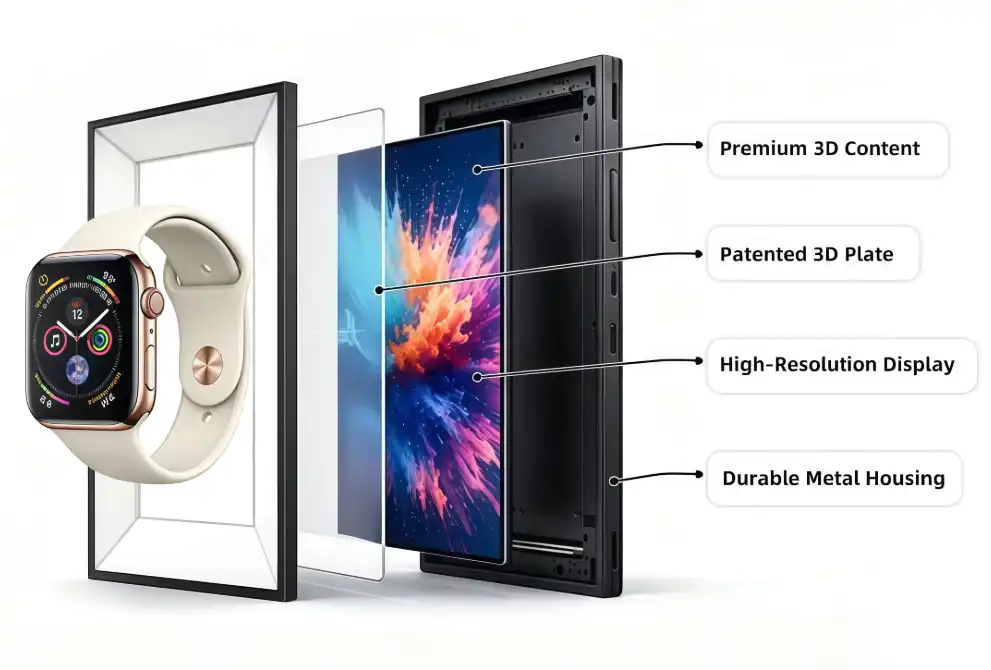
Topview's glasses-free 3D display uses binocular parallax to show each eye a different picture at the same time. This difference is seen by the brain as depth, making it seem like an item has three dimensions and is in real space. There is no need for headsets or glasses, which makes it easier for people to watch in busy commercial spaces.
The "2D Subject, 3D Background" Rendering Method
The display uses a certain rendering method: the subject in the foreground is shown with sharp 2D resolution, while the background has the effect of having depth. This method fixes the two main issues with regular 3D screens that don't require glasses: images that aren't as clear and viewing angles that are too narrow to be useful. This gives you a 178° viewing angle, a 60° 3D depth-of-field view, and a 500mm depth-of-field space.
Key Specifications Worth Knowing
The 3d spatial signage display's screen comes in 21.5", 32", 55", and 86" sizes, and you can choose between 2K (1920x1080) and 4K (3840x2160) resolutions. The default brightness level is 350 cd/m², but you can choose to increase it to 1000 cd/m² for places with a lot of natural light. The contrast ratio is 1200:1, the color range is 100% sRGB, and the system can be connected via HDMI and works with both Android and PC. Installations on the floor or mounted on the wall are both possible. When setting up the show for different types of products, these numbers are important.
Types of Products That Benefit Most from 3D Spatial Signage Displays
You don't have to guess to pick the right product group. Because of how they look and how buyers judge them, some types of products always get better reactions from viewers on spatial displays.
Luxury Goods: Jewelry, Watches, and Handbags
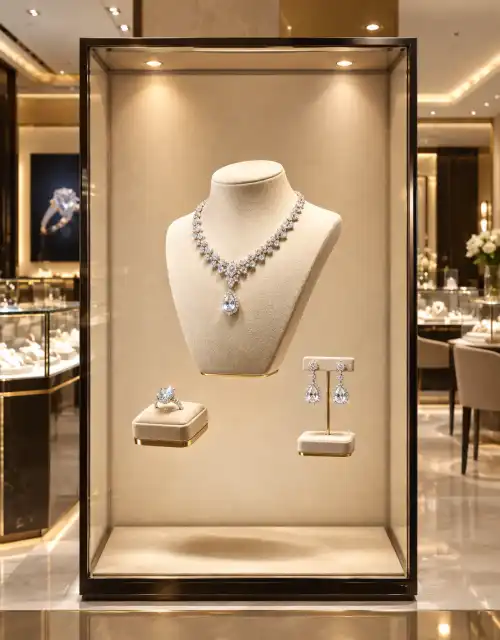
The facets of a cut diamond, the grain of leather, and the sweep of a watch hand are all small but meaningful parts of high-value accessories. A commercial 3D display that doesn't require glasses gives these details a sense of space that flat photography can't match. Retailers say that showing products with more depth makes people stay longer at display points, which is directly linked to sales in high-end settings.
Consumer Electronics and Technology Products
Smartphones, headphones, and smart tech all have shapes where the depth of the space shows what the designer was trying to do. By rotating a product in what appears to be three-dimensional space, viewers can check out the device's size, where the ports are placed, and the quality of the finish before actually handling it. This format gives the product a real presence without needing physical inventory at every display point. This is great for electronics brands that are launching new products in corporate showrooms or shopping mall activations.
Automotive and Industrial Models
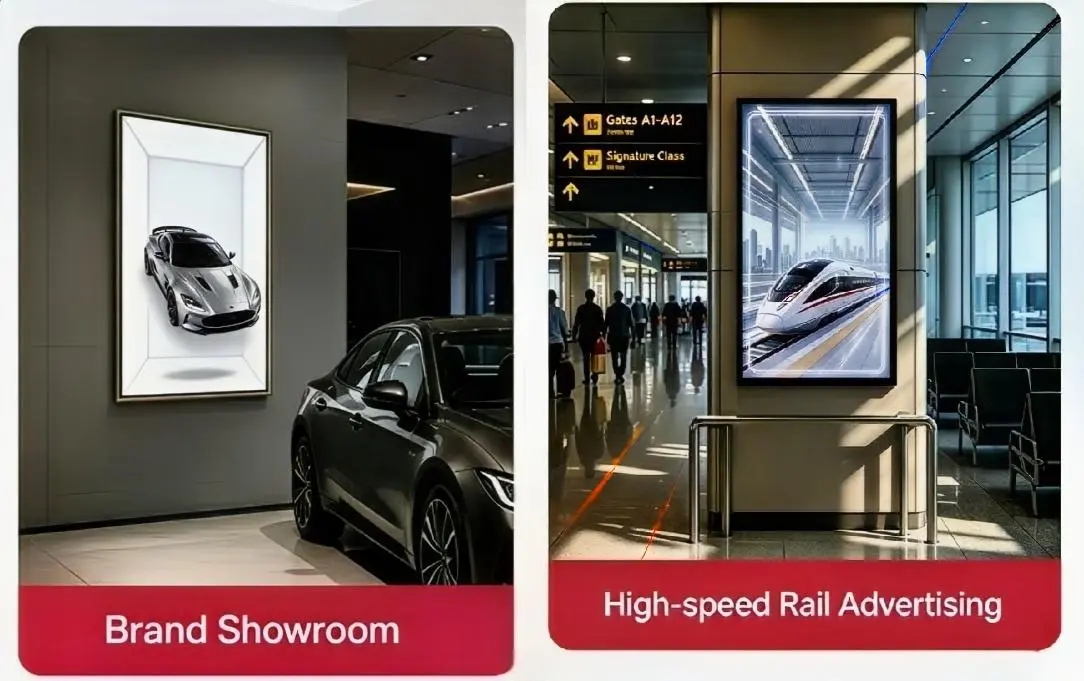
Scale models and computer renders are used by automakers and companies that make industrial tools to show off their products in showrooms. Spatial 3D displays make the outside lines of a car or the inside structure of a machine look like they are really there, at sizes that aren't possible with regular screens. This app works especially well in corporate showrooms and trade shows where floor space limits the size of the exhibits.
Fashion and Apparel
Fashion stores can benefit from virtual model presentations that show clothes moving around and having depth. This format keeps customers interested for longer and makes flat lookbook displays less static. When shown on a commercial 3D display, dynamic virtual model material makes a visual anchor in store design that draws people in from far away.
Museum Artifacts and Exhibition Content
Spatial displays are used by museums and exhibition contractors to show objects or archival material that can't be directly shown because they are too fragile, too big, or too few of them. Visitors are more interested in an exhibit when a historical item seems to float in space within the display area. This isn't the case with printed panels or flat screens. Because the show can be set up in a variety of ways and stays up for long periods of time, it can be used in both fixed and temporary exhibition settings.
All of these types of products have something in common: people judge their real or visual traits based on where they are in space. Putting any of these items on a 3D screen that doesn't require glasses is a clear way for buying teams to set their client projects apart from regular sign setups.
Comparative Advantages: 3D Spatial Signage vs Other Display Technologies
Procurement experts can better divide their budgets when they know where spatial displays perform better than other options.
Against Standard Digital Signage
Standard LED and LCD digital signs show flat images on a large scale. It works well for writing, prices, and simple pictures. Spatial 3D displays are used for different things, like showing how a product works, telling stories about a brand, and in high-attention commercial settings where depth adds real communication value that flat content can't.
Against Holographic Projection
Holographic projection systems need controlled lighting, a lot of infrastructure for placement, and regular upkeep for the projection parts. A 3D display that doesn't need glasses, a 3d spatial signage display, can work in normal office lighting, with HDMI or Android input, and with power from 110V to 220V. It can also be mounted on standard wall frames or floor stands. The level of operational simplicity is much lower, but the visual depth effect is still there.
Against Augmented Reality
AR needs viewers with gear like phones or headsets, which reduces the number of people who can see it at the same time and makes adoption more difficult. A spatial 3D image can be seen by anyone with a 178° viewing angle, and no special equipment is needed. This passive engagement model reaches more people per installation in places with a lot of foot traffic, like airports, shopping malls, and storefronts.
How to Effectively Design Content for 3D Spatial Signage Displays?
Match Content Structure to the Rendering Method
The content needs to be in the "2D subject, 3D background" format for this type of display to work right. The subject or product should be in great focus in the center, and depth layers should go behind it. Standard video files can't be changed directly into 3D content; content has to be written or changed to fit this format.
Scale and Resolution Selection
For close-up retail viewing, like at jewelry counters, watch displays, or cosmetics counters, the 32" or 55" size at 4K resolution shows the most accurate details. For watching large areas in airports, shopping mall atriums, or trade show floors, the 86" model with 1000 cd/m² light keeps things visible from farther away.
Content Cycle and System Integration
The screen can accept HDMI input and can be set up to work with either an Android or PC system. This means that it can be used with current content management processes. AV integrators don't have to make any special interfaces to connect it to bigger commercial AV systems. There are wall-mounted and floor-standing choices for both fixed installations and event deployments.
Procurement Insights: Choosing and Purchasing 3D Spatial Signage Displays
Evaluate Supplier Manufacturing Capability
Verify that the supplier has dedicated production lines and quality-controlled assembly environments when looking for a 3d spatial signage display manufacturer. Topview Technology has a 2,000-square-meter building in Shenzhen that has three production lines, more than 20 engineers, and the ability to make 100 units per day. Because of the size of this production scale, there is a steady long-term supply for project-based procurement.
OEM, ODM, and Customization Options
When buying displays for branded client projects, procurement teams should make sure that both OEM and ODM options are available. Topview can make custom logos for silk screen printing and LED backlighting, as well as custom colors, power-on logo arrangement, and brightness settings for both indoor and outdoor use. For customization jobs, there is no minimum order number that needs to be met.
After-Sales Support and Technical Resources
Long-term display projects need reliable assistance after the installation is done. Topview has two specialized after-sales experts and an R&D team of ten people with eight years or more of experience in the field. Technical support includes integrating hardware, customizing software, and setting up displays to meet the needs of a specific project.
Conclusion
From its factory in Shenzhen, Topview has been making commercial display solutions for more than 13 years. With choices for 2K or 4K resolution, four sizes, OEM/ODM customization, and no minimum order quantity, our glasses-free 3d spatial signage display is available. We can help your project from the beginning to the end, whether you are a brand buying team, an AV installer, or a digital signage solution provider.
FAQ
Q1: Which industries gain the most from glasses-free 3D commercial displays?
Luxury retail, consumer electronics, automotive, fashion, museums, and commercial advertising consistently produce the strongest results. These sectors present products where visual depth directly affects how buyers perceive quality and value.
Q2: How does a spatial 3D display differ from standard digital signage?
Standard digital signage presents flat imagery. A spatial display uses binocular parallax to create perceived depth, producing a fundamentally different viewer experience. Attention hold time and brand recall are measurably higher with depth-enhanced content in controlled retail studies.
Q3: What is a realistic ROI timeline for spatial 3D display installations?
ROI timelines vary by application. Luxury retail and high-traffic commercial venues typically see measurable engagement improvements within the first quarter of deployment. Event and trade show applications recover costs within individual campaign cycles due to premium visual differentiation value.
Q4: Can existing video content be used on these displays?
Standard video files cannot be directly converted into 3D spatial content. Content must be authored or adapted to the "2D subject, 3D background" format. Topview's technical team provides software customization support for content integration.
Ready to Source a 3D Spatial Signage Display for Your Next Project?
Topview has manufactured commercial display solutions for over 13 years from its Shenzhen facility. Our glasses-free 3D spatial signage display is available in four sizes with 2K and 4K resolution options, OEM/ODM customization, and no minimum order quantity. Whether you are a digital signage solution provider, AV integrator, or brand procurement team, we support your project from specification to after-sales. Contact us at market@tviewdisplay.com to request product details and a project quote.
References
1. Digital Signage Today — State of the Digital Signage Industry Report, 2023.
2. Journal of Retailing and Consumer Services — The Effect of Immersive Display Technology on Consumer Attention and Purchase Intent, 2022.
3. InfoComm/AVIXA — AV Industry Outlook and Compensation Report, 2023.
4. Display Daily — Glasses-Free 3D Display Technology: Commercial Applications and Market Trajectory, 2022.
5. Harvard Business Review — How In-Store Technology Affects Luxury Retail Conversion Rates, 2021.
6. Messe Frankfurt Exhibition GmbH — EuroShop Retail Technology Trends Report, 2023.