



What should I consider when purchasing IP66 outdoor digital signage
When purchasing IP66 outdoor digital signage, you need to evaluate weather protection ratings, display brightness, thermal management, certifications, supplier reliability, and total cost of ownership. The IP66 rating means the enclosure is fully dust-tight and protected against powerful water jets — a non-negotiable standard for permanent outdoor installations. Whether you are sourcing screens for retail storefronts, transportation hubs, or government projects, understanding these factors upfront saves money, reduces downtime, and helps you build a dependable outdoor display network.
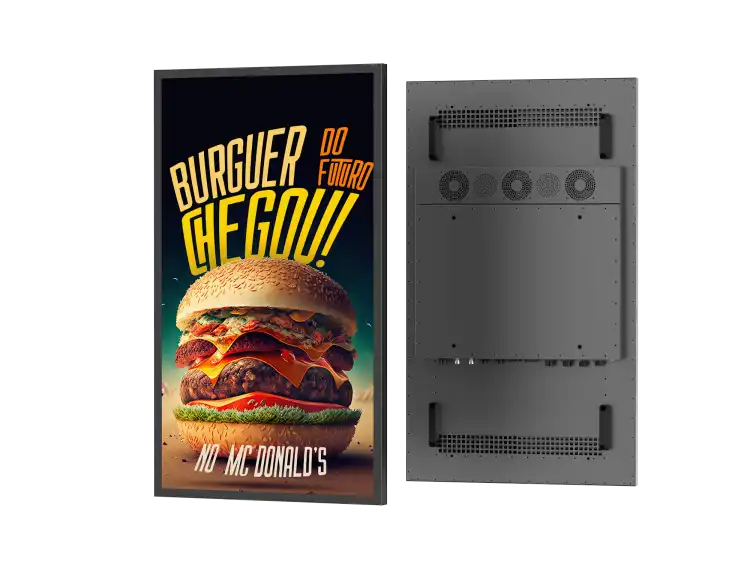
Understanding IP66 Outdoor Digital Signage: Features and Benefits
Before you buy a lot of something, it's helpful to know what the IP66 standard actually does and why it's important for business use.
What the IP66 Rating Actually Means
IEC standard 60529 sets the rules for the IP (Ingress Protection) rating system. The number "6" in the first row shows that there is no possible dust entry. The second number, "6," confirms that you are safe from strong water jets coming from any direction. For procurement managers in charge of advertising billboards, transit displays, or retail signage, equipment failure during a storm is a costly event. This is because screens can work through heavy rain, pressure washing, and dusty industrial environments without any damage to the inside. IP66-rated enclosures made from 1.5 mm galvanized steel with outdoor powder paint, like those on Topview's T32SO/T43SO/T49SO/T55SO models, last longer than seven years, which means they don't need to be replaced as often and don't cost as much to maintain.
Weather Resistance as a Business Asset
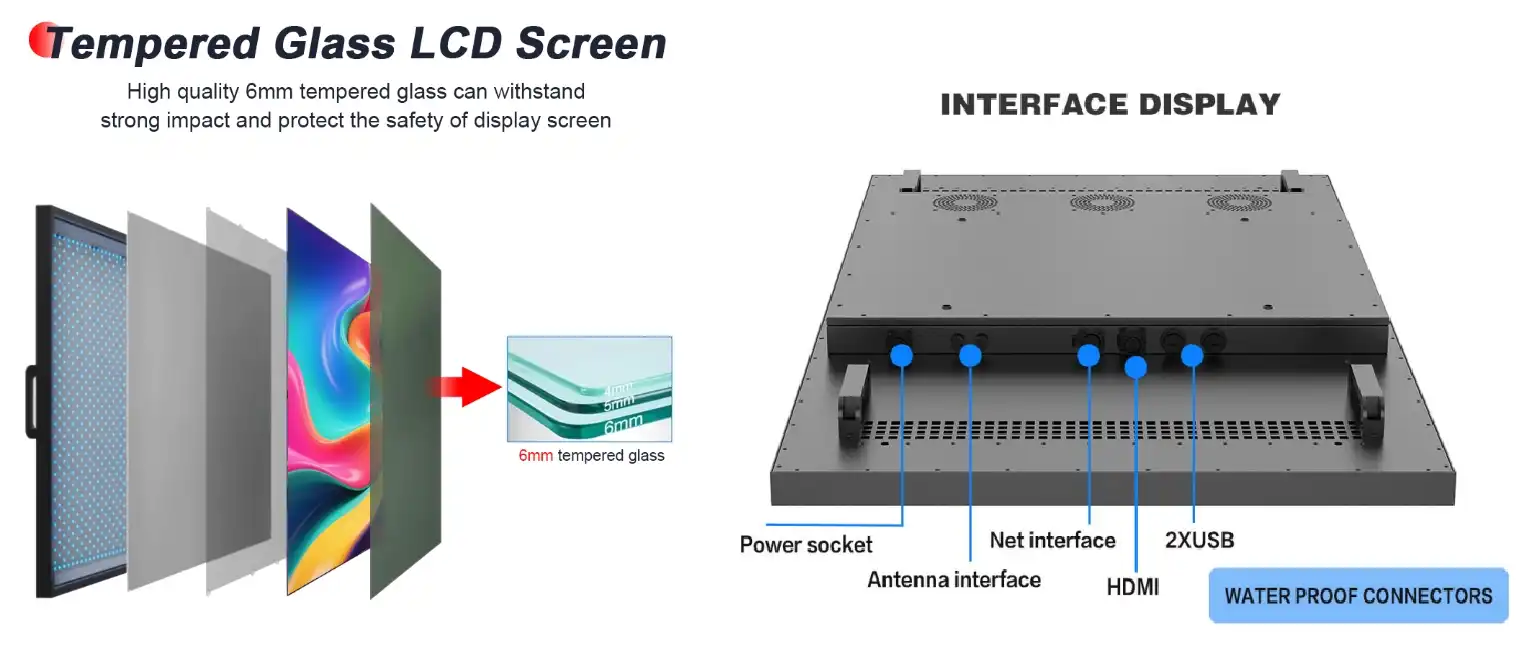
Outdoor screens have to deal with weather, glare, and changes in temperature every day. High-brightness screens with 1,500 to 2,000 nits and 6mm AR anti-glare laminated glass that lets over 97% of light through and reflects less than 3% of it back make it possible to read content at any time. Every installed unit is protected by consistent exposure, which saves brand messaging and ad income.
Visibility and Brand Consistency
Outdoor digital signage screens face sunlight, glare, and temperature swings daily. High-brightness displays at 1,500 to 2,000 nits, combined with 6mm AR anti-glare laminated glass offering over 97% light transmission and less than 3% reflectivity, keep content legible at all hours. Consistent visibility protects brand messaging and advertising revenue across every installed unit.
Critical Technical Specifications to Evaluate When Purchasing IP66 Outdoor Digital Signage
It's easier for buying teams to avoid costly specification mismatches when they know which technical factors are the most important.
Display Technology and Brightness
The current standard for outdoor readability is LED-backlit LCD panels with a rating of 1,500 to 2,000 nits. Topview's industrial-grade monitors have automatic sensor probes that change the brightness based on the amount of light in the room. This saves energy and keeps parts from wearing out too quickly. This smart lowering feature also makes the panel last longer without reducing its sight.
Operating Temperature Range and Thermal Management
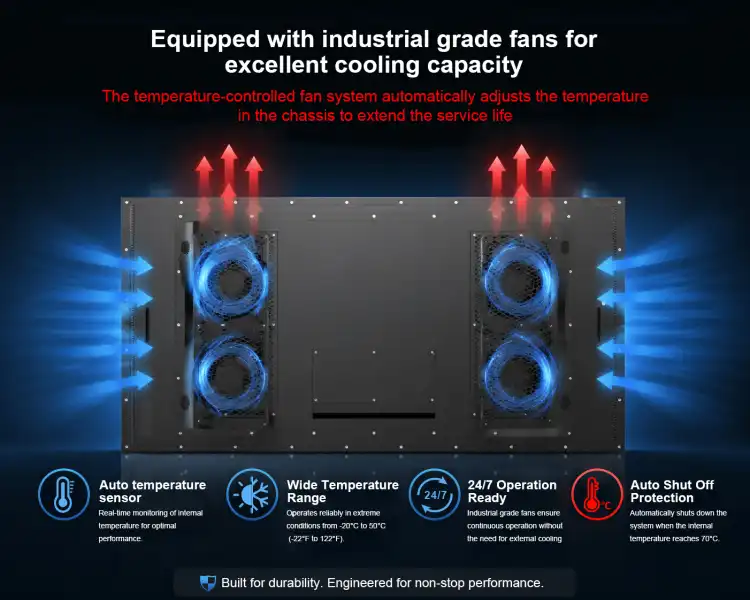
It gets very cold (-20°F) in the Midwest of the United States and very hot (100°F) in the summer. The High-Tni liquid crystal panels and military-grade heat dissipation technology allow them to work in a wide temperature range of -30°C to 110°C. This stops the "blackening" failure that happens with regular consumer panels when they are directly exposed to sunlight. The temperature inside stays between 5°C and 25°C all the time thanks to intelligent straight-wind temperature control.
Resolution, Screen Size, and Content Compatibility
The minimum resolution for clear images and videos at normal watching range is 1920x1080, which is full HD. Topview has screens ranging in size from 32 inches to 55 inches (T32SO to T55SO), so project managers can choose the right size screen based on the depth of the placement and the distance of the audience. The built-in player works with pictures, videos, text, cable network transfer, and offline playing, so you don't have to be connected to the internet all the time.
Installation and Maintenance: Ensuring Longevity and Performance
It's not enough to just buy the right goods. How it's put together and taken care of determines how long it will last in real life.
Choosing the Right Installation Location
For outdoor digital signage, choice of site has a direct effect on both longevity and visibility. Screens that are put up in places with a lot of car fumes, salt spray from the coast, or straight sunlight from the west will wear out faster. The outdoor powder finish on the galvanized steel container makes it resistant to ISO 12944 C4/C5 corrosion classes. However, good hardware and a good location will still shorten the time between maintenance visits. Topview sends all of its units in sturdy wooden cases that protect the screens while they're being moved to difficult installation sites.
Mounting Options and Structural Considerations
Different types of configurations—freestanding, wall-mounted, and pole-mounted—need different amounts of structural load. AV system installers and EPC workers should make sure that the mounting clamps meet the wind load codes in their area. Topview helps project managers meet site-specific structural requirements by giving them technical documentation and engineering support. This cuts down on installation delays during tight tender timelines.
Routine Maintenance Best Practices
When shelters are properly sealed, regular upkeep is easy to do. Inside Topview units, a high-precision cleaning system stops dust from building up on internal parts. Every three months, the glass should be cleaned with non-abrasive products, the integrity of the seals should be checked, and the fan or cooling system should be checked. Topview offers free technical support for life, even after the insurance period is over. This means that your team will always be able to get expert help when problems arise in the field.
Comparing IP66 Outdoor Digital Signage With Other Options
Figuring out how IP66 displays stack up against other options helps people making decisions defend spending plans to people inside the company.
IP66 Digital Displays vs. Traditional Static Billboards
For every change in a campaign, static billboards cost money to print and can't be updated remotely. They also don't let you connect with the material. An IP66-rated digital display with an integrated network content management system lets you schedule content in real time, play it back in multiple formats, and control it from a central server. This difference in how things are run directly means lower campaign costs and faster turnaround for store chains or ad networks that are in charge of dozens of sites.
Outdoor vs. Indoor Display Solutions
Most commercial displays inside can only have an IP54 rating and work at 700–1,000 nits, which is too dim for use outside. If you put an indoor display outside, the panels will turn black, water will get in, and the display will break within months. Screens that are IP66-certified are made with vandal-proof 6mm layered glass, UV-blocking AR coatings that stop 99.99% of UV light from getting through, and industrial power sources that protect against surges. These aren't upgrades for indoor screens; they were made to work in places where they can't be managed.
Solar-Powered vs. Grid-Connected Outdoor Displays
Topview's T32SO/T43SO/T49SO/T55SO series has a solar-powered option that saves energy and doesn't need any wiring or electrical connections. The deep-cycle gel battery can handle being overcharged or overdischarged, works at high altitudes and temperatures, and keeps screens running 24 hours a day, seven days a week without needing to be plugged into the grid. This feature gets rid of one of the biggest problems with outdoor deployment when it comes to places that are hard to reach, like parks, highways, or municipal sites that aren't connected to the power grid.
Procurement Considerations: How to Select and Purchase the Right IP66 Outdoor Digital Signage?
Strategic buying of outdoor digital signage means matching the capabilities of a product to its use, checking the qualifications of the seller, and planning for the total costs over its entire lifecycle.
Industry-Specific Application Requirements
Here are the main types of applications and the requirements that go with them:
- Retail and advertising: Content refresh frequency is high; remote CMS integration and bright, glare-resistant panels are priorities. Topview's embedded network release system supports segmented timer control and automatic power scheduling.
- Transportation hubs: Airports and transit stations demand 24/7 operation, IP66 protection, and vandal-resistant glass. The IK10-equivalent laminated glass and IP66 enclosures on Topview units meet these standards.
- Government and municipal projects: Compliance with CE, FCC, and RoHS certifications is mandatory for U.S.-facing tenders. All Topview T-series units carry these certifications.
These application-specific standards help procurement teams choose setups that don't need expensive changes after installation.
Cost Structure and Warranty Coverage
The unit price is only one part of the total cost of ownership. Payment can be made through TT, and shipping terms are EX Works, FOB, or DDP. Lead time is between 5 and 15 business days. The standard warranty lasts for one year, but you can extend it for up to three years if you want to. Since screens are made to be used in businesses 24 hours a day, seven days a week, the choice for an extended warranty should be included in project costs from the start.
Evaluating Suppliers on Production Capacity and Certifications
The size of a supplier's factory tells you if it can meet the deadlines for big projects. Topview has a 2,000-square-meter factory in Shenzhen that can make 100 units per day and has three production lines, more than 20 engineers, and a capacity to do so. The more than ten engineers on the R&D team have an average of more than eight years of experience in the field. Topview is a good choice for both bulk buying and project-specific sourcing because they accept OEM and ODM projects and don't have a minimum order quantity for customization.
Conclusion
Buying IP66 outdoor digital signage is a choice with many parts. The IP66 enclosure is the first line of defense against weather, but brightness, heat management, certifications, content systems, and provider support will decide how well the investment holds up over years of use outside. The T32SO to T55SO line from Topview meets these needs with industrial-grade parts, solar power choices, FCC/CE/RoHS compliance, and free expert support for life. By taking the time to make sure that the specs fit the needs of your project and that the provider can meet those needs, you can get displays that work reliably from the start of the project and for years to come.
FAQ
Q1: Does IP66 protection cover complete waterproofing?
Based on IEC 60529. IP66 means the cover can withstand strong water jets coming from any direction. It doesn't mean that the unit can go under water. For outdoor advertising, stores, and transit sites, IP66 is enough to keep out rain, weather, and cleaning tools.
Q2: What brightness level do I need for outdoor visibility?
There should be at least 1,500 nits in most open areas in the United States. 2,000 nits may be needed for direct sunlight. Topview's T-series screens have both levels of brightness and can automatically change to the lighting conditions where they are used.
Q3: Can these screens operate in extreme cold?
Yes. The High-Tni LCD base can work in temperatures ranging from -30°C to 110°C, so it can start up quickly and show clear images in cold places.
Q4: What certifications should I require from a supplier?
In order to sell something in the U.S., it needs to have CE, FCC, and RoHS approvals. The T-series units from Topview have all three.
Partner With Topview for Your Next Outdoor Digital Signage Project
Topview is a well-known company in Shenzhen that makes outdoor digital signage. They have been in business for more than 13 years and have three dedicated production lines. The T32SO/T43SO/T49SO/T55SO series comes with full FCC/CE/RoHS certification, IP66 protection, 1,500–2,000 nit brightness, solar power, and is ready for bulk orders and custom OEM projects. To get specs and a project price right away, email our team at market@tviewdisplay.com.
References
1. International Electrotechnical Commission. IEC 60529: Degrees of Protection Provided by Enclosures (IP Code). IEC, 2013.
2. Digital Signage Federation. Digital Signage Best Practices Guide. DSF, 2022.
3. InfoComm International (AVIXA). AV Industry Outlook and Compensation Report. AVIXA, 2023.
4. Grand View Research. Digital Signage Market Size, Share & Trends Analysis Report. Grand View Research, 2023.
5. SEMI International Standards. Standards for Outdoor Electronic Display Systems: Environmental and Performance Requirements. SEMI, 2021.
6. Freedonia Group. World Digital Signage Displays. Freedonia Group, 2022.