



What screen brightness is recommended for outdoor digital display in direct sunlight?
The minimum recommended screen brightness for outdoor digital display that will be exposed to direct sunlight is 2,500 nits (cd/m2). In full-noon sun, the ambient light level can approach 100,000 lux, which will soon wash out displays rated below that level. Most industry professionals recommend 2,500–5,000 nits for normal outdoor deployments, while places with extreme, unimpeded solar exposure, like rooftop billboards or transit platforms, require displays rated at 5,000 nits or more. Getting the specification correct in the first place minimises washed-out visuals, saves your investment, and keeps your audience engaged throughout the day.
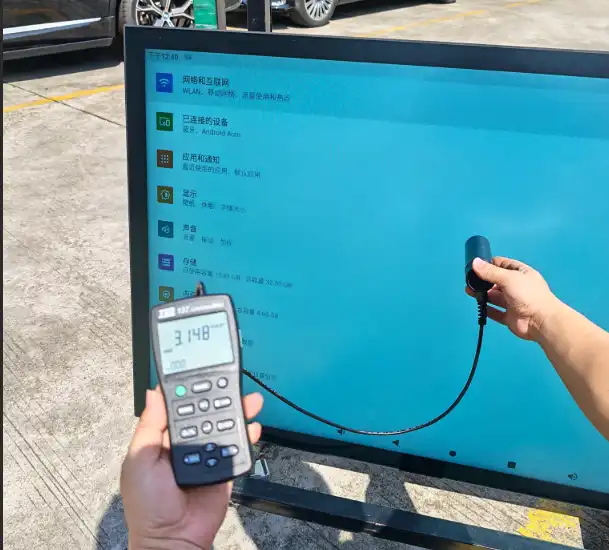
Understanding Outdoor Digital Signage Brightness Requirements
Brightness: Brightness is the amount of light emitted by a screen. It is measured in nits, or candelas per square metre ( cd/m 2 ). Though they do work together, they are not the same thing. Outside, even a screen with a high contrast ratio won’t function because the backdrop light will wash out the image.
Why Is Direct Sunlight the Hardest Test?
The direct sun irradiance at sea level is roughly 1,000 W/m²; therefore, on a clear day the light intensity is far beyond 50,000 lux. A standard commercial display is practically impossible to notice when the brightness is in the 350 to 500 nits range. A good rule of thumb is that a display should be at least 1/10th the ambient lux level. This is why most outdoor uses have now standardised to 2500-5000 nits.
Brightness vs. Contrast: What Procurement Teams Often Overlook
Just saying what colour you want is not enough. Even on high-nit screens, the contrasts are less stark because of glare and surface reflection. Thanks to high brightness and AR (anti-reflective) glass coatings, such as the US-sourced glass in Topview’s T-series displays, that allow over 97% of light to pass through and less than 3% to bounce back, the picture remains visible all day long.
Industry Benchmarks at a Glance
According to published guidelines from groups in the display industry, the following nit ranges should be used depending on the environment:
- 1,000–1,500 nits — Covered outdoor areas, shaded facades
- 2,500–3,500 nits — Semi-exposed locations, east/west-facing walls
- 4,000–5,000+ nits — Full direct sunlight, south-facing or rooftop installations
Types of Outdoor Digital Signage and Their Brightness Capabilities
Picking the right display technology affects both how well it works and how much it costs to own, especially for outdoor digital signage. LED and high-brightness LCD, the two main types, are used in different ways.
LED vs. High-Brightness LCD
Direct-view LED panels can have more than 5,000 to 8,000 nits of brightness, which is why they are best for large-format billboards and stadium fascias. LCD screens with a brightness rating of between 1,500 and 4,000 nits work well for single-screen kiosks, information boards on public transportation, and shop displays where picture clarity and full HD resolution are more important than size.
Anti-Glare and AR Glass Treatment
LCD screens that will be in direct sunlight need to be optically bonded and treated to reduce glare. The T32SO, T43SO, T49SO, and T55SO models from Topview use AR glass made in the US that is imported and stops 99.99% of UV radiation and cuts solar heat gain by 52%. This treatment isn't just for looks; it stops the "isotropic failure" (black spots from overheating the panel) that ends the useful life of screens that aren't protected.
Resolution and Brightness Together
A 1920x1080 Full HD resolution screen at 2,000 nits shows more useful visual information than a lower-resolution screen at 3,000 nits. This is because pixel density affects how clearly small details, like price text or road maps, show up when reading. The T-series panels from Topview offer 1920x1080 resolution at 1,500 to 3,000 nits, which is a good balance between brightness, clarity, and power use.
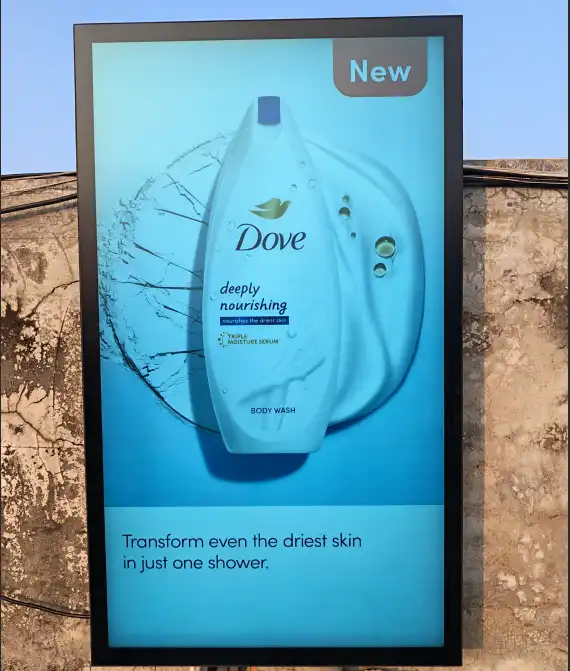
How to Choose the Right Brightness Level Based on Deployment Scenarios?
There is no one lighting level that works for all projects. AV installers and procurement managers have to make sure that the brightness requirements for each site are met.
Retail and Advertising Displays
A shopping mall facade or street-level show will usually face east or west, and a canopy may provide some shade. A screen with 2,500 to 3,000 nits is usually enough for this, and Topview's sensor probe feature lets the brightness be automatically adjusted. This saves power during off-peak hours while keeping visibility high during peak traffic.
Transportation Hubs and Government Infrastructure
Light levels vary a lot in places like airport curbsides, metro exits, and city information booths, which are common deployment sites for outdoor digital display. Displays rated at 3,500 to 5,000 nits and a clever dimming system work well together in these setups. In these places, consistent readability is more important because people using them have to make quick choices based on the information shown.
Solar-Powered Deployments in Remote Locations
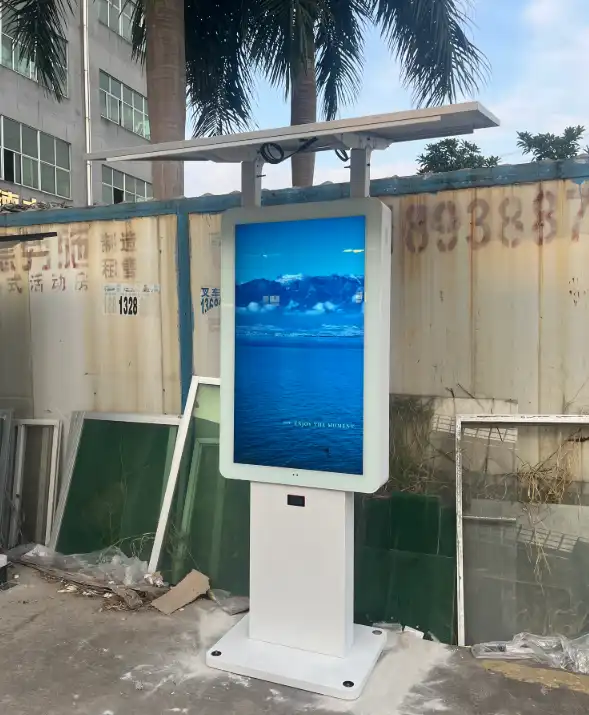
Some projects don't have access to the grid, especially those that involve outdoor advertising or public signs. The T32SO/T43SO/T49SO/T55SO series from Topview directly addresses this issue: it runs on solar power 24 hours a day, seven days a week, and doesn't need any wiring or electrical connections. The deep-cycle gel battery works well at high altitudes and temperatures, and the 1,500 cd/m² industrial-grade backlight stays bright all day even when it's not connected to the grid.
Installation and Maintenance Best Practices to Maximize Brightness Performance
Choosing a screen with a high brightness is only part of the answer. Whether the screen stays bright for years or months depends on how it is mounted, cooled, and taken care of.
Mounting Angle and Physical Shading
When you tilt a screen 10 to 15 degrees away from vertical, less direct sunlight hits the panel face, which lowers the amount of heat that builds up inside. If it's possible, a sunshade or hood that goes over the top rim cuts down on ambient glare without lowering the panel itself. These choices for structure are cheap and improve both light and component life.
Thermal Management Is Non-Negotiable
Heat is the main thing that shortens the life of public displays. The T-series from Topview uses military-grade heat dissipation technology and a clever temperature control system to keep the temperature inside the cabinet between 5°C and 25°C, even when the screen is in full sunlight and the temperature outside hits 45°C. The system turns on fans to cool the LCD so that it doesn't black out, which happens when the liquid crystal changes to an isotropic state above its thermal limit.
Routine Maintenance Schedule
The output brightness gets worse over time without any care. Here is a useful maintenance plan for LCD signs outside:
- Monthly: Clean panel face and AR glass with a non-abrasive cloth; inspect cabinet seals for water ingress
- Quarterly: Check firmware version; test auto-dimming sensor response; inspect fan filters
- Annually: Full hardware inspection; verify waterproof ratings remain intact; review battery health on solar-powered units
Following this plan on Topview's T-series—which has a waterproof cabinet rated IP65 made from 1.5 mm galvanized steel and a service life of more than seven years—helps workers get the most out of the warranty period and beyond.
Procurement Considerations for High-Brightness Outdoor Digital Signage
Buying outdoor digital display equipment is a big choice that has a lot of financial and operational weight. Getting the specifications and source choice right from the start saves a lot of money in replacement costs in a few years.
Evaluating Brightness Specifications Against Total Cost
A 5,000-nit display from a seller that doesn't offer after-sales service might cost more in the long run than a 2,000-nit unit with three years of warranty and technical support from the manufacturer. Topview ships the T-series all over the world using EXW, FOB, or DDP terms and TT payment. The standard lead time is 5–15 working days, and the units are packed in reinforced wooden cases to keep them safe during international freight.
Certifications That Matter for International Projects
In the United States, government bids and business property owners need compliance documents that can be checked. The T32SO/T43SO/T49SO/T55SO series from Topview is certified by CE, FCC, and RoHS, so it meets the requirements for most public procurement specifications in the US and Europe without the need for extra testing by a third party.
OEM/ODM Flexibility and Scalable Supply
Regional wholesalers and EPC builders often need custom branding, certain cabinet colors, or screen sizes that aren't standard. Topview has been making things for more than 13 years, has a 2,000-square-meter factory in Shenzhen, and has an R&D team of more than 10 engineers. They are happy to work on both OEM and ODM projects, and there is no minimum order quantity for customization. The daily output capacity is up to 100 units, which means that both test operations and large-scale rollouts can happen on time.
Conclusion
Getting screen brightness correct for outdoor digital display is a technical and business decision with actual ramifications. 2,500 nits is the acknowledged minimum in direct sunshine, although deployments in full solar exposure sometimes require 4,000 nits or more. Getting the correct luminance rating to work with excellent AR glass, a dependable thermal management system, and a disciplined maintenance program provides any outdoor display the best chance of working reliably throughout its entire service life. Topview’s T32SO/T43SO/T49SO/T55SO series covers all these variables in a certified, solar-compatible package aimed at worldwide B2B customers.
FAQ
Q1: What is the minimum brightness of an outdoor display to make it sun readable?
Most display engineers see 2,500 nits as the practical minimum for a screen mounted in partial or intermittent sunlight. For areas receiving continuous, direct sunlight at noon, such as south-facing walls or open plazas, 3,500 to 5,000 nits is the safer standard.
Q2: Is more brightness always better for outdoor visibility?
No, not by itself. The readability depends on the anti-reflective glass, the suitable mounting angle, and the contrast ratio. On the same screen, under the same settings, a 4,000-nit screen without AR coating can look washed out compared to a well-treated 2,000-nit screen.
Q3: Does auto-dimming extend screen life?
Running a panel at maximum brightness 24 hours a day degrades the LED backlight faster. An ambient light sensor that auto-dims reduces the backlight brightness during low-light periods, extending the life of the backlight, but still providing the required visibility.
Q4: What qualifications should I be looking for in an outdoor display supplier?
US & EU projects: minimum CE, FCC, RoHS certification required. These confirm compliance with electromagnetic compatibility, electrical safety, and prohibited substances – basic standards for government and commercial property purchase.
Get a Brightness Specification Matched to Your Project — Contact Topview
Need outdoor digital display that can maintain clear visibility in direct sunlight? Topview provides high-brightness outdoor displays with options for AR glass, automatic brightness adjustment, thermal management, and solar-powered configurations. Whether you are sourcing displays for retail, transportation, public infrastructure, advertising, or large-scale projects, Topview supports OEM and ODM requirements to match your installation and performance specifications. Contact market@tviewdisplay.com to discuss your project, request product specifications, or get a customized quotation.
References
1. Society for Information Display (SID). Information Display Magazine. 2022.
2. International Electrotechnical Commission. IEC 62341: Organic Light Emitting Diode (OLED) Displays — Measurement of Optical Properties. 2021.
3. Planar Systems. Outdoor Display Brightness and Visibility: A Technical Guide for Specifiers. 2020.
4. Digital Signage Federation. DSF Industry Report: Outdoor Display Technology Standards and Deployment Best Practices. 2023.
5. Illuminating Engineering Society. IES HM-1: Recommended Practice for the Design and Deployment of Outdoor Electronic Displays. 2021.
6. Commercial Integrator Magazine. High-Brightness Display Procurement Guide for AV Integrators. 2023.