



What is the ROI of using a glasses-free 3D display for digital advertising?
When clients ask me about return on investment for display technology, the answer is rarely simple. But with glasses-free 3D displays, the numbers tell a clear story. Businesses deploying a 3D spatial signage display in commercial settings report audience dwell time increases of up to 30%, with some retail case studies showing conversion lifts between 20% and 40% compared to standard flat-panel signage. Factor in reduced printing costs, lower long-term maintenance, and stronger brand recall, and the ROI case becomes genuinely compelling for procurement teams evaluating next-generation advertising formats.
Understanding Glasses-Free 3D Displays in Digital Advertising
It's helpful to know what makes this technology different from regular screens before figuring out how much money it makes.
How the Technology Works
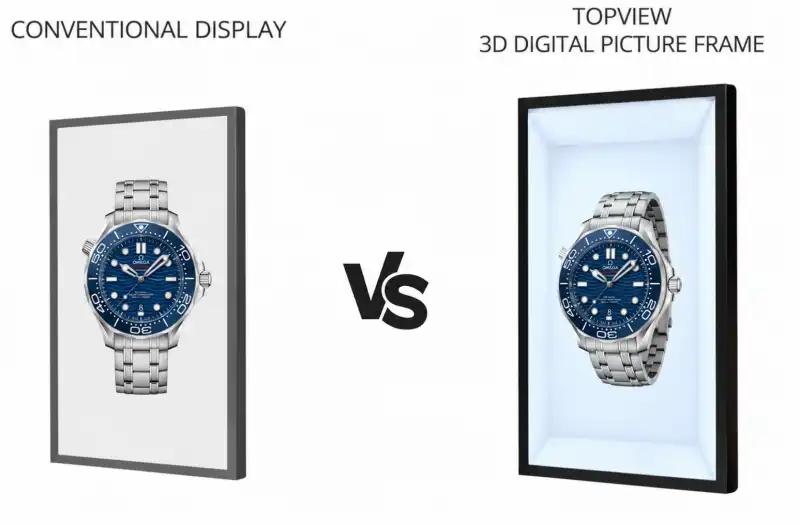
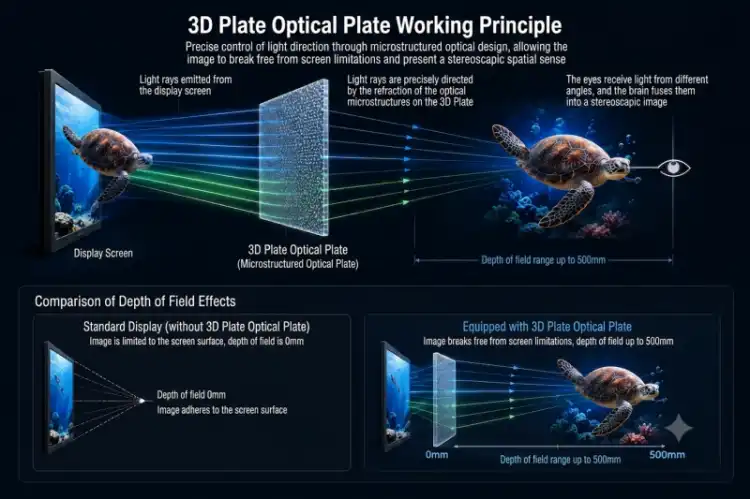
Different pictures are shown to each eye by binocular parallax optics, which can be either parallax walls or lenticular lens arrays. The brain sees the difference as depth, so you don't need glasses or headsets to get an accurate sense of space. The commercial 3D spatial signage display from Topview uses a "2D subject, 3D background" rendering method. This means that the object in the foreground stays sharp in 2D resolution while the background has a depth field. This fixes the problem of image degradation that was common in older glasses-free 3D systems.
Display Types and Their Advertising Advantages
When it comes to viewing angles, lenticular lens panels are better than parallax barrier types because they give you more accurate depth information. Topview's 3D spatial signage display has a 178° horizontal viewing angle, a 60° 3D depth-of-field view, and a 500mm depth-of-field space. This means that more people in a business corridor can see the effect at the same time, which is a key measure for advertising impression counts.
Where These Displays Perform Best
3D spatial signage displays work best in places with a lot of foot traffic, like businesses. They are used by high-end stores to show off the feel of jewelry and handbags in 360-degree views. Airport advertising managers use them to get their brand's message across in a big way. They are put together by museum project managers so that objects look like they "float" in the frame of the show. It depends on the type of venue, but they all have one thing in common: they all need to get people's attention.
Measuring the ROI: Benefits of Glasses-Free 3D Displays for B2B Procurement
ROI for display hardware comes from both more money coming in and less money going out. This is how the math really works.
Engagement and Conversion Metrics
A study by the Digital Signage Federation found that audiences are up to 47% more interested in changing digital displays than in static signs. More is added by glasses-free 3D spatial signage displays that add depth, which makes the visual response stronger. For example, 3D screens that show pictures of products have been linked to a measured rise in people asking to take test drives in car dealerships. For procurement managers, this means that digital media has a better cost-per-impression than traditional media.
Total Cost of Ownership
A commercial 3D spatial signage display costs more up front than a regular LCD panel, but over the course of three to five years, it usually pays for itself more than the initial cost. Topview's screen has LED backlighting, an input range of 110–220V, a brightness range of ≥350 cd/m² (upgradable to 1000 cd/m²), and a contrast ratio of 1200:1. These specs allow it to be used continuously in a business setting while using little power. There are no ongoing print costs, vinyl replacement cycles, or special hardware for the viewer to wear or manage.
Competitive Positioning for Brand Clients
Brands that put up 3D spatial signage displays in stores show a level of investment that regular flat screens can't match. This is important for visual marketing managers and retail experience directors who have to defend the budgets for real stores against the competition from online stores. In terms of money, a display that stops a shopper in their tracks is worth more than one that is ignored.
Evaluation Criteria for Selecting Glasses-Free 3D Displays
When picking out hardware, you need to think about more than just the screen size. Here are the things that have the most direct effect on ROI results:
Technical Specifications That Matter
How real the 3D effect looks in real life depends on the resolution, brightness, and depth-of-field range. Topview's 3D spatial signage display comes in sizes of 21.5", 32", 55", and 86" and has a standard 9:16 aspect ratio that works well for vertical commercial installations. The resolutions are 2K (1920x1080) and 4K (3840x2160). The reaction time of 8ms and the working frequency of 60Hz make sure that product videos and animated ads look good in motion.
Supplier Reliability and Support
When digital signage project managers buy a lot of hardware, the stability of the seller is just as important as the product specs. Topview's office is in Shenzhen and is 2,000 square meters. It has three production lines, more than 20 engineers, and two after-sales engineers. The daily production capacity is up to 100 units, which means it can meet the needs of both one-time projects and long-term supply deals with no minimum order quantity rules for custom setups.
Customization and Integration Flexibility
AV system integrators often need displays that can be used with infrastructure that is already in place, so they don't have to rebuild the whole system. Topview's 3D spatial signage display comes with HDMI input and can be used with both Android and PC systems. Installation options include models that stand alone or are placed on the wall. OEM and ODM projects are both welcome, and custom names can be printed on a silkscreen or lit up by LEDs. There are also options for custom power-on screens and color customization, all of which are important to brand owners and event workers who need to make sure that everything looks the same.
Implementation Best Practices for Maximizing ROI
It's not enough to just have the right tools. Whether or not the investment works depends on the deployment plan.
Content Design for Spatial Displays
On these screens, regular video files don't automatically turn into 3D. To get the spatial depth effect, content must be made just for the "2D subject, 3D background" format. Brands that want to use this technology should include the cost of making content in their budget. The result is big: in tests of user retention, purpose-built spatial content always does better than repurposed 2D content.
Placement and Environmental Factors
How well the depth effect reads depends on where the screen is placed, how bright it is, and how far away the user is. Topview's 3D spatial signage display has a 60-degree 3D viewing cone, which means that the sweet spot covers a range that is useful for most installations in hallways or storefronts. The extra 1000 cd/m² brightness upgrade keeps things visible in places with a lot of background light, like airports or shopping mall atriums. It does this without washing out the depth layers.
Maintenance and Operational Continuity
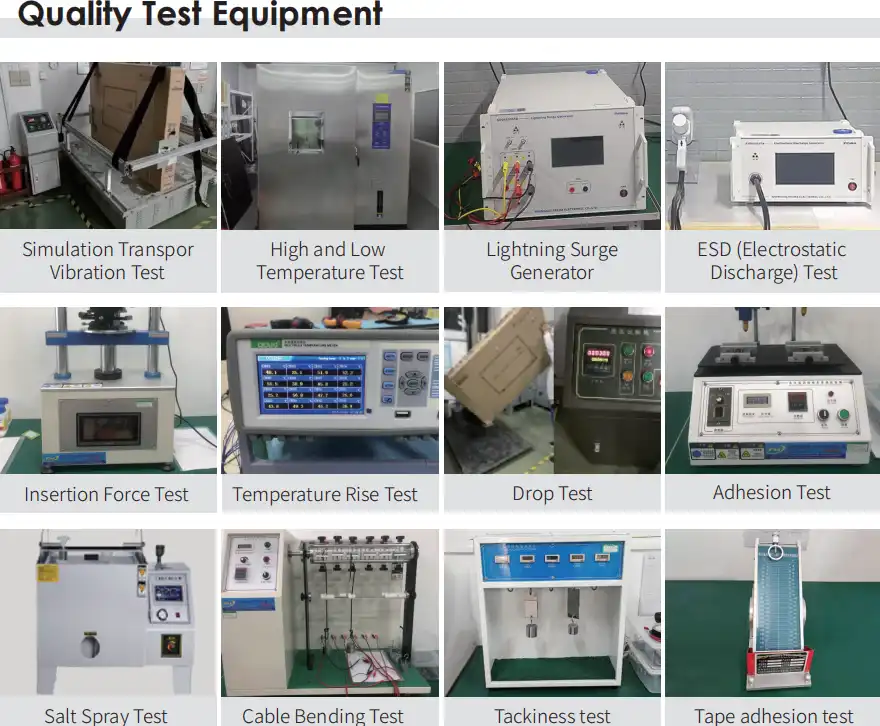
Commercial 3D spatial signage displays in places with a lot of foot traffic need to work reliably for long periods of time. Topview's anti-glare panel option uses HAZE parameter optimization to change specular reflection into diffuse, paper-like light output. This makes it easier on the eyes and improves the quality of what you see over long periods of time. The system stays up to date with content management needs thanks to regular firmware changes and expert help.
Future Trends and Strategic Implications in 3D Spatial Signage
There are more and more people buying business screens that are auto-stereoscopic. Grand View Research thinks that the global market for digital signs will grow to $43.3 billion by 2030. Immersive 3D spatial signage displays will make up a bigger part of that total. AI-assisted content rendering is starting to lower the cost of making 3D advertising content, which will make it easier for mid-market advertisers to use 3D spatial signage displays. For procurement professionals who are buying now, this means that hardware bought today will work in an ecosystem that supports more content.
Emerging Vertical Markets
3D spatial signage displays that can read in depth are becoming more popular in areas other than transportation and shopping. These include healthcare wayfinding, business lobby branding, and higher education. Each new category opens up a new way for solution providers with a skilled 3D spatial signage display product to make money.
Sustainability Considerations
LED-based 3D spatial signage displays use a lot less power than plasma or projection-based options. As business property managers are put under more and more pressure to report how much energy they use, low-draw display gear becomes more valuable for reasons other than its advertising value.
Conclusion
You can measure the return on investment (ROI) of 3D spatial signage display advertising in a number of ways, including higher audience engagement, higher conversion rates, lower long-term content costs, and brand differentiation that flat panels can't match. When hardware specs, content design, and location plan all work together, the technology works best. The data suggests that procurement teams thinking about commercial display investments after 2024 should give 3D spatial signage display formats a close look.
FAQ
Q1: What content format does a glasses-free 3D display require?
Content must be produced specifically for the spatial format. Standard video cannot be directly converted into 3D. The display uses a "2D subject, 3D background" method, so source material needs to be prepared accordingly. Most commercial content studios now offer spatial display formats as a standard deliverable.
Q2: What screen sizes are available for commercial installation?
Topview's spatial display is available in 21.5", 32", 55", and 86" configurations, covering everything from boutique retail counters to airport corridor placements.
Q3: Can these displays integrate with existing AV systems?
Yes. The standard configuration includes HDMI input. Android and PC system boards are available as options, making integration with existing digital signage networks straightforward.
Q4: How bright is the display in high-ambient-light environments?
Standard brightness is ≥350 cd/m². An upgrade to 1000 cd/m² is available for installations in bright environments such as airport terminals or shopping mall atriums.
Get a Quote from Topview — Your Trusted 3D Spatial Signage Display Manufacturer
From our plant in Shenzhen, Topview has been selling business LCD advertising screens for more than 13 years. Our 3D spatial signage display line includes sizes ranging from 21.5" to 86", 2K and 4K resolutions, OEM/ODM customization, and no minimum order quantity (MOQ). Please let us know if you need a single project unit or a stable long-term supply chain. We are ready to help you with your sourcing. To get prices and details, email us at market@tviewdisplay.com.
References
1. Digital Signage Federation — State of the Digital Signage Industry Report, 2023.
2. Grand View Research — Digital Signage Market Size, Share & Trends Analysis Report, 2023.
3. Statista — Global Digital Out-of-Home Advertising Spending Forecast, 2023.
4. Journal of Retailing and Consumer Services — The Effect of In-Store Digital Displays on Consumer Purchase Behavior, 2022.
5. Display Daily — Auto-Stereoscopic Displays: Technology and Commercial Applications Review, 2022.
6. Nielsen — The ROI of Digital Signage in Retail Environments, 2021.