



What is the difference between IP65 and IP66 outdoor digital signage?
If you have ever sourced commercial display equipment for an outdoor project, you already know that IP ratings are non-negotiable. IP65 and IP66 are the two most common protection levels specified for outdoor digital signage, yet many procurement teams treat them as interchangeable. They are not. IP65 enclosures resist low-pressure water jets from any direction, while IP66 enclosures withstand significantly more powerful water jets without allowing ingress. That single difference in water-resistance grade determines which display survives a coastal installation—and which one fails inside 18 months. This guide walks you through every dimension of that difference so your next procurement decision lands on the right spec.
Understanding IP Ratings for Outdoor Digital Signage
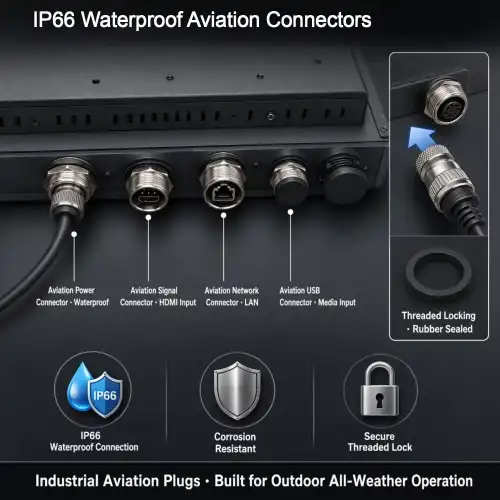
Two-digit IP ratings are used in the IEC 60529 standard. The first number protects against solid particles, and the second number protects against liquids getting in. An "6" at the beginning of both IP65 and IP66 means that the enclosures are completely dust-tight—no particles can get in under any test conditions.
What the Second Digit Actually Means
When you get to the second number, the two scores split up. A "5" rating means that the enclosure can withstand a 12.5-liter-per-minute water jet coming from any direction for at least three minutes. A "6" means it has to be able to handle an eight-times-the-volume-rate jet of 100 liters per minute at about 100 kPa pressure for at least three minutes. That is not a marketing term; it is a testable and measurable tech gap.
Why Dust-Tight Rating Matters Equally
The first number in both ratings is "6," which means that no dust can get through in a vacuum. For display electronics, dust building up on driver boards is one of the main reasons they break down early, so getting either level of dust-tightness already puts a unit well above standard consumer-grade gear. Full dust-tightness shouldn't be seen as an extravagance by industrial procurement teams; it should be the norm.
Where These Standards Are Referenced
A Comprehensive Guide for B2B Procurement Managers and Engineers
Comparing IP65 and IP66: Technical Features and Performance
At a basic level, both protection classes require the same quality of container construction. However, IP66 outdoor digital signage units have more closing depth, which affects a number of engineering decisions further down the line.
Enclosure Construction Differences
To keep their shape during testing with pressurized water, IP66 enclosures usually have thicker gasket profiles, more mounting points around the edges, and higher-quality powder-coated steel or extruded aluminum. For instance, Topview's T32SO/T43SO/T49SO/T55SO line uses a 1.5 mm galvanized steel plate with an outdoor powder finish, and the shell is expected to last more than seven years. That building standard allows sealing to IP66 levels without making the box too heavy.
Thermal Management and Brightness Stability
The warmth inside goes up when the seal is tighter. Because of this, units with an IP66 rating need more advanced temperature control than units with an IP65 rating. Topview solves this problem with a smart straight-wind temperature control system that keeps the inside of the fridge between 5 °C and 25 °C even when the outside temperature is 45 °C. The T-series' LED backlight stays between 1,500 and 3,000 cd/m² bright, so you can read the screen even in bright sunlight. Higher brightness backlights shorten panel lifespan by a lot if thermal engineering isn't done right. This is a problem that affects the total cost of ownership much more than the price difference between IP65 and IP66.
Display Optics Under Both Ratings
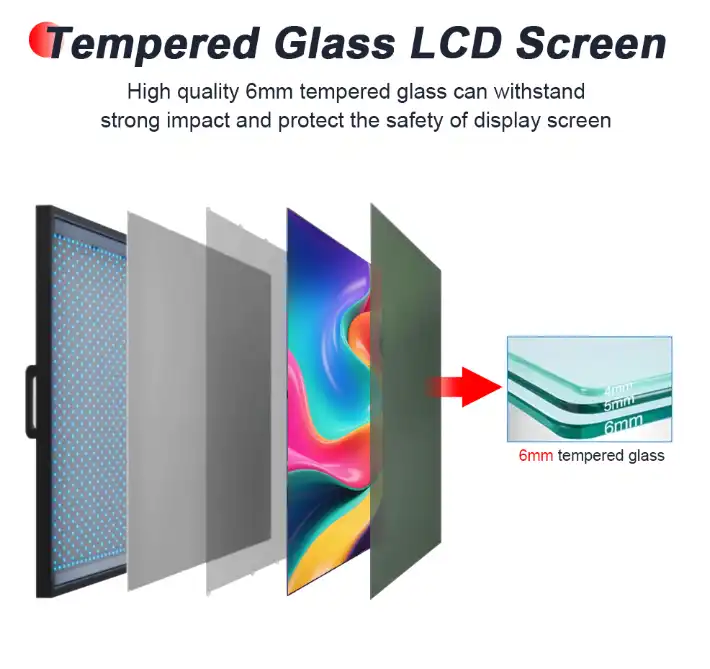
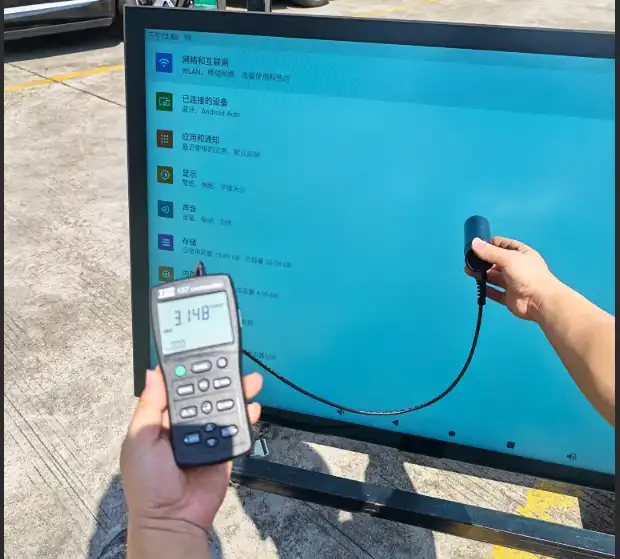
It doesn't matter what IP class an outdoor display has; what makes it truly durable is the quality of its optical construction. The T-series uses 6 mm AR glass that is laminated on both sides and blocks 99.99% of UV radiation. It also lets over 97% of light through and keeps reflectivity below 3%. The LCD base works in temperatures ranging from -30 °C to 110 °C, which stops the liquid-crystal isotropic failure (screen blackening) that happens with regular panels when they are exposed to the sun for a long time. No matter if the box is sealed to IP65 or IP66, these optical qualities will stay the same.
Installation and Operational Considerations for IP65 vs IP66 Outdoor Digital Signage
To choose the right IP class, you should first do an honest evaluation of the site, not look through a list.
Matching IP Class to Deployment Environment
IP65 is good for protected urban areas like covered transit shelters, building facades with roof overhangs, shopping mall exterior walls, and retail forecourts where direct water jets are not likely to happen. IP66 is the right standard for seaside promenades, open stadium concourses, gas station canopies, and any other place where high-velocity rain or pressure washing happens often. It costs more and doesn't work better to specify IP66 when IP65 would do; specifying IP65 when IP66 is needed increases the risk of failure.
Connectivity and Power Integration
For outdoor digital signage, both IP types must meet the same standards for connectivity. The T-series from Topview can send content over an embedded network via cable and also play content offline. It also comes with server-based control software. Gel electrolyte deep-cycle batteries with strong overcharge and overdischarge tolerance make the solar-powered setup completely wireless. This makes installation easier in places where running cable isn't possible. The electric control system has a divided timer, automatic on/off switching, and full-circuit breaker safety for places that get power from the grid.
Mounting, Access, and Maintenance Planning
Because their gasket systems have to reseat correctly after every maintenance entry, IP66 enclosures usually need more careful access panel design. The procurement team should make sure that the repair intervals are in line with the manufacturer's plan for reseating the gaskets. Topview offers technical support for life from the time of delivery. This means that field teams can get engineering advice on how to reseal without having to hire a third-party service contractor.
Cost and Procurement Insights for IP65 and IP66 Outdoor Digital Signage
Most of the time, there is an 8–15% price difference between IP65 and IP66 units from the same manufacturer. However, this depends on the size of the screen and the level of customization available.
Total Cost of Ownership Analysis
IP66 units lower the number of problems caused by water getting in. In places with a lot of rain or near the coast, replacing equipment just once can cost more than the difference in price from IP65 to IP66 for the whole job. Instead of just looking at unit price, procurement managers who are in charge of multiple sites should model three-year upkeep costs along with capital expenditures.
Procurement Terms and Lead Times
You can pay Topview with TT and ship on EXW, FOB, or DDP terms. Standard wait times are 5–15 working days. Units are shipped in strong wooden cases to keep the integrity of the enclosures during ocean freight. The standard promise lasts for one year, but it can be extended to three years if needed. This is important to know when making tender specifications that need performance guarantees for more than one year. Customization projects don't have a minimum order number, which is helpful for EPC contractors and system designers who work on projects of different sizes.
Decision-Making Guide: Choosing Between IP65 and IP66 Outdoor Digital Signage
Before finishing specs, procurement teams can use this useful framework.
Before sourcing outdoor digital signage, make sure you know the answers to these site-specific questions before you talk to vendors:
- Annual rainfall and wind-driven rain frequency at each installation point—sites exceeding 1,200 mm annual rainfall or with frequent storm exposure warrant IP66.
- Proximity to salt water or industrial washdown operations—both environments degrade IP65 gaskets faster than rated service intervals suggest.
- Maintenance access frequency—if enclosures will be opened more than twice per year, confirm that IP66 gaskets are user-replaceable without specialized tooling.
- Content management requirements—verify that the display's embedded player supports your CMS platform before IP class becomes the deciding factor.
- Certification requirements for the tender—many US government and municipal projects require CE, FCC, and RoHS compliance; Topview's T-series carries all three.
Requirements for certification for the bid—many US government and municipal projects need to be CE, FCC, and RoHS compliant; Topview's T-series meets all three.
Conclusion
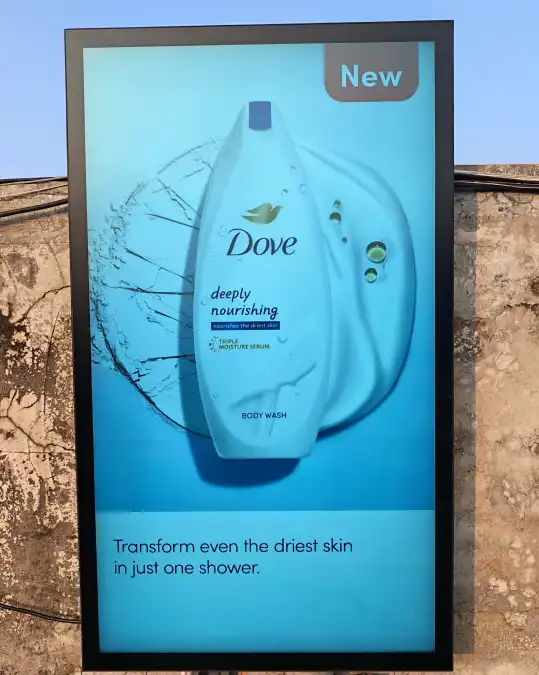
For outdoor digital signage, the dust protection of IP65 and the water resistance of IP66 are both good, but IP66's 100 L/min jet resistance makes a big difference in harsh settings. It's better for capital cost and long-term reliability if procurement managers match IP class to the conditions of the site instead of always going with the higher rating. The T32SO/T43SO/T49SO/T55SO series from Topview shows that strong heat management, high-brightness optics, and IP-rated enclosure construction can all be found in one product line that is designed to work 24/7 in business settings.
FAQ
Q1: Can IP65 signage handle heavy rain?
Yes, IP65 displays resist rain under standard storm conditions. However, they are not rated for high-pressure water jets. In regions with frequent severe storms or hurricane-level wind-driven rain, IP66 provides a measurably safer margin.
Q2: Does IP66 cost significantly more than IP65?
The price difference at the enclosure level is typically 8–15%. Over a three-year deployment in a harsh environment, reduced failure rates from IP66 protection usually offset that upfront cost differential.
Q3: How often do IP-rated enclosure gaskets need replacement?
Gasket service intervals depend on UV exposure, temperature cycling, and access frequency. Most manufacturers recommend inspection every 12–18 months. Topview provides lifetime technical support to guide maintenance schedules specific to each installation environment.
Q4: Is IP66 required for solar-powered outdoor displays?
Not mandatorily, but solar-powered units installed without grid backup must tolerate the full range of weather exposure. IP66 is the lower-risk choice for unattended solar deployments in open environments.
Partner With Topview for Your Next Outdoor Display Project
Topview makes professional outdoor digital signs and is based in Shenzhen. They have been making signs for 13 years and have a 2,000-square-meter factory with three separate production lines. The T32SO, T43SO, T49SO, and T55SO series come with CE, FCC, and RoHS certification, a warranty that lasts between 1 and 3 years, and technical support that lasts a lifetime. Email our team at market@tviewdisplay.com to get a price, talk about OEM/ODM options, or get detailed specs for your next outdoor digital signage purchase.
References
1. International Electrotechnical Commission. IEC 60529: Degrees of Protection Provided by Enclosures (IP Code). IEC, 2013.
2. Digital Signage Federation. Digital Signage Best Practices Guide. DSF, 2022.
3. National Electrical Manufacturers Association. NEMA 250: Enclosures for Electrical Equipment. NEMA, 2020.
4. Invidis Consulting. Global Digital Signage Yearbook. Invidis, 2023.
5. Display Daily. High-Brightness LCD Technology for Outdoor Environments. Display Daily, 2021.
6. AVIXA. AV Industry Outlook and Trends Report. AVIXA, 2023.