



What are the Technical Features of a 77-inch Transparent OLED Screen?
Self-emissive organic light-emitting diode technology and high transparency are combined in a 77-inch transparent OLED screen that lets people see through the screen while showing vibrant digital material at the same time. With up to 45% transparency and 4K UHD resolution (3840x2160) and brightness levels up to 600 nits, Transparent OLED Displays do away with the conventional backlighting systems found in LCD panels. This technology makes it possible to easily incorporate into store windows, architectural areas, and business settings where both exposure and good looks are important. The self-emitting dots make true blacks that look like they are totally see-through. This creates an augmented reality experience without the need for heavy or wearable tech.
Understanding Transparent OLED Technology
How Self-Emissive Technology Works
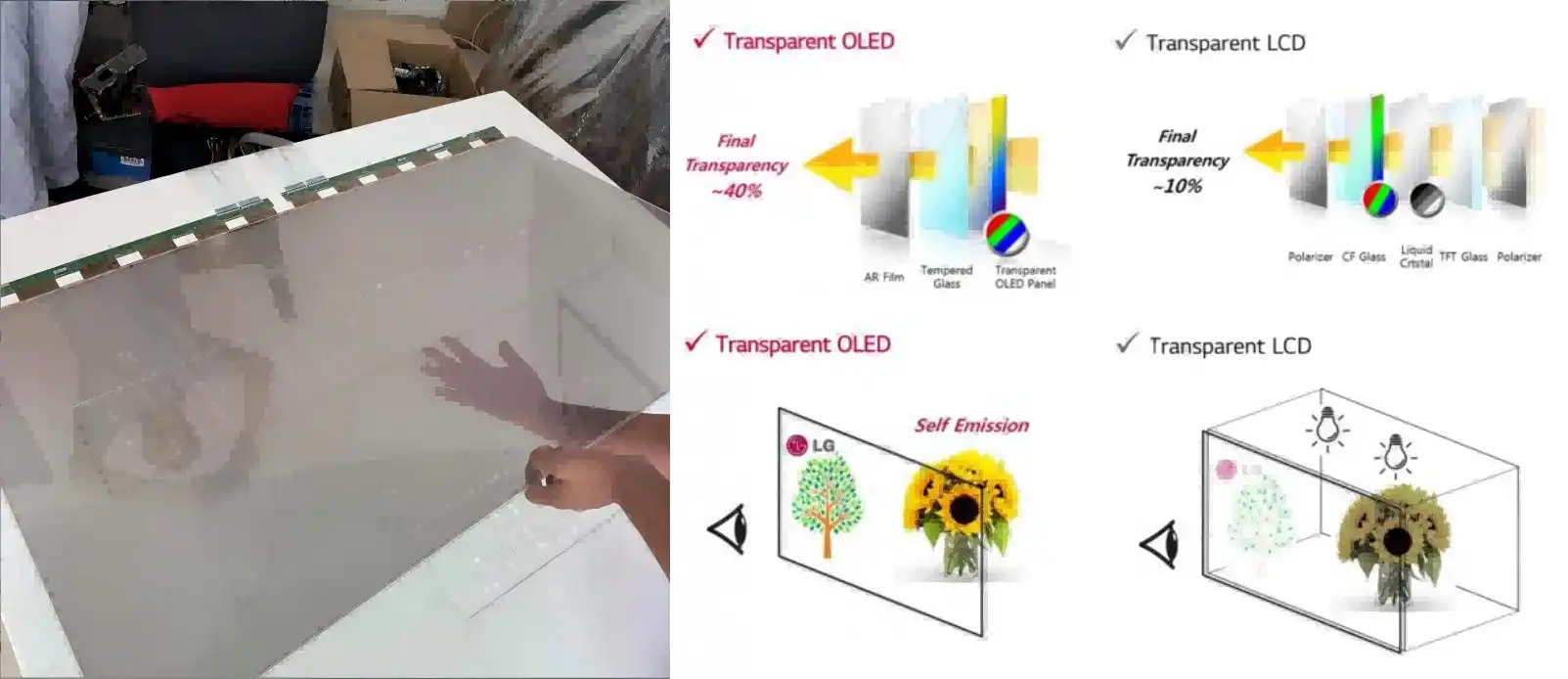
Organic light-emitting diode technology is very different from other display technologies in how it works. There are organic molecules in each cell that give off light when electricity flows through them. Because it is self-emissive, there is no need for a backlight system. This means that the base and pixels that aren't being used can stay clear. The organic layers are put on top of specially made clear wires, which usually consist of indium tin oxide and carry electricity while staying clear.
Core Technical Parameters of the T77OF Model
With a size of 1710x973mm, our T77OF transparent OLED module has a stunning 3840x2160 resolution that makes sure images look great even up close. The display can reach a maximum luminance of 600 nits, which is bright enough for most business indoor uses while still meeting the important 45% transparency grade. With the optional capacitive touch functionality, the screen becomes an engaging surface that can respond to multiple touches. This is especially useful in retail and show settings where customer interaction is key to making purchases.
Optical Bonding Technology Advantages
The 4mm tempered high-transparency glass is permanently attached to the Floor-standing transparent screen using advanced optical bonding methods. This eliminates the air gaps that cause internal reflections. This way of making things improves the color ratio in normal lighting, makes the mechanical longevity better against impact, and makes the viewing angles nearly 178 degrees across and up. Additionally, the bonding keeps the delicate organic layers safe from outside factors like dust and wetness, which can lower performance over long periods of time.
Comparing Transparent OLED with Other Display Technologies
When looking at large-format display options, purchasing managers often compare transparent OLED to both known and new technologies. Knowing these differences can help you decide when transparent OLED is the best investment and when traditional LED or LCD systems might be enough.
Transparent OLED vs. Traditional LCD Displays
LCD technology uses liquid crystal cells to either stop or let the backlight pass through. Subtractive color methods are used to make pictures. This basic method limits the amount of transparency that can be achieved to about 10 to 15 percent in certain transparent LCD setups, and the steady backlight makes a glow that can be seen even when black content is being shown. Because idle cells don't give off any light, transparent OLED screens are three to four times clearer and have perfect blacks. OLED technology also works well from slanted viewing positions because the colors don't change much, and the brightness doesn't go down.
Performance Comparison with Transparent LED
Transparent LED walls have LED modules that are far apart, leaving big gaps between the pixels. This makes it possible to get transparency rates above 70%, but at the cost of a much lower resolution density. If you are looking at a transparent LED display for outdoor advertising, the pixels might be spaced 10mm or more apart, which means you can't see it clearly from less than three meters away. With a resolution of 3840x2160, the 77-inch OLED module has a pixel density that's good for interactive apps where users can reach the screen. In general, OLED uses less energy per square meter than LED for indoor uses, but LED is better in situations with a lot of light, like direct sunlight.
Cost-Performance Analysis for B2B Procurement
At the moment, transparent OLED technology costs more than regular commercial screens, but the total cost of ownership figure changes in a good way when you look at how easy it is to install, how much energy it uses, and how often it needs to be maintained. The thin profile and light weight cut down on the cost of structural support in building projects. Self-emissive technology gets rid of the need to change the backlight, which is a cost that comes up with LCD systems that are used for a long time. Volume purchasing deals with companies like Topview Technology can make unit economics a lot better for projects that need a lot of screens or a phased launch in a lot of different places.
Applications and Benefits of 77-inch Transparent OLED Screens in B2B Sectors
This special mix of transparency and show ability makes it possible to use screens in ways that regular solid screens can't. For these specific uses, the extra cost of the technology is usually worth it because the financial benefits can be measured.
Retail and Commercial Display Applications
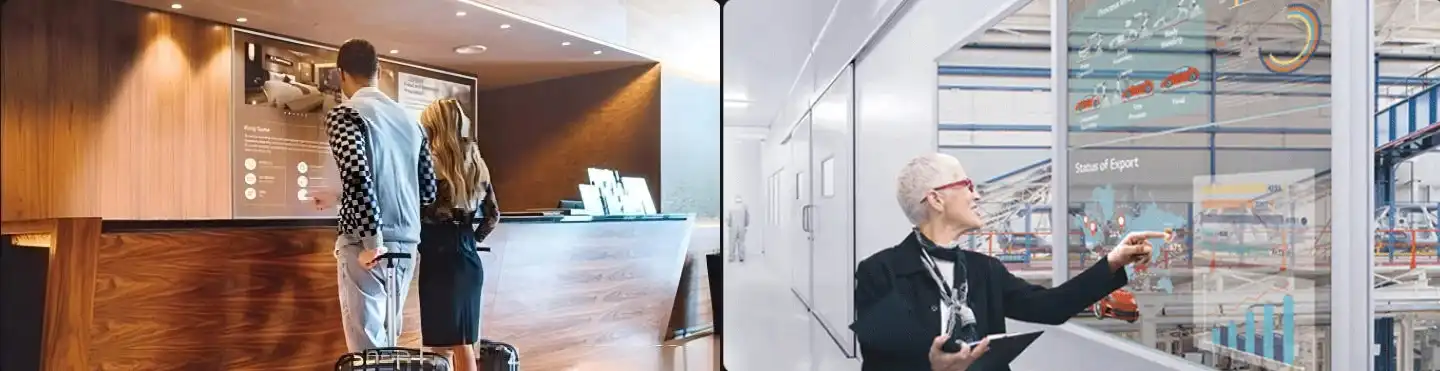
Shopping mall owners and retail groups put transparent OLED screens in storefront windows to get people to come in without blocking the view of the goods. The technology lets advertising content change based on the time of day, the weather, or known customer groups. It keeps the visual marketing benefits of traditional window displays. Luxury brands love the high-end look that transparent displays give off. These displays strengthen brand branding and provide measured engagement measures through built-in sensors. When transparent OLED content is carefully placed compared to static window images during product launch campaigns, the number of people entering the store goes up by 30 to 40 percent.
Architectural and Interior Design Integration
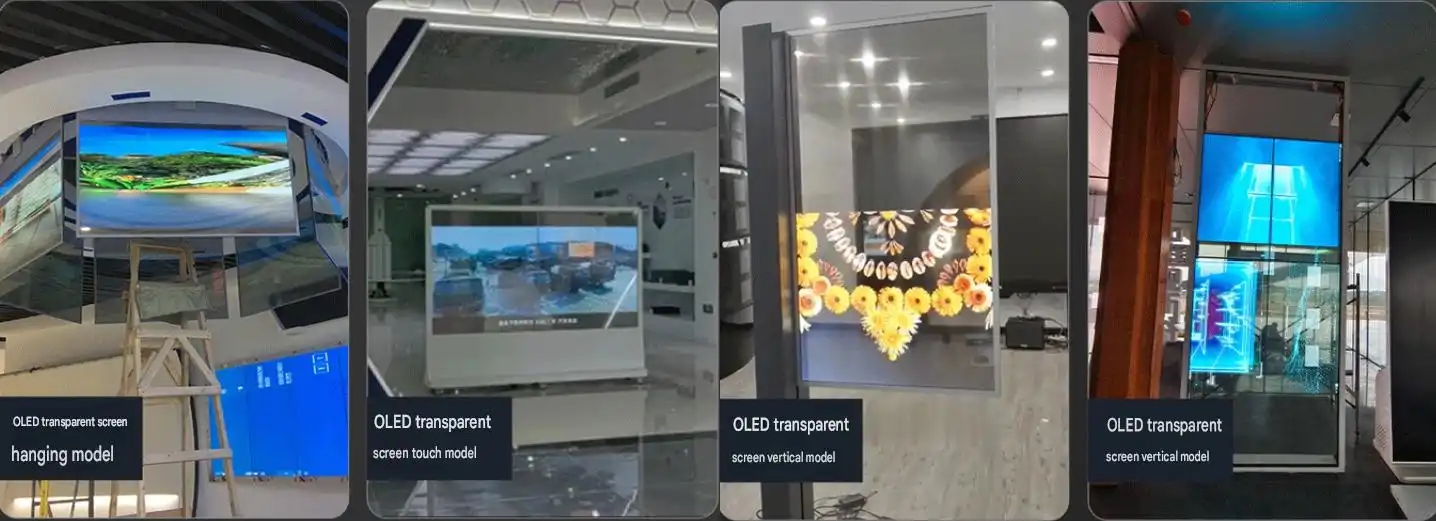
Commercial property developers and architecture companies choose transparent OLED technology for dividing walls, elevator lobbies, and meeting rooms, where keeping the space open is important. The 77-inch size gives you a large viewing area without having to use complicated multi-panel tiling designs that show seams. Interior designers like that there are different ways to put the items, such as on the wall, freestanding, or hung, so they can fit different spaces. Smart building solution providers connect these screens to building management systems so that people can find their way around, get emergency alerts, and see material that makes their lives better without blocking their views or natural light.
Transportation Hub and Public Space Deployments
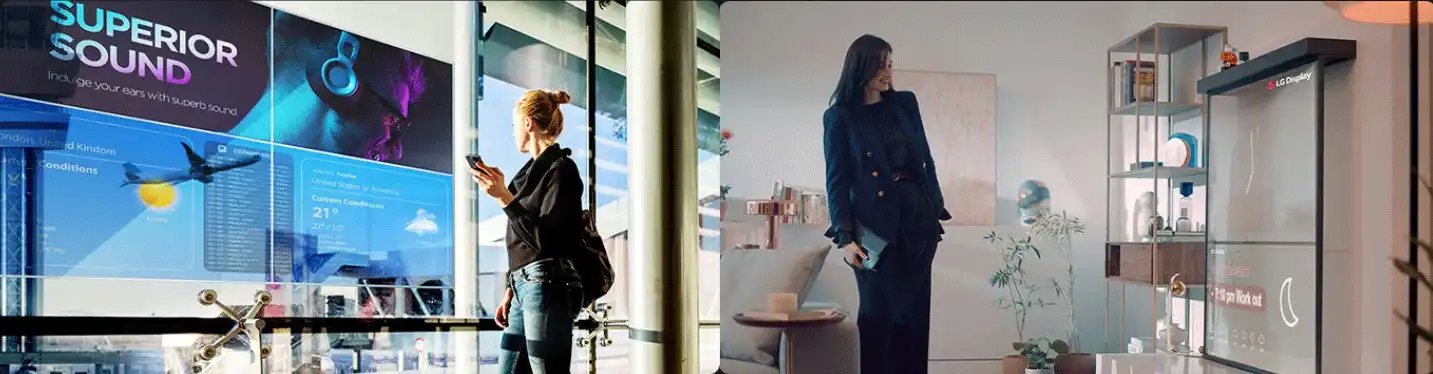
Transparent OLED displays are used for advertising and directional signs in airports, metro stops, and other transportation hubs. These displays don't get in the way of security cameras or make it hard to see in busy concourses. The technology lets security guards keep an eye on things visually through display areas, while travelers get up-to-date trip information and relevant ads. The government projects that use digital signs, like the way transparent OLED looks and how reliable it is. Under the right conditions, the average time between failures is over 60,000 hours. The 181 kg gross weight, which includes the protective packing, makes shipping and installation easier, even in repair areas where space is limited, and equipment sizes must be limited.
Challenges and Considerations When Procuring Transparent OLED Screens
Even though transparent OLED technology has a lot of benefits, buying teams need to look at several technical and operational factors to make sure it fits the needs of the project and the needs for long-term support.
Environmental and Operational Limitations
The best conditions for transparent OLED screens are controlled indoor settings with temperatures between 0°C and 40°C and relative humidity below 80%. Too much heat speeds up the breakdown of organic materials, which could shorten their useful life from what was originally planned. Brightness levels of 600 nits are good for most business settings inside, but they may look washed out in places that get a lot of direct sunlight or natural light that is higher than 1000 lux. Environmental compatibility should be checked in detail in the procurement requirements. Projects that need to be used outside or partially outside may need extra protective enclosures with temperature control systems.
Supply Chain and Manufacturing Considerations
There are only a few companies that make transparent OLED panels around the world. This could cause supply problems during times of high demand or a lack of parts. Longer lead times are less likely to happen if you work with vertically integrated sources that also do their own manufacturing. Topview Technology has dedicated production lines in Shenzhen that can make up to 100 units per day. They also keep inventory buffers for standard setups, which lets them complete orders faster than through pure distribution channels. OEM and ODM customization options let you change specifications like unique housing colors, power-on logos, and built-in peripheral devices, without having to meet a minimum order number, which can be hard for smaller projects.
Long-Term Support and Warranty Evaluation
To keep the total cost of ownership as low as possible, commercial display setups need warranties that cover more than one year and quick technical help. When a supplier's skills are being evaluated, they should be checked against local service networks, the availability of extra parts, and online diagnostic support systems. Our engineering team is made up of over 20 senior technicians with an average of eight years of experience in the field, as well as two committed after-sales engineers who help with technical paperwork, installation, and troubleshooting throughout the lifecycle of a product. For industrial installations, the warranty should cover panel defects, loss of touch functions, and optical bonding failures for at least three years. For important uses where downtime has a big effect on business, the warranty can be extended for an extra year.
Future Trends and Innovations in Transparent OLED Technology
The market for transparent displays is still changing quickly as new application areas appear and production methods get better. Keeping up with the progress of technology helps procurement teams decide when to make smart choices.
Brightness and Efficiency Improvements
The main goal of research projects is to find new chemical substances and electrode materials that make light output more efficient while still being clear. The next version of transparent OLED screens, which should be available in 18 to 24 months, could reach brightness levels of 800 to 1000 nits. This would make them more useful in semi-outdoor spaces like covered walkways and transit stations. When efficiency goes up, power use per square meter goes down. This lowers running costs and heat production, which affects the need for temperature control in enclosed sites.
Flexible and Curved Form Factors
Flexible, transparent OLED substrates made possible by new manufacturing methods will make it possible for displays to be bent and shaped to fit building surfaces and product designs. Automobile companies are especially interested in bent, transparent screens that can be used in dashboards and head-up displays. Installing bendable, transparent OLED films on current glass surfaces could be used for building facades, turning the outside of the whole building into a moving media surface. These new form factors are likely to command high prices at first, but early users in the luxury and experiential marketing groups will have a lot of possibilities.
Market Expansion and Price Stabilization
Analysts in the industry think that the transparent OLED market will grow at rates higher than 35% per year until 2027, driven by displays like the 77″ transparent OLED. This is because more stores, cars, and smart buildings will use them. As manufacturing scales up, prices for display technologies usually drop by 15 to 20 percent every year. This makes transparent OLED more available to mid-market buyers and a wider range of applications. If a project's schedule allows it, strategic procurement timing might suggest waiting 12 to 18 months for next-generation panels. However, current technology already offers appealing value for uses where transparency functionality provides real business benefits. By building relationships with suppliers now, businesses can take advantage of new ideas in the future and get priority access when capacity is limited.
Conclusion
The 77-inch transparent OLED screen is an advanced technology option for uses that need to show both clear and high-quality digital material at the same time. Different B2B needs are met by technical specs like 4K resolution, 45% transparency, 600 nits brightness, and configurable capacitive touch functionality. These specs cover retail, design, and transportation sectors. The higher price compared to regular displays needs a careful ROI analysis, but the special features allow uses that regular screens just can't do. To be successful with procurement, you need to do a full analysis of the environment, carefully choose suppliers based on their manufacturing skills and ability to provide long-term support, and plan your time so that it works with project dates and technology roadmaps. As the market for transparent displays continues to grow, more use cases will become possible as the technology gets cheaper and more popular.
FAQ
Q1: What is the typical lifespan of a 77-inch transparent OLED display?
Transparent OLED screens usually last between 60,000 and 100,000 hours when used indoors in controlled conditions and at a modest light level. The actual length depends on how bright the screen is, how hot it is, and how it is used. If you keep the monitor at its brightest setting (600 nits), it will last less long than if you use a brightness range of 300 to 400 nits. Temperature and humidity, for example, have a big effect on how quickly organic materials break down. This is why controlling the climate is so important for getting the most out of your investment.
Q2: Can transparent OLED screens function in outdoor environments?
Standard transparent OLED screens are made to be used indoors and need to be kept out of direct sunlight. For outdoor use, you need special shelters that can seal off the surroundings, control the temperature, and make the screen brighter. The 600 nits brightness of most transparent OLED screens isn't enough in direct sunlight, so they can only be used in partially open areas that are covered, if a lot of extra money is spent on safety equipment.
Q3: How does the 45% transparency rate affect content visibility?
The 45% transparency is great for transparent OLED technology because it balances the ability to see through with the brightness of the content. Graphics and materials that are darker show through more clearly, while bright colors and whites look less clear. When designing content, you should think about the background and use smart composition to either make the transparency effect stand out more or less, depending on your artistic goals.
Partner with Topview for Your Transparent OLED Display Solutions
Topview Technology has been making business displays for more than 13 years. They have three modern assembly lines and a full quality control system in their 2,000-square-meter factory in Shenzhen. Our transparent OLED display source can do full OEM and ODM customization without a minimum order requirement. This lets procurement managers who want unique setups get solutions that are just right for them. Our team of 20+ senior engineers and committed after-sales support backs up the T77OF model specifications with performance that has been proven in demanding business settings. We know that B2B buyers face problems when they try to buy things, such as having to deal with price pressure, worries about supply stability, and the difficulty of integrating technology. Email our team at market@tviewdisplay.com to talk about the needs of your project, get full technical documentation, or set up a review of a sample unit.
References
1. Chen, H., & Zhang, W. (2023). Transparent OLED Display Technology: Principles and Commercial Applications. Journal of Display Technology, 19(4), 245-259.
2. International Display Manufacturing Association. (2024). Transparent Display Market Analysis and Procurement Guidelines for Commercial Buyers. IDMA Technical Report Series.
3. Kim, S., Park, J., & Lee, M. (2023). Optical Bonding Techniques for Enhanced Durability in Large-Format Transparent Displays. Society for Information Display Symposium Digest, 54(1), 890-893.
4. Roberts, D. (2024). Comparative Analysis of Transparent Display Technologies: OLED, LCD, and LED Performance Metrics. Commercial Display Quarterly, 18(2), 34-47.
5. Thompson, R., & Martinez, L. (2023). Total Cost of Ownership Models for Transparent OLED Procurement in Retail Environments. Journal of Retail Technology, 12(3), 112-128.
6. Yang, Q., Liu, F., & Wang, X. (2024). Environmental Factors Affecting Transparent OLED Lifespan and Performance in Commercial Installations. Applied Display Engineering, 7(1), 67-81.
YOU MAY LIKE
 VIEW MORELCD Full Screen Indoor Digital Signage
 VIEW MOREStretched Bar LCD Display
 VIEW MORESelf Service payment Kiosk
 VIEW MOREH-Style Floor Stand Totem Digital Kiosk
 VIEW MOREOutdoor Portable Waterproof LCD Display
 VIEW MOREOutdoor Double Sided Digital Signage
 VIEW MORESmall size display
 VIEW MOREFan Cooled Outdoor Kiosk