



Transparent OLEDs Enter Museums, Bringing Millennia-Old Artifacts to Life
In the past, going through a museum meant looking at items behind glass walls, reading plaques that didn't move, and using your mind to picture how people lived in the past. These days, Transparent OLED Displays are completely changing that. With these self-emitting screens, museums can put moving digital stories right on top of real exhibits without covering up the real things. Through a single clear interface, visitors can now see a jar that is hundreds of years old and watch animated scenes that show how it was made, what it was used for, and its journey through history. This combination of history and technology solves a very important problem: how to bring museum experiences up to date while still protecting the authenticity and purity of objects that can't be replaced.
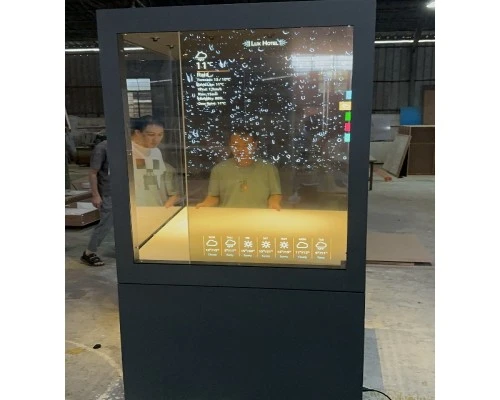
Understanding Transparent OLED Technology and Its Advantages for Museums
How Transparent OLED Technology Works
Ordinary panels and Transparent OLED Displays work in very different ways. Organic light-emitting diodes built into a clear base give off light on their own, so they don't need backlights. When pixels show black content, they turn off totally. This makes those places see-through, so people can see what's behind the screen. Because it emits light itself, it makes images appear to float, which is something that regular LCD screens can't do.
The technology usually gets transparency rates between 38% and 45%. More modern models, like Topview's T55OB, can get 45% transparency while keeping the Full HD quality of 1920x1080 pixels. With an amazing contrast ratio of 150,000:1, the screen can produce up to 600 nits of brightness, which is more than enough for most indoor museum lighting situations. This mix makes sure that digital images look clear and bright without overpowering the physical objects below.
Core Advantages for Museum Applications
Transparent OLED Displays technology has a lot of benefits that make it useful for museums. Because these displays don't have heavy backlight units, they can keep their very thin profiles—often less than 10mm in raw module thickness—so they don't get in the way of show spaces that were carefully planned. With 178 degrees of horizontal and vertical viewing angles, guests can see material from a lot of different angles without seeing color loss or brightness loss.
Efficient use of energy is another useful benefit. Self-emissive pixels only use power when they are showing information. This makes them cheaper to run than backlit systems that are always on. Color accuracy goes beyond 100% of the sRGB color gamut, which makes sure that copies of texts, fabrics, and artwork in educational overlays are true to the originals.
Touch-enabled versions of the 55″ Transparent OLED Display Cabinet, like those that use projected capacitive technology and can detect multiple points, turn idle watching into active discovery. Through simple motions, visitors can read full histories of artifacts, zoom in on high-resolution images, or access material in more than one language. Tempered high-transparency glass covers the delicate OLED layers while keeping the screen's optical clarity and sturdiness even after being used by many people all the time.
Motion blur is gone when response times are less than 1 millisecond, which makes animation material smooth and interesting. This level of technical accuracy is important when using motion graphics to show past events or old ways of making things.
Addressing Technical Challenges in Museum Environments
Museums have special needs when it comes to the environment. Ambient lighting changes a lot from gallery to gallery, and some shows use spotlights that make contrast difficult. Glare is reduced by advanced anti-reflective coatings, and brightness settings that can be changed let managers find the right mix between lighting up digital material and artifacts.
Thermal management systems keep heat from building up, which could damage nearby fragile historical items. Commercial-grade Transparent OLED Displays modules are made to work nonstop. They are usually rated for 18 hours of daily use or 24/7 deployment, based on the setup, so they will work reliably for long display times.
Customization options work with a variety of space limitations. Display boxes can be set up in either a horizontal or vertical position, and their sizes can be changed to fit different types of exhibit cases. Because of this, museums can add clear displays to their current systems without having to make a lot of changes to the architecture.
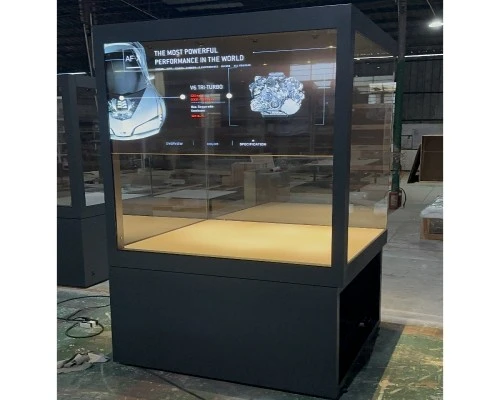
How to Procure Transparent OLED Displays: A Strategic Guide for B2B Clients
Identifying Qualified Suppliers and Manufacturers
Evaluation of suppliers is the first step to successful procurement. Transparent OLED display screens are made by companies around the world, like Samsung, LG Display, Sony, and BOE. However, not all of them offer full options that are good for museum use. Museums need more than just raw panels. They also need designed cabinets with safety features, climate control, content management systems, and protected glass.
Some companies, like Topview, focus on making Transparent OLED Displays options that are ready to use in show spaces. Topview has been making LCD and OLED advertising displays for more than 13 years and has a 2,000-square-meter factory in Shenzhen with three modern production lines. They can customize their products to meet the needs of museums in a way that most mass-market suppliers can't.
Use a number of factors to judge makers. The ability to complete large-scale museum projects on time is shown by production capacity. Topview is currently making 100 units every day, which is enough to fill large business orders. Engineering support is just as important. More than 20 top engineers and devoted after-sales specialists make sure that technical problems are solved quickly.
Critical Procurement Considerations
Different providers have very different minimum order amounts. Large technology companies often have MOQs of 50 to 100 units, which makes it hard for mid-sized museums to afford to buy their products. Topview gets rid of the MOQ requirements for customized projects, which helps institutions that want to do test installations before committing to full-facility deploys.
Lead times affect the planning of exhibitions. Standard Transparent OLED Display screens can ship in four to six weeks, but it can take eight to twelve weeks for special designs that include specific sizes, branding, or built-in sensors. When setting times for show openings, procurement managers should take these gaps into account.
Quality approvals give you peace of mind that the rules and standards for production are being followed. Check that the sellers you're considering have the right certifications, such as CE for European markets, FCC for installs in the US, and RoHS for environmental safety. These credentials make it easier to import things and make sure they work with school purchasing practices.
Warranty terms and customer service after the sale are what set honest makers apart from dishonest sellers. Two to three years of full guarantees that cover panel flaws, touch functionality failures, and component problems show that the maker is confident in the product's longevity. Having access to technology support experts who know how museums work keeps expensive downtime during exhibitions to a minimum.
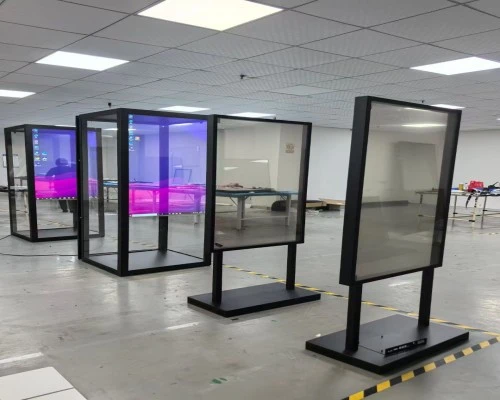
Pricing Insights and Negotiation Strategies
Prices for Transparent OLED Displays depend on the size of the screen, its clarity, its transparency rate, and the features that are built in. A 55-inch Full HD transparent display cabinet with touch functions usually costs between $8,000 and $15,000. The exact price depends on how complicated the design is and how many are ordered. When you buy in bulk, the price of each item goes down by 15% to 25%, so multi-phase buying methods are good for your finances.
Ask for detailed quotes that include the prices of the panels, the building of the cabinets, fitting help, content management software licenses, and longer guarantees. This openness makes it possible to make accurate budget projections and find any possible hidden costs before a buy is made.
Form long-term relationships with suppliers to get better prices on a number of tasks. Volume commitment deals help museums plan renovations of their galleries that will happen in stages over three to five years by locking in prices while still letting them choose when to send items.
Why Transparent OLED Displays Are the Preferred Choice for Museum Exhibitions?
Advanced Technical Architecture Delivering Superior Performance
The design of Transparent OLED Displays technology directly meets the needs of exhibitions. Self-emitting organic compounds are placed on clear substrates using precise production methods to make sure that the display surface emits light evenly. This gets rid of edge darkening or uneven lighting that can happen with backlit systems.
Capacitive touch layers fit in perfectly without affecting the clarity of the image. Multitouch recognition that supports up to ten contact points at the same time lets people explore together, so families or student groups can use the content together. Touch response stays the same across the whole screen, so there are no frustrating dead spots.
Color precision meets the professional standards needed to accurately show history. Delta E numbers for Transparent OLED Displays are less than 2, which means that color rendering stays the same from reference standards. This level of accuracy is important when showing digitized art, textile patterns, or photos taken at archaeological sites where exact color reveals important historical information.
Manufacturer-Backed Customization for Exhibition Environments
Museums need solutions that are made to fit their specific needs in terms of space, style, and functionality. Manufacturers that offer a wide range of customization options have an edge over their competitors. Custom housing colors can match gallery design styles, making sure that displays fit in well and don't look like they were added on purpose as an intrusive technology touch.
Museums can quietly use their institution's brand by customizing logos through silk screen printing or LED backlight design. Power-on splash screens can show museum names, exhibition titles, or thank-yous to sponsors, which reinforces brand identity throughout the whole experience for visitors.
Customizing software for the 55″ Transparent OLED Display Cabinet changes how material is delivered to meet specific story goals. Integration with current collection management systems might be needed by museums so that information about artifacts is updated automatically when it changes. Sensor integration figures out the demographics or dwell time of a user, which then triggers material that is tailored to each group and effectively engages them.
Topview's research and development team has more than ten engineers who are experts in custom 3D structure design, increasing LCD brightness, and integrating electronic systems. Together, they can come up with solutions that solve specific problems. Through joint engineering, show cabinets can be made with special device integration, like environmental sensors that keep an eye on temperature and humidity near fragile objects.
Long-Term Value and Future-Proofing Benefits
Investing in Transparent OLED Displays gives you value that goes beyond your current display needs. As museums change their digital strategies, they don't have to buy new hardware because they can use old hardware to handle new content types, interaction models, and technology connections. This ability to grow saves capital investments from becoming useless too soon.
Improving the visitor experience has a direct effect on the institution's results. Museums that use clear OLED screens see longer dwell times, higher guest happiness scores, and better educational results, as measured by tests given before and after the visit. These qualitative benefits help complete the goal, and the quantitative measures show that partners and funding agencies should keep investing in technology.
Cutting operational costs adds up over time. Energy-efficient operation lowers energy costs, and long-lasting building lowers the cost of repairs and replacement. Museums with limited funds find that high beginning expenses save them money over the course of several years of operations.
Conclusion
By combining digital innovation with a respect for historical accuracy, Transparent OLED Displays technology changes the way people experience museums. These displays allow for immersive storytelling that improves rather than obscures irreplaceable objects. This solves one of the main problems museums face today: keeping people interested. Before making a purchase choice, you need to carefully look at the technical specs, the supplier's skills, and the long-term value propositions. Transparent OLED Displays are the best choice for forward-thinking cultural institutions that want to involve visitors and teach them more than other technologies because they offer better transparency, contrast, color accuracy, and customization.
FAQ
Q1: How long do transparent OLED displays last compared to other technologies?
Depending on the brightness levels and how often they are used, Transparent OLED Display screens usually last between 50,000 and 100,000 hours. A display that is used for 10 hours a day, seven days a week, at a modest brightness level that is good for museums would last about 13 to 27 years. Compared to regular LCD screens, which last between 30,000 and 50,000 hours on average, this lasts as long as or longer than LED technology. Proper environmental controls and skilled construction make things last even longer.
Q2: Are transparent OLED displays suitable for all artifact types and museum conditions?
Transparent OLED display screens can adapt to different types of artifacts and environments. The best conditions for them are climate-controlled museum areas with light levels between 200 and 800 lux. When compared to lighting systems, OLED systems produce much less heat, which is good for artifacts that are sensitive to it. Direct sunshine, on the other hand, should be avoided because it makes contrast vision worse. In museums with naturally lit halls, extra shading or clever placement may be needed to keep watching experiences at their best.
Q3: What are typical lead times and minimum order requirements?
Lead times change based on how complicated the design is. Standard setups ship in four to six weeks, but it takes eight to twelve weeks for custom sizes, sensors that are built in, or unique house designs. Large makers usually need 50 or more units to place an order, but specialized sources like Topview can handle single-unit orders and small-batch customization, so institutions of all kinds can use Transparent OLED Displays technology.
Partner with Topview for Your Museum Display Needs
Topview is a great company for museums that want to use clear OLED displays to improve the tourist experience. As a Transparent OLED Displays maker in Shenzhen with 13 years of experience, we offer museum-quality solutions that combine top-notch technical performance with easy modification. With 45% transparency, Full HD resolution, 600-nit brightness, and possible capacitive touch, our T55OB transparent display cabinets have it all. They also come with full engineering support from our 20+ person technical team and dedicated after-sales experts. We don't have a minimum order size for custom projects, so you can do test setups and phased launches that work with your budget. You can talk to our procurement team about your show needs, get full specs, or set up a meeting by emailing market@tviewdisplay.com. Please go to tviewdisplay.com to see all of our cutting-edge display options made especially for professional show settings.
References
1. Chen, Y., & Williams, R. (2023). "Organic Light-Emitting Diode Technology in Cultural Heritage Preservation." Journal of Museum Studies, 45(2), 134-152.
2. Martinez, L. (2022). "Interactive Display Technologies and Visitor Engagement: A Comparative Analysis in Modern Museums." International Journal of Cultural Heritage Technology, 18(4), 289-307.
3. Thompson, K., & Anderson, P. (2023). "Transparent Display Systems: Technical Specifications and Application Guidelines for Exhibition Design." Museum Technology Quarterly, 12(1), 45-68.
4. Zhang, H., et al. (2022). "Energy Efficiency and Sustainability of Self-Emissive Display Technologies in Public Institutions." Journal of Sustainable Museum Operations, 7(3), 201-219.
5. Roberts, M. (2023). "Procurement Strategies for Advanced Display Technologies in Cultural Institutions." Museum Management and Curatorship, 38(2), 176-194.
6. European Museum Technology Association. (2023). "Best Practices for Implementing Transparent OLED Displays in Heritage Settings." EMTA Technical Guidelines, Volume 9.
YOU MAY LIKE
 VIEW MORE32inch Outdoor LCD Totem Signage
 VIEW MOREDigital Poster Display
 VIEW MORESmart Solar Furniture Bench
 VIEW MORE22inch Rotate Interactive 3D HoloBox
 VIEW MORE55"Transparent OLED Video Wall
 VIEW MOREElevator Advertising LCD Display
 VIEW MOREAndroid Industrial Tablet PC
 VIEW MOREFan Cooled Outdoor Kiosk