



How to Choose Glass for Outdoor Digital Signage: A Complete Procurement Guide
The right glass for outdoor digital signage is safety-rated, matched to your climate and kiosk size, and tested with the actual display and touchscreen before bulk production. I recommend starting with the environment, then comparing tempered and laminated options, setting measurable optical targets, and confirming that the full enclosure, not the glass alone, meets the IP rating. A capable OEM outdoor kiosk manufacturer can coordinate glass, display, cooling, and sealing in one design. Glass affects readability, touch accuracy, heat, and maintenance cost. This guide walks procurement managers, integrators, and distributors through each decision, so you can compare quotations fairly and avoid costly replacements.
Start With the Environment, Glass Type, and Structure
Define the Outdoor Environment Before Choosing Glass
Before requesting a single price, I usually make sure to complete some documentation of the installation location. A kiosk is subjected to a variety of environmental conditions, including sunshine, rain, salt spray, dust, snow, and temperature changes, thanks to its location in a parking lot, a coastal transportation hub, a gas station, and a retail mall. Make a note of the temperatures at which the device is functioning and stored, the solar loading, the internal heat, the cold-weather startup, the daily touch volume, and the danger of vandalism. On a day with clear skies, direct sunlight may reach around 100,000 lux, which means that a screen that faces the afternoon sun has different requirements than a canopy unit that is shaded. Not only does a clear site profile avoid over-specification of a low-risk area, but it also prevents under-protection of a sensitive place.
Compare the Main Glass Types
Standard installations often begin with tempered glass since it is the most feasible starting point. The ASTM C1048 standard covers heat-treated flat glass, and tempered panels are about four times more durable than annealed glass of the same thickness. When they shatter, tempered panels emit small shards that are blunt in shape. Glass layers are bonded together using an interlayer in laminated glass, which also prevents pieces from moving about and blocks the majority of ultraviolet light; ASTM C1172 covers it. High-traffic or vandalism-prone areas are ideal for tempered laminated glass, despite the fact that it is heavier and more expensive. Considering that low-iron, anti-glare, anti-reflective, and chemically reinforced choices each tackle a distinct issue, I consider them to be supplementary components to a base glass structure rather than replacements for existing glass.
Select the Right Thickness, Size, and Construction
Instead of being included on a pricing sheet by itself, thickness should be included in the structural design. The construction is shaped by a number of factors, including panel size, aspect ratio, mounting span, wind load, frame support, and impact requirements. The most common thicknesses range from three millimetres to six millimetres, and laminated combinations may be required for panels that are bigger or pose a greater danger. Having thicker glass adds weight, which in turn burdens hinges, increases the cost of freight, and necessitates a frame that is more rigid. When it comes to impact, IEC 62262 is the standard that establishes IK values, and IK10 is equivalent to a 20-joule impact. Before the glass is tempered, you should finish drilling holes, sensor windows, speaker apertures, corner radii, and polishing the edges. This is because tempered glass cannot be cut or drilled after it has been tempered.
| Application Scenarios | Common thicknesses | Enhancement Method |
| Indoor Self-Service Terminal / Touchscreen | 2–3 mm | Chemical tempering (ion exchange) |
| Retail Advertising Displays | 3–4 mm | Chemical tempering or physical tempering |
| Outdoor Freestanding All-in-One Display / Video Wall | 4–6 mm | Physical tempering |
| Floor-standing stand for adult-sized flow-rate medical equipment | 6–8 mm | Heat-tempered + laminated |
Check Optical, Sealing, and Application Requirements
Evaluate Optical Performance for Direct Sunlight
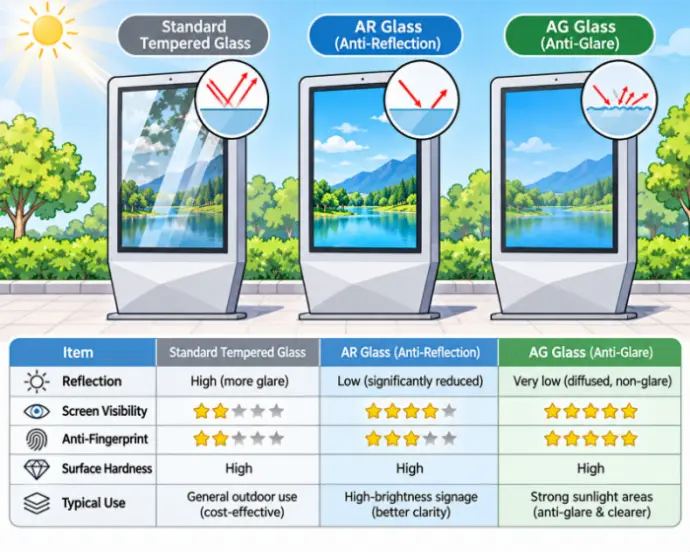
Terms like “high clarity” or “sunlight readable” mean little without numbers. I ask an OEM touch screen kiosk supplier for visible light transmission, front-surface reflectance, haze, contrast, and color consistency. Uncoated glass reflects about 4% of light at each surface, so anti-reflective coatings help the screen stay visible. Bonding the display to the cover glass removes the air gap, which cuts internal reflections. Anti-glare treatment scatters reflections instead, which softens hotspots but can reduce sharpness. The two treatments are not interchangeable. Also test touch response, polarized sunglasses, gloved hands, and side-angle viewing. Run prototype checks in direct sun, low-angle light, wet conditions, and artificial lighting from several viewing positions.
Check Weatherproofing, Sealing, and Condensation
Despite the fact that glass helps to protect the kiosk from the elements, it does not determine the kiosk's IP classification. Due to the fact that IEC 60529 is responsible for defining IP codes for full enclosures, IP65 is contingent upon the glass, bezel, gaskets, doors, cable entry, drainage, and sealed joints all functioning in tandem. Glass specifications should never include the IP65 rating. Sealants that are resistant to ultraviolet light, adhesives that are compatible, and gaskets that are uniformly squeezed avoid water infiltration, coating degradation, and delamination. Condensation may also be caused by fluctuations in temperature and humidity; thus, it is important to enquire about the design's approach to ventilation, heating, or pressure equalisation. It may be necessary to do additional testing and validation for salt spray, chemicals, cleaning agents, and long-term coating durability for locations that are located along the coast, in industrial areas, and at gasoline stations.
Match Glass to Kiosk Applications
The priorities are rearranged with each new application. Typically, parking payment and transit kiosks need anti-glare performance, durability for repeated touch, resistance to impact, and the ability to be easily cleaned and require little maintenance. Wet-finger or gloved operation, grease resistance, and chemical-resistant coatings are some of the requirements that may be mandated for food-ordering kiosks. Environmental protection, payment security, resistance against tampering, and readability from dawn to night are all requirements for electric vehicle charging kiosks. Wind load, deflection, transit damage, and replacement logistics are all new additions to the list that are brought forth by large-format digital signage. It is essential that I test the glass in conjunction with the display, touchscreen, payment hardware, enclosure, and sealing system in each and every instance. This is due to the fact that even a component that functions properly on its own might still fail inside the assembly.
Evaluate Suppliers and Prepare Your RFQ
Build a Technical and Commercial Scorecard
The use of a scorecard enables you to compare vendors on more than just the unit pricing. The safety treatment, impact resistance, optical performance, touch compatibility, temperature behaviour, weather resistance, surface durability, dimensional correctness, paperwork, testing, cost, and lead time are all factors that I evaluate. Due to the fact that tooling and prototype costs are different, it is important to differentiate between ordinary panels and bespoke glass that has particular dimensions, cuts, coatings, or integrated modules. An additional factor to consider is the material of the enclosure. Aluminium and stainless steel exhibit distinct characteristics in terms of installation, expansion, resistance to corrosion, weight, and stiffness. The complete cost of ownership should be taken into consideration, which includes the costs of packing, shipping, installation, maintenance, breakage, replacement, warranty exposure, and spare parts. Sometimes the option with the lowest unit price is not the most cost-effective option over the long run.
Choose a Dependable OEM Outdoor Kiosk Manufacturer
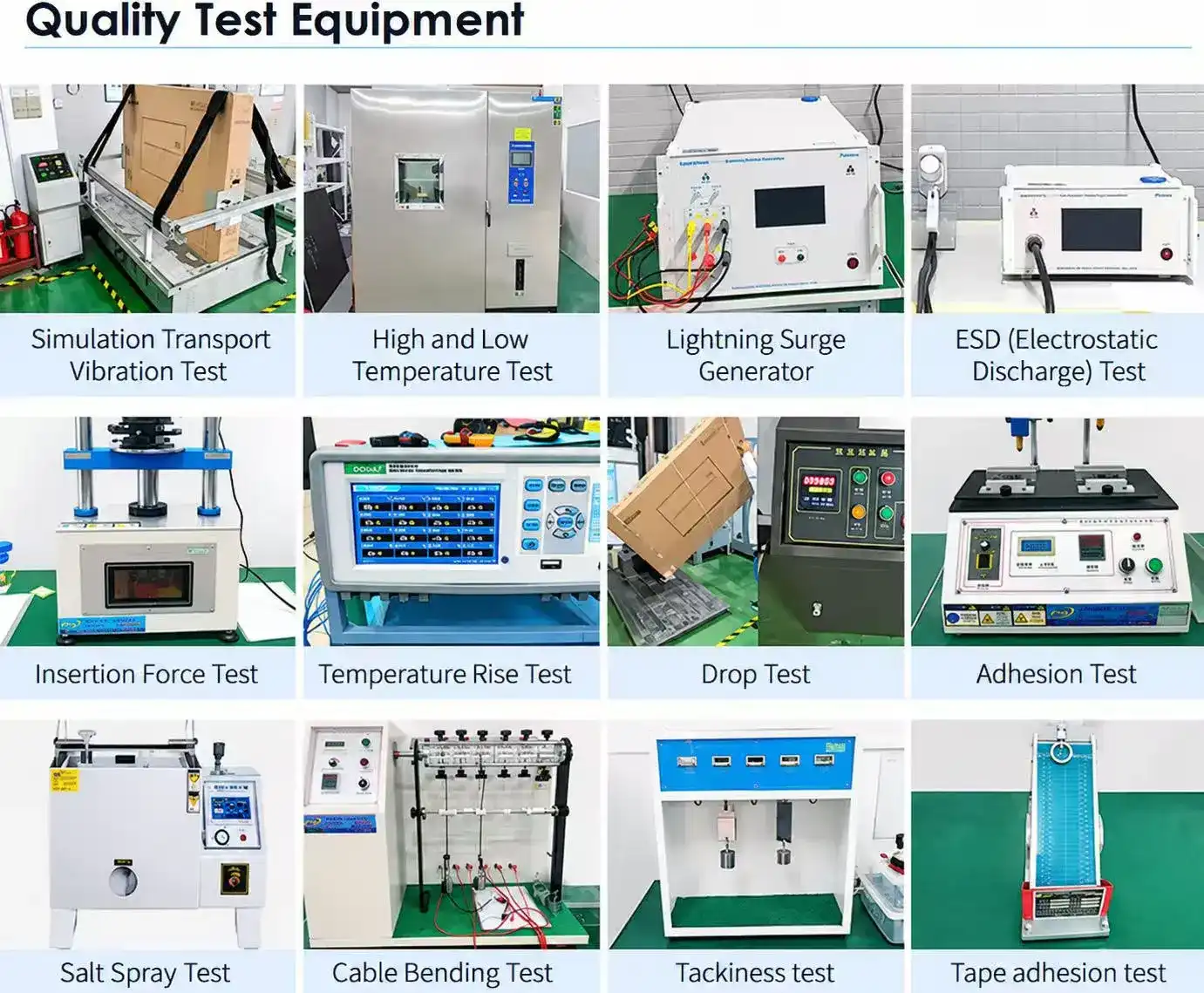
A competent original equipment manufacturer (OEM) provider of outdoor kiosks supports the whole system, not simply a glass panel. Confirm that you have expertise with bespoke glass requirements, touchscreen integration, thermal management, intellectual property testing, prototypes, and product manufacturing at scale. Ask about the arrival inspection, the controls for tempering or lamination, the coating checks, the touch testing, the water-ingress testing, and the temperature cycling. Additionally, test reports, material declarations, and certifications such as FCC and RoHS should be requested by purchasers in the United States. Additionally, buyers should verify with the local inspector whether additional electrical listings are required. The minimum order quantity (MOQ), tooling, prototype charges, lead time, packaging, warranty, Incoterms, and spare-glass support should all be included in the quotations. This will ensure that there are no unexpected costs after the order has been placed.
Prepare an Effective RFQ and Final Checklist
A complete RFQ lets an OEM touch screen kiosk supplier quote on the same basis as other suppliers and cuts engineering revisions. Include the application, site, display model, glass dimensions, thickness, corner radius, holes, cutouts, mounting method, annual volume, launch date, and delivery destination. Define optical targets such as light transmission, reflectance, haze, and anti-glare or anti-reflective treatment, plus impact, temperature, humidity, UV, and salt-spray requirements, along with the IP target for the complete kiosk. Ask which safety standard applies, such as 16 CFR 1201 in the US. Before approval, confirm safety treatment, touchscreen compatibility, edge processing, seals, and adhesives. Approve samples and an integrated prototype before bulk production, since reflection, condensation, and transport problems appear there first.
Topview Outdoor Digital Signage With Full-Bonded Glass
Full-Bonding Glass and Display Performance
The T32OLD, T43OLD, T49OLD, T55OLD, T65OLD, and T75OLD outdoor digital signage series are all examples of how Topview applies the glass concepts described above. In order to link the LCD to the cover glass, cutting-edge full-bonding technology is used. When the light transmittance is high, the pictures are bright and clear, and the power consumption is reduced by more than thirty percent. On the other hand, when the reflectivity is low, the content is legible even when the sun is shining brightly. The units are resistant to pressure, dust, shock, and water, and they are also resistant to pressure. Furthermore, they have great heat dissipation, which decreases power consumption by two-thirds in comparison to conventional air-cooled systems. The fact that they are more than one-third thinner than conventional outdoor advertising displays allows for more room to be saved during installation. Additionally, they are able to function throughout a broad temperature range for the sake of commercial advertising applications.
Sizes, Mounting, and Commercial Terms
With regard to these vehicles, the following are the primary options that purchasers often confirm first:
- Dimensions and construction: The series is offered in diameters of 32, 43, 49, 55, and 65 inches, and it may be purchased with either a single-sided or dual-sided configuration. It is possible to place the units on the ceiling or utilise them as floor-stand signage. The completely sealed body has a thickness of 86 millimetres, a frame that is 24 millimetres slim, and a front design that is symmetrical, which helps to conserve room during installation.
- It is possible to choose between Full HD at 1920 x 1080 or Ultra HD at 3840 x 2160 for the display and system. It is possible to use either Android or Windows as an operating system, and the rich interface is compatible with the majority of motherboard models on the market, allowing you to add functionality at a later time. You have the ability to customise the software, the starting logo, the brightness for use indoors or outdoors, and the colour for your own project.
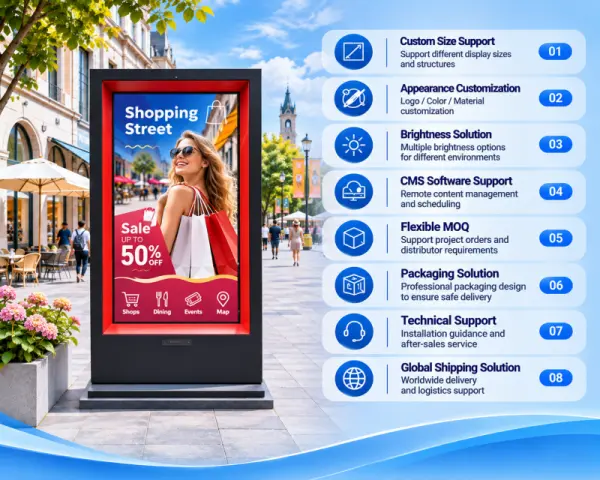
- In terms of the service, the conditions of payment are as follows: EXW, FOB, or DDP, with wire transfer. A strong hardwood box is used for the packaging, and the lead time ranges from five to fifteen workdays. Certifications include RoHS, CE, and FCC certifications. By default, the guarantee is for one year, but with the option to extend it for up to three years, and it also includes lifetime technical support.
Because of these possibilities, purchasers are able to customise the glass and display to each location without having to redo the whole kiosk.
Factory Strength and OEM/ODM Customization
Over the course of more than thirteen years, Topview has been constructing LCD advertising displays in Shenzhen. There are three manufacturing lines operating in our 2,000-square-meter workshop, which is staffed by more than twenty senior engineers and assembly helpers. The daily output of our workshop may approach one hundred pieces. Pre-service training is completed by each and every member of the team. Our own housing factory enables us to directly handle OEM and ODM projects, and our workshop is kept clean and dust-free to ensure that the quality of the assembly remains consistent. In order to enable personalised logos (silk screen or LED backlight), colours, software, and internal structures, a research team consisting of at least 10 individuals is required. There is no minimum order quantity needed for customisation. Following shipping, you will get help from two experienced after-sales engineers.
Conclusion: Make Glass Selection Part of the Complete Kiosk Design
Choosing glass for outdoor digital signage is an engineering decision that starts with the site. This guide showed that environment, glass type, thickness, optical treatment, and sealing must be evaluated together with the display, touchscreen, and enclosure, because IP ratings and impact performance belong to the assembled kiosk. Tempered and laminated constructions address different safety needs, while anti-glare and anti-reflective treatments solve different reflection problems. Scorecards, complete RFQs, and prototype testing help buyers compare suppliers on total ownership cost instead of unit price alone. An experienced OEM outdoor kiosk manufacturer can coordinate these elements so glass, display, cooling, and sealing perform as one tested system.
FAQ: Outdoor Digital Signage Glass Procurement
1. Is tempered or laminated glass better for outdoor signage?
Tempered glass suits many standard installations because it is stronger than annealed glass and breaks into small pieces. Laminated or tempered laminated glass fits public payment, parking, and transit kiosks, where fragment retention and vandal resistance matter more. It does add weight and cost, so match the choice to the site risk.
2. Does the glass alone determine the IP65 rating?
No. IEC 60529 defines IP ratings for the complete enclosure. IP65 means the enclosure is dust-tight and protected against water jets. The glass, gaskets, bezel, doors, drainage, and cable entries must work together, so test the assembled kiosk, not the panel alone.
3. What should an RFQ for custom glass include?
Include drawings, display model, installation environment, quantity, certification needs, optical targets, and delivery destination. With these details, Topview can respond with a specification-based quotation, and our lead time is 5 to 15 workdays.
Request a Custom Outdoor Digital Signage or Kiosk Quotation
Share your application, display size, site conditions, glass preference, IP target, quantity, and destination with Topview, your OEM outdoor kiosk manufacturer and supplier. Our engineers will recommend a glass configuration, flag optical and mechanical risks, and prepare a specification-based quotation. We offer OEM/ODM support, no MOQ for customization, and warranties of one to three years. Email market@tviewdisplay.com for details.
References
1. ASTM International, ASTM C1048 Standard Specification for Heat-Treated Flat Glass, 2018
2. ASTM International, ASTM C1172 Standard Specification for Laminated Architectural Flat Glass, 2019
3. International Electrotechnical Commission, IEC 60529 Degrees of Protection Provided by Enclosures (IP Code), 2013
4. International Electrotechnical Commission, IEC 62262 Degrees of Protection Provided by Enclosures Against External Mechanical Impacts (IK Code), 2002
5. U.S. Consumer Product Safety Commission, 16 CFR Part 1201 Safety Standard for Architectural Glazing Materials, 1977
6. European Parliament and Council, Directive 2011/65/EU on the Restriction of Hazardous Substances (RoHS), 2011
YOU MAY LIKE
 VIEW MORESolar Bench with bicycle parking
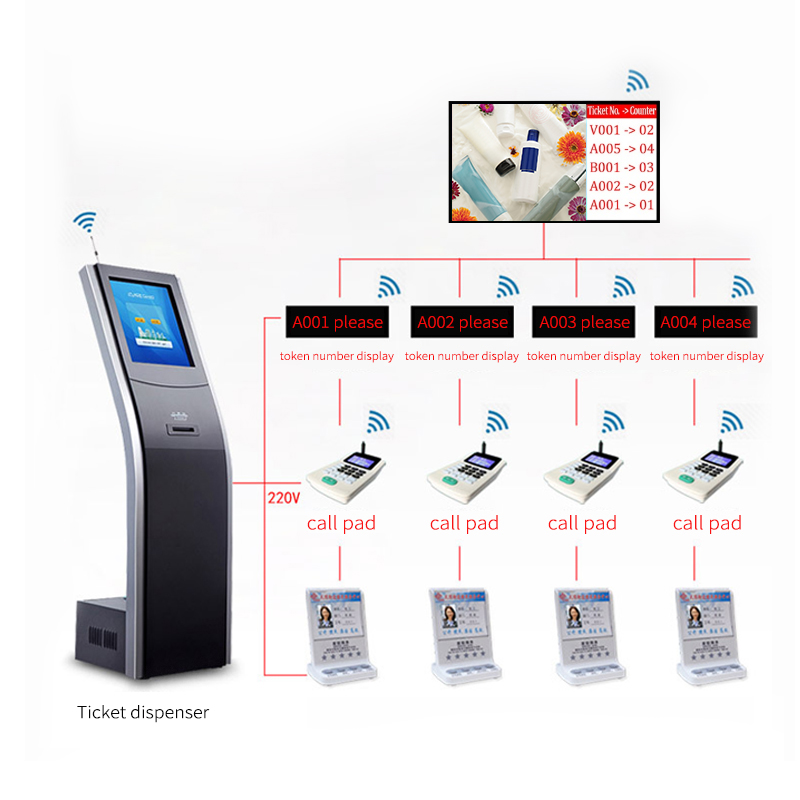 VIEW MOREBank/Hospital/Government queue management display system
 VIEW MORE22inch Rotate Interactive 3D HoloBox
 VIEW MORESingle Sided High Brightness Windows Facing Displays
 VIEW MORERound Circular LCD Display
 VIEW MOREAndroid Industrial Tablet PC
 VIEW MOREMoving Touch Screen Kiosk
 VIEW MOREOutdoor Durable Prefabricated Smart Public Bus Stop Shelter