



How much does a professional spatial display cost, and what factors affect the price?
A professional 3d spatial signage display typically ranges from $800 to $15,000+ per unit, depending on screen size, display technology, brightness specification, and customization requirements. Entry-level 32-inch glasses-free commercial displays start around $800–$2,000, while large-format 86-inch configurations with 4K resolution and high-brightness panels can exceed $8,000. OEM/ODM builds, content management software, and installation services add further costs. Understanding these variables before purchasing helps procurement managers and solution architects secure better pricing and avoid budget overruns on commercial projects.
Understanding 3D Spatial Signage Displays: What You're Investing In
Before talking about price, it's helpful to know what makes a spatial display different from a regular business screen.
What Makes It Different from Conventional Displays
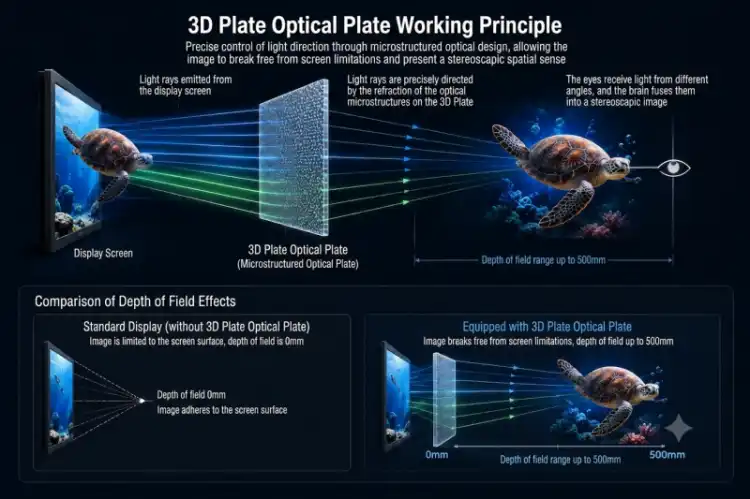
A 3D advertising screen that doesn't require glasses is not like a normal LCD panel. It uses binocular parallax technology to show each eye a different image at the same time. This lets the brain perceive real depth without any extra gear that needs to be worn. This creates a "2D subject, 3D background" image where the information in the center stays clear, and the background adds depth, with up to 500mm of depth-of-field space.
Core Technical Components That Drive Cost
There are more parts inside a spatial display than in a normal flat screen. A high-precision optical layer that is lined up with the display grid, an LED backlight system, and a display driver board that can accept input from a PC, Android, or HDMI are some of the most important parts. For example, Topview's spatial display has a 178° viewing angle, a 1200:1 contrast ratio, an 8ms response time, and an optional brightness level of up to 1,000 cd/m². These specs show that a lot of work went into the engineering.
Where These Displays Are Used
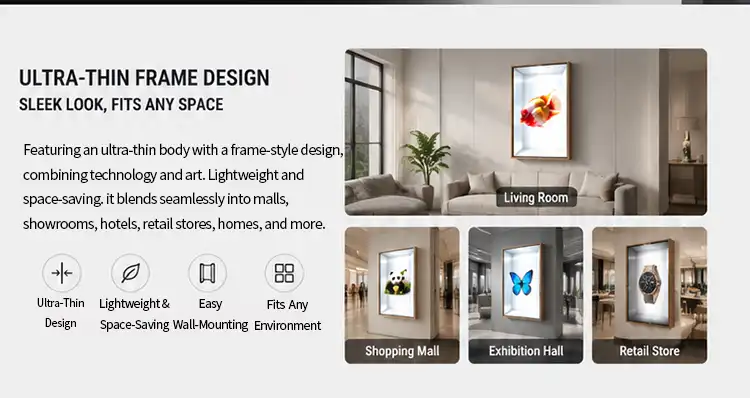
The 3d spatial signage display is being used in more and more commercial venues around the world. They are put in high-end shops to show off jewelry and handbags in all directions. They are put up in museums so that artifacts look like they "float" in space. They are used for strong ads in airports and shopping malls. Each type of application affects both the system specs needed and the price range that goes with them.
Main Factors Affecting the Cost of Professional 3D Spatial Displays
Pricing isn't always easy to understand. The last number on a quote is shaped by several variables that interact with each other.
Screen Size and Panel Specification
The biggest factor that affects price is the size of the screen. There are four different sizes of Topview's spatial display: 21.5", 32", 55", and 86". There is a big difference in price between a 32-inch 2K screen and an 86-inch 4K panel that measures 1,895 × 1,066mm. Resolution, color gamut (72% NTSC / 100% sRGB), and brightness level (350 cd/m² as standard vs. 1,000 cd/m² upgrade) all cost more.
Customization and OEM/ODM Requirements
Custom branding, logo integration with silk-screen or LED backlight, custom housing color, and power-on logo configuration all have an effect on the price per unit. But, unlike many other companies, Topview doesn't have a minimum order number for tailoring. This lets project-based buyers who need custom solutions but don't want to commit to large production runs place custom orders.
Anti-Glare Technology and Optional Upgrades
The standard panel ships with a 5% haze rating. The extra 25% haze anti-glare covering changes specular reflection into diffuse, paper-like output. It costs more, but it really helps people who work in places with a lot of ambient light, like airport lobbies or store floors. Customizing software and integrating Android and PC systems are extra costs that should be planned for.
Comparing 3D Spatial Displays with Traditional and Digital Signage Options
A spatial display costs more up front than a regular business LCD. But that gap gets a lot smaller when you look at success measures further down the line.
Upfront Cost vs. Long-Term ROI
A normal 55-inch business LCD screen costs between $400 and $900. A similar 3d spatial signage display costs more, but a study from the Digital Signage Federation shows that displays that get people more involved lower the cost-per-impression by a large amount over the course of a campaign. The better visual experience means longer dwell times and higher conversion rates for luxury retailers and DOOH operators.
Maintenance and Operational Durability
The spatial display from Topview works with AC 110–220V and has an LED backlight that is recommended for long-term business use. The 60Hz frequency and 8ms reaction time make sure that the output is stable and flicker-free over long daily working cycles. This is important for mall owners and airport media managers who need reliable service 24 hours a day, seven days a week.
Which Industries Justify the Investment
In businesses where visual differentiation directly affects revenue, like high-end retail, DOOH advertising, museum exhibits, and brand activation events, the extra cost is always worth it compared to flat-panel options. Businesses in these areas say that glasses-free 3D content always gets more people to come in and look at it than regular digital signage because it is new and has more visual depth.
How to Budget and Plan for Purchasing 3D Spatial Signage Displays?
To make a good budget, you need to look at more than just the unit price. You need to look at the whole job.
Understanding the Full Cost of Ownership
A full budget should include mounting hardware (wall-mount brackets or optional floor-standing structures), content production for 3D content that is designed for depth, and any software licensing or CMS platform fees. When multiple units are used in airport networks or retail chains, buying in bulk from the manufacturer cuts out the middleman and lowers the cost per unit.
Evaluating Suppliers Against Project Requirements
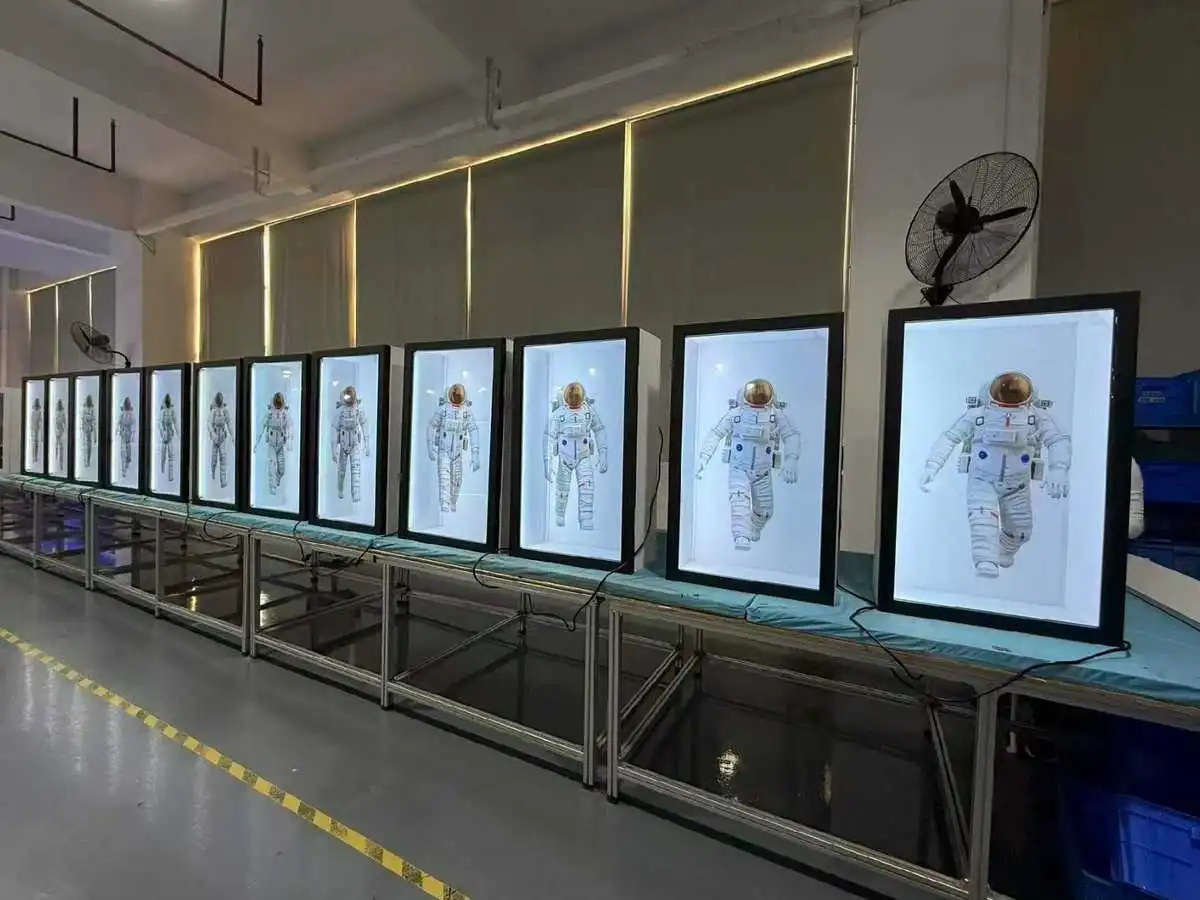
When looking for a glasses-free 3D monitor provider, you should check their production capacity, engineering background, and infrastructure for after-sales service. Topview has a workshop in Shenzhen that is 2,000 square meters and has three production lines, more than 20 engineers, and dedicated after-sales staff. At the moment, the company can make 100 units per day, so it can easily handle both small special orders and large-scale project launches.
Project Timeline and Procurement Planning
For 3d spatial signage display projects, timing is very important for system designers who put screens in AV projects. Take into account wait times for production, shipping from the base, installation windows on-site, and testing times for content. Before placing a full order, asking for samples or a technical consultation can help you make sure that the product works with HDMI, meets the input voltage needs (AC110–220V), and can be integrated with your current Android or PC-based content systems.
Real-World Use Cases and Their Impact on Cost Expectations
The application environment affects not only the specifications that need to be met but also the total cost of the project.
Luxury Retail and Fashion Environments
It's possible for a high-end jewelry brand to spend between $1,500 and $3,000 per unit, which includes installation, on a 32-inch spatial display for a key spot in the store. The visual output—products with added depth and texture—supports the brand's high price point, which makes it easy to explain to a store design manager why the investment was worth it.
Museums, Exhibitions, and Event Contractors
Larger displays or arrays of multiple screens are often needed by museums and exhibition designers. When put in an exhibition hall, an 86-inch 4K spatial display makes a "artifact floating in space" effect that can't be made by regular flat displays. Event contractors who rent or buy floor-standing units for trade shows like how easy they are to set up and how the hardware can be used for more than one activation.
Shopping Malls and Airport Media Networks
Reliability and content management compatibility are the most important factors in buying big business sites. Advertising managers in malls and airports usually look at the cost per sign along with guarantees of operational uptime and response times for repair. When bought in bulk, factory-direct prices from a company like Topview save property managers a lot of money compared to buying through retail channels.
Conclusion
A professional 3d spatial signage display's price relies on its screen size, resolution, brightness level, level of customization, and the way the seller supports it. The least expensive units start at around $800, and the most expensive ones are large-format 4K setups with custom branding. Smart procurement means matching the standard to the application and working with a maker that can keep the product in stock, help with integration, and provide support after it has been installed. Topview is a useful source for digital signage solution providers, AV integrators, and retail brands because it is factory-direct, has a lot of engineers, and lets you make changes in a number of ways.
FAQ
Q1: What screen sizes does Topview's spatial display come in?
The display is available in four standard sizes: 21.5", 32", 55", and 86". Each size supports wall-mounted or optional floor-standing installation, making them adaptable to retail fixtures, exhibition walls, and public-space installations.
Q2: Can the display be customized with our brand logo?
Yes. Topview supports both silk-screen print logos and LED backlight logo designs on the display housing. Custom power-on logos, housing colors, and software configurations are all available with no minimum order quantity requirement.
Q3: Does the display work with existing AV systems?
The standard configuration includes an HDMI input compatible with most commercial AV signal sources. Android and PC system options are also available, making integration into existing AV infrastructures straightforward for system integrators.
Q4: How bright is the screen for high-ambient-light environments?
The standard brightness is ≥350 cd/m². An optional upgrade raises output to 1,000 cd/m², which is suitable for retail floors, airport terminals, and other well-lit commercial environments where screen visibility must compete with ambient lighting.
Get a Direct Quote from Topview — Trusted 3D Spatial Signage Display Manufacturer
Topview has been making business LCD advertising screens for more than 13 years. They have a 2,000-square-meter plant in Shenzhen with two after-sales engineers and a dedicated R&D team. If you need a single unique unit or a lot of glasses-free 3d spatial signage displays for sale for a project, the team can meet your needs with no minimum order quantity. To get a product demo, specification sheet, or project quote, email the Topview sales team at market@tviewdisplay.com.
References
1. Digital Signage Federation. State of the Digital Signage Industry Report. 2023.
2. InfoComm International. AV Technology and Commercial Display Integration Standards. AVIXA, 2022.
3. Grand View Research. Digital Signage Market Size, Share & Trends Analysis Report. 2023.
4. Gartner. Hype Cycle for Emerging Technologies: Spatial Computing and Display Innovation. 2023.
5. Mdisplays & Retail Technology Review. Visual Merchandising and Display Technology in Luxury Retail. 2022.
6. Digital Signage Today. Buyer's Guide to Commercial Display Procurement and Total Cost of Ownership. 2023.
YOU MAY LIKE
 VIEW MOREUltra Thin Super Slim Display Indoor Digital Display Screen
 VIEW MOREIntelligent IOT System Bright LED Light Pole
 VIEW MOREMoving Touch Screen Kiosk
 VIEW MOREDouble Sided Floor Standing Digital Signage
 VIEW MOREWall-Mounted Outdoor Displays
 VIEW MOREOutdoor LCD Totem Signage
 VIEW MORESlim outdoor digital totem
 VIEW MORESmall size display