



How does AI improve spatial 3D content creation?
AI significantly accelerates spatial 3D content creation by automating labor-intensive tasks such as depth mapping, object segmentation, and scene rendering. For commercial applications like a 3d spatial signage display, AI tools can generate depth-layered visual assets faster than traditional production pipelines, reducing both cost and turnaround time. Machine learning models analyze source footage and automatically apply the "2D subject, 3D background" composition that glasses-free display hardware requires. This means brands can produce high-quality, deployment-ready content without hiring large design teams, making AI a practical advantage for procurement managers and project leads across retail, advertising, and exhibition sectors.
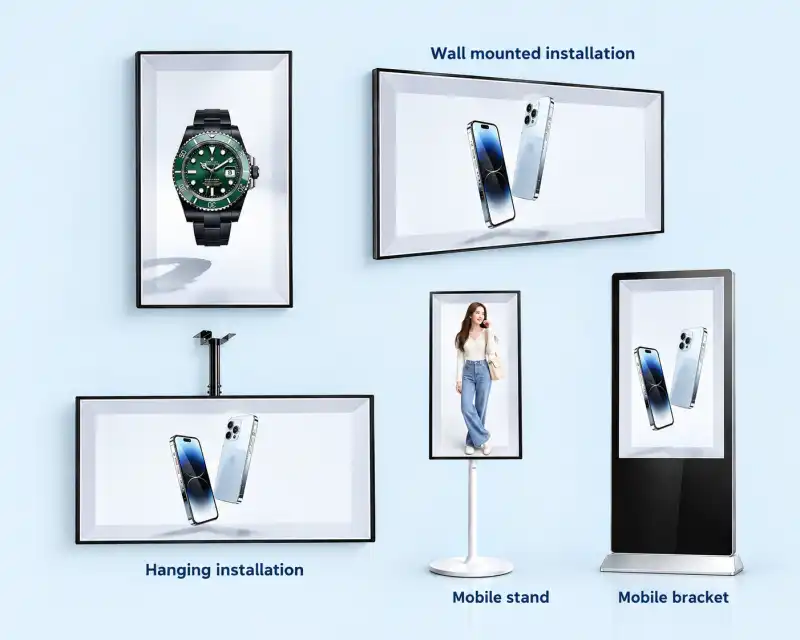
Understanding 3D Spatial Signage Displays and Content Creation
What a Spatial Display Actually Is
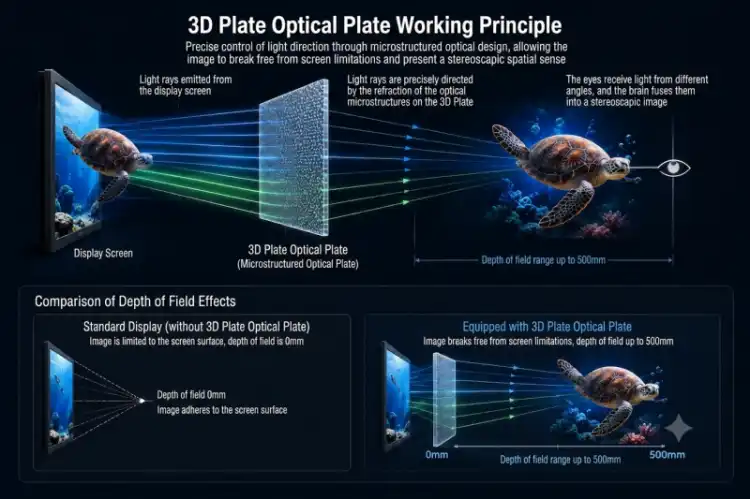
A glasses-free 3D screen is not the same as a regular LCD screen. It uses binocular parallax technology to show each eye a different picture. This lets the brain understand depth without any special gear being worn. "2D subject, 3D background" rendering is used by the screen. This means that the object in the center looks sharply in 2D, while the background gives the impression of depth. The two biggest problems with old glasses-free 3D technology that this method fixes are poor picture quality and a small viewing area that works best.
Key Technical Specifications Worth Knowing
Topview's spatial display doesn't need glasses and comes in sizes of 21.5", 32", 55", and 86". Its resolutions are 1920x1080 (2K) or 3840x2160 (4K). It's useful for business areas with a lot of foot traffic because it has a 178° viewing angle and a 60° 3D depth-of-field view. The brightness can be set up to 1000 cd/m² for brighter rooms. It starts at 350 cd/m². The system can accept HDMI input and can optionally connect to an Android or PC device. Depending on the project, it can be mounted on the wall or on the floor.
Where Traditional Content Creation Falls Short
Before AI came along, making content for a 3d spatial signage display needed skilled 3D artists, a lot of time to render, and pricey software licenses. It could take days to finish a single product video. This timeline caused real scheduling problems for procurement managers who were working on multiple client deployments at the same time. Making changes to material to fit different screen sizes or brand rules made things even more complicated. Time-to-market was slowed down by these problems, and project costs went up a lot.
How AI Changes the 3D Spatial Content Workflow
Automating Depth and Scene Generation
AI-powered tools, such as generative depth estimation models, can look at flat 2D video and make depth maps automatically that meet the needs of the spatial display. Things that used to need a skilled compositor to do by hand can now be done in a lot less time. Grand View Research said in a study from 2023 that the world market for AI in media and entertainment was worth more than $10.87 billion. One of the main factors that led to this growth was the automation of content.
Accelerating Asset Production for Commercial Displays
AI batch-processing tools can instantly resize, recompose, and depth-adjust the same source image for each format for digital signage project managers who are putting content on multiple screen sizes, such as 32" retail units and 86" panels in airport hallways. This cuts down on the need to make different files for each screen size. The result is a leaner production pipeline that can handle more projects for clients without having to hire more people or pay them more.
Real-World Performance Gains in Retail and Advertising
A store case study in the Journal of Retailing and Consumer Services found that compared to flat digital displays, three-dimensional product displays made people 20% more likely to buy. This performance difference is reason enough for DOOH operators and high-end retail brands to switch from regular digital panels to spatially rendered advertising screens. Using AI to make the material for these screens keeps the visual quality while cutting costs, which directly improves the return on investment (ROI) of the promotion.
Comparing AI-Powered Spatial Displays With Conventional Signage
Engagement Gap Between 3D and 2D Displays
The Out of Home Advertising Association of America (OAA) found that static signs usually get people's attention for about 2.5 seconds. A 3d spatial signage display that doesn't require glasses and has AI-generated depth content always makes that dwell time longer. When you look at something on a flat screen, you can't see something else at the same time. More time spent on an ad directly leads to better customer results and higher ad memory for mall and airport advertising managers.
Cost Efficiency Over the Project Lifecycle
The cost of making each asset is lower with AI-assisted content pipelines, which is important for managing large display networks. In the past, making 3D content meant making custom processes for each program. With AI tools taking care of depth conversion and scene design, the same creative team can make more content of the same high quality. Over a deployment period of 12 to 24 months, these saves add up in licensing, labor, and revision costs in a big way.
Sustainability and Energy Considerations
Topview's spatial displays work with AC 110–220V and have an LED backlight system with a standard haze of 5% (an optional 25% anti-glare setting is also available). Lighting systems that use LEDs use a lot less power than older neon or high-wattage fluorescent formats. Facility managers who look at total running costs will find that AI-optimized content management and energy-efficient gear cut down on both IT costs and IT overhead. Because of these things, the site is a good long-term investment for business places.
Procurement Considerations for AI-Enabled Spatial Display Projects
Evaluating Supplier Capability and Customization Options
Topview Technology is a company based in Shenzhen that has been making business LCD advertising screens for more than 13 years. There are more than 20 engineers working in the 2,000-square-meter factory. It has three production lines. For B2B buyers, this means that OEM and ODM projects can go ahead as planned, and there is no minimum order number needed for customization. You can choose between silk-screen printing or designing an LED backlit logo. The color, power-on name, and lighting can all be changed to fit the needs of the project.
Installation, Integration, and After-Sales Support
For AV installers, Topview's spatial display works with both Android and PC-based content systems and can be connected via normal HDMI input. The standard installation is on the wall, but floor-standing options can be ordered if needed. Technical help after deployment is handled by two specialized after-sales experts. For projects that need to be done during extended hours, like those that happen in airports or museums, this level of dedicated support is a must, not just a selling point for the vendor.
Bulk Pricing and Long-Term Supply Reliability
If a lot of 3d spatial signage displays need to be bought, procurement managers should focus on sellers who can guaranty consistent component buying and production stability. Topview can make up to 100 units a day, and the clean, dust-free working setting makes sure that the quality of the assemblies is always the same. The Topview sales team can help you buy in bulk and get competitive wholesale prices. This makes it a good long-term supply partner for digital signage integrators and DOOH operators who are building out larger networks.
Future Trends: AI and the Next Stage of Spatial Display Content
Real-Time Rendering and Personalization
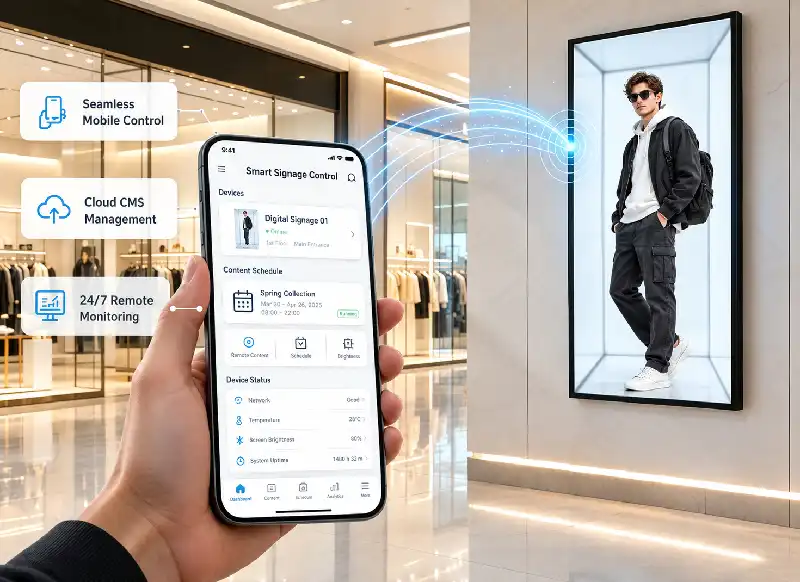
Real-time rendering will be possible on the monitor hardware with the next wave of AI-driven content tools. Instead of using pre-rendered files, AI models will create or change 3D images based on information about the audience, such as the time of day, the type of viewers, or changes in the products that are available. This means that for retail brands, a spatial display could show different products or messages at different times of the day without the need for manual content updates.
Integration With AR and Broader Visual Ecosystems
It is already possible for AI to connect physical screens with augmented reality content hubs. Display hardware that works with both Android and PC systems, like Topview's units, is likely to get software changes that let it work with this kind of cross-platform material. This direction will help exhibition designers and business store managers the most because it will allow one display network to serve both in-person and digital audiences at the same time.
Preparing Now for What's Coming
It will be easier for businesses to use AI content tools in the future if they buy good spatial display hardware now. Resolution, depth-of-field range, brightness, and system compatibility are some of the most important display specs that directly affect how well the screen works with next-generation content pipelines. If you choose a maker like Topview that has a strong research and development team and hardware that can be used in a variety of ways, your deployments will stay up to date without having to go through full hardware replacement rounds.
Conclusion
AI is really changing how spatial 3D material is made—it's getting made faster, cheaper, and with better quality. This change means that a 3d spatial signage display doesn't have to cost a lot of money anymore for procurement managers, AV installers, and brand teams. Not only do the hardware specs matter, but so does picking a supply partner that can help you with your project from the very beginning, all the way through long-term maintenance. Topview's spatial display platform unites tested technical performance, customization straight from the factory, and reliable engineering help after the sale.
FAQ
Q1: Can standard video files be converted directly into 3D spatial content?
No. Standard videos cannot be directly converted into spatial 3D content. The display's depth effect depends on purpose-built assets that follow the "2D subject, 3D background" composition method. AI tools can assist in producing compatible content from source footage, but the output must be specifically prepared for the spatial display format.
Q2: What screen sizes are available for commercial deployments?
Topview's spatial display is available in 21.5", 32", 55", and 86" sizes, covering a broad range of commercial applications from retail countertop displays to large-format airport or mall installations.
Q3: Is the display compatible with existing AV systems?
Yes. The standard configuration includes HDMI input, and the system supports optional Android or PC integration, making it compatible with most commercial AV environments without requiring proprietary content management software.
Q4: What brightness level is suitable for high-ambient-light environments?
The standard brightness is 350 cd/m². For environments with strong ambient lighting — such as airports or storefront windows — an optional 1000 cd/m² configuration is available.
Ready to Source a 3D Spatial Signage Display? Contact Topview Today
Topview has been helping businesses in the retail, advertising, and exhibition industries with their display needs for more than 13 years. As a direct producer of 3d spatial signage displays, we can offer factory prices, OEM customization, and full engineering support from the time of design until installation. The people on our team are ready to help you whether you need a single test unit or a large-scale deployment. You can talk about your project needs at emailing market@tviewdisplay.com.
References
1. Grand View Research. (2023). AI in Media and Entertainment Market Size, Share & Trends Analysis Report.
2. Out of Home Advertising Association of America (OAAA). (2022). OOH Audience Attention and Dwell Time Research Report.
3. Flavián, C., Gurrea, R., & Orús, C. (2019). The influence of online product presentation videos on purchase intention. Journal of Retailing and Consumer Services.
4. Milgram, P., & Kishino, F. (1994). A taxonomy of mixed reality visual displays. IEICE Transactions on Information and Systems.
5. Nielsen Norman Group. (2021). Digital Signage Usability: Attention, Engagement, and Wayfinding.
6. MarketsandMarkets. (2023). Digital Signage Market — Global Forecast to 2028.