



How do spatial displays compare with traditional LED screens and digital signage?
When procurement managers and AV integrators ask how spatial displays stack up against traditional LED screens and digital signage, the short answer is this: a 3d spatial signage display delivers depth-based, glasses-free visual experiences that flat panels simply cannot replicate. Where conventional LED screens broadcast content on a two-dimensional plane, spatial display technology uses binocular parallax to trick the brain into perceiving genuine depth — no headsets, no glasses, no gimmicks. For B2B buyers evaluating commercial display solutions, that difference has real implications for engagement, brand positioning, and long-term project value.
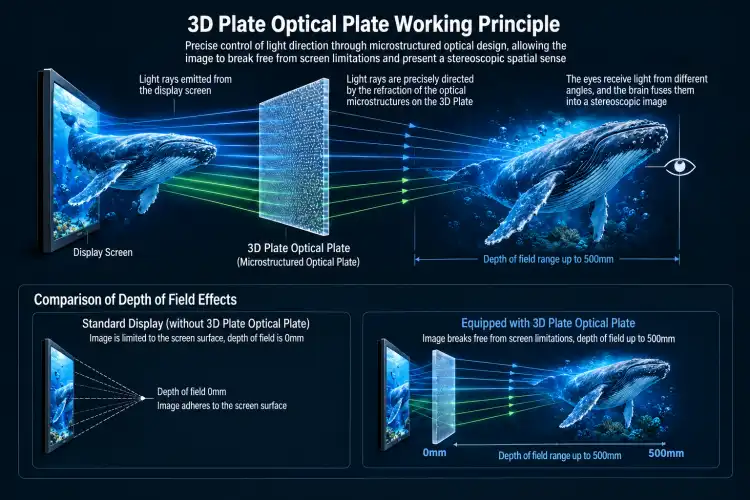
Understanding 3D Spatial Signage Displays and Traditional Signage Technologies
It's helpful to know what each technology does at the hardware level before comparing how well it works.
How Spatial Display Technology Works
Some 3d spatial signage displays, like the Topview spatial screen, use precise optics and a "2D subject, 3D background" rendering method to show slightly different images to each eye. Full 2K or 4K resolution keeps the foreground sharp, while a 500mm depth-of-field space is made for the background. This fixes the two biggest problems with glasses-free 3D that have been around for a while: bad picture quality and limited viewing angles. Therefore, there is a 178° horizontal viewing angle and a 60° 3D depth-of-field view.
How Traditional LED Screens and Digital Signage Work
Normal LED screens and LCD digital signs show information on a flat surface. LED panels are made up of separate light-emitting diodes arranged in a grid. They are very bright and can be used outside or on a large scale. A backlit screen and a content management system are what make up standard digital signs, which is usually LCD-based. Both forms are stable, used by a lot of people, and are easy for AV installers and procurement teams to understand.
Where Each Technology Fits
Traditional displays are good for projects with limited funds, a lot of text, or helping people find their way. Spatial displays work best in places where visual distinction is important, like high-end store windows, airport brand activations, museum exhibits, and company showrooms where the ability to stop people directly affects business results.
Core Differences and Performance Comparison
Understanding the differences at the specification level helps procurement teams make accurate budget projections and avoid deployments that don't match.
Visual Impact and Viewer Engagement
The Digital Signage Federation did research in 2022 that showed motion-based screens get up to 400% more views than standard signs. A 3d spatial signage display goes even further: the depth effect naturally draws the eye in a way that flat motion graphics don't. Even in places with a lot of background light, like shops or airports, a spatial screen with a 1200:1 contrast ratio and an extra 1000 cd/m² brightness keeps your attention.
Installation, Power, and Maintenance
Here are the factors that matter for project planning in the real world:
- Spatial display (Topview 55"): can be placed on the wall or on the floor, accepts AC 110–220V power, has an 8ms response time, and comes with a standard HDMI input and an optional Android/PC integration. It can be dropped into most current AV sets without the need for any extra hardware.
- Traditional LED wall: usually needs structural supports for mounting, its own power supply circuits, and a more complex system for managing content.
- Standard LCD digital signage: has a lower initial cost and is easier to set up, but it doesn't have a depth effect and doesn't show much difference in how things look.
Both standard and spatial displays can work for long periods of time, but commercial-grade parts are used to make spatial screens specifically for use in businesses.
Cost and ROI Considerations
There is a higher cost per unit for spatial screens than for regular LCD panels. For high-end stores, brand events, and show companies, however, the ROI estimate changes when you take into account dwell time, social sharing, and brand memory. A flat screen with an ad for a watch and a spatial screen with the same watch that looks like it has depth are not competing for the same audience response; they have very different results.
Advantages of 3D Spatial Signage over Traditional LED and Digital Signage
When you look at specific business use cases, the difference between 3d spatial signage displays and regular computers becomes most clear.
Here are the main benefits of Topview's spatial signage that business buyers always look for:
- Depth experience without glasses: No extra hardware is needed. Binocular parallax lets viewers easily sense 3D depth, which makes installation easy and the viewing experience smooth.
- Wide range of sizes: Available in 21.5", 32", 55", and 86" sizes, these screens can be used for everything from jewelry displays on a countertop to full lobby installations, giving solution providers and integrators a lot of options for all types of projects.
- Anti-glare technology: The optional HAZE 25% atomization coating changes specular reflection into diffuse reflection, which makes the image clearer and less tiring on the eyes in bright places like airports and stores.
- Compatible with HDMI and Android/PC: Easily connects to current audiovisual systems, which is a major factor for system designers in charge of multi-display business projects.
- OEM/ODM customization: Custom branding, silk-screen or LED backlight logos, custom colors, and power-on logos are all possible with OEM/ODM customization. There is no minimum order quantity needed for customization.
These benefits directly meet the needs of digital signage solution providers, AV integrators, and luxury brand managers who want to buy hardware that works reliably in commercial settings and sets their client's space apart from standard flat-panel installations.
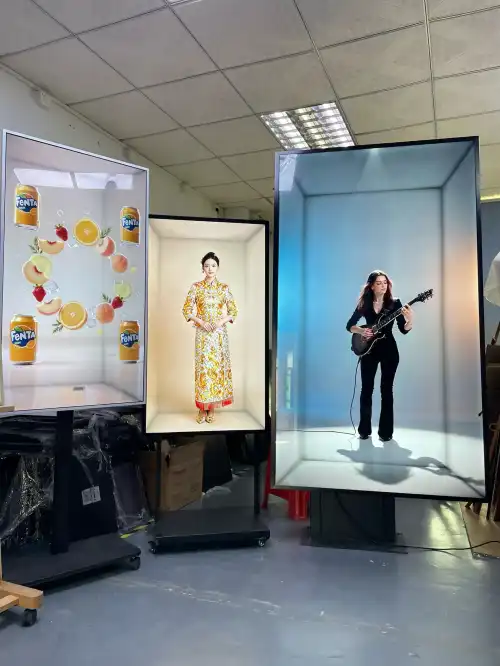
How to Choose Between 3D Spatial Signage, Traditional LED, and Digital Signage – A B2B Procurement Guide
Being honest about the needs of your project is the first step in choosing the right show technology.
Define Your Visual Objective First
Traditional digital signs are enough and don't cost much if your client needs help finding their way or menu boards. A 3d spatial signage display is better than flat screens for stopping people in their tracks, making an expensive brand moment, or making a product look like it floats in space. Museum display designers, luxury visual merchandising managers, and DOOH operators all say that 3D depth content gets people to react in ways that regular computers don't.
Evaluate Integration Requirements
For AV integrators, the important thing is to see if the display works with the current signal chain. Topview's spatial screens work with both Android and PC operating systems and accept standard HDMI input. This means that they can be added to most commercial AV architectures without changing how the content is processed. The various sizes (up to 86") and aspect ratio (9:16) make it possible to use most professional installation formats.
Vet Your Supplier's Manufacturing Capability
When buying commercial displays for long-term projects, the security of the seller is just as important as the screen specs. Topview Technology has a factory in Shenzhen that is 2,000 square meters and has three production lines, more than 20 engineers, and a specialized R&D team of 10 or more specialists with more than 8 years of experience in the field. Every day, 100 units are made, which keeps the supply stable for large purchases. Support after installation is handled by two dedicated after-sales techs. This is something that procurement managers often forget about until there is a problem on a live rollout.
Real-World Applications and Success Stories
3d spatial signage display technology is now being used in real businesses in a number of important areas, going beyond proof-of-concept.
Luxury Retail and Fashion
Spatial screens are used by jewelry and watch stores to show product details and textures in what looks like three-dimensional space. When placed at eye level in a store window, a 32-inch spatial screen gives the impression of depth to a watch face, which is something that flat screens can't do.
Museums and Exhibition Halls
Exhibition contractors say that visitors are more interested in objects that are shown on spatial screens than in the same material shown on flat panels. "Floating" effects, in which an object seems to exist in the space in front of the screen, create a new way to interact with the content that encourages people to stay on it longer and watch it again.
Shopping Malls and Airports
The people in charge of commercial property and digital media at big places use spatial screens for brand advertising campaigns where the advertizer pays extra for a strong visual impact. The brighter choice (up to 1000 cd/m²) makes it easier to see in places with a lot of background light, like a hallway.
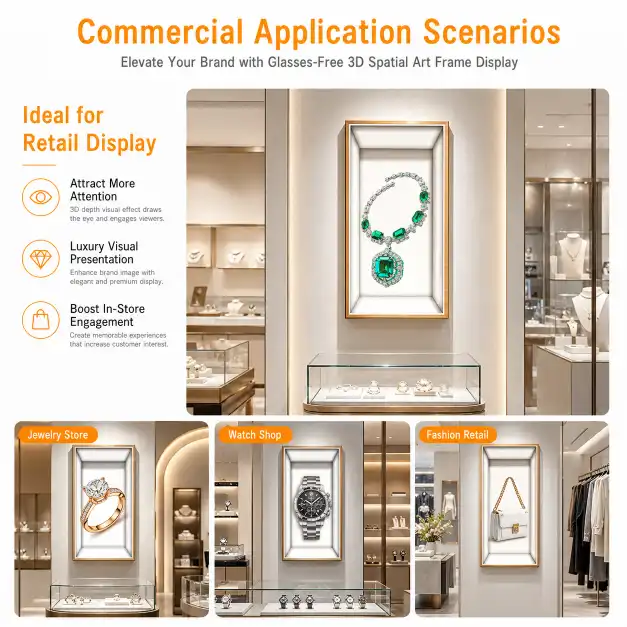
Conclusion
Traditional LED screens and spatial displays can't be switched out because they are used for different business purposes. For high-volume information displays and projects that need to stay within a budget, flat screens are still the best option. On the other hand, 3d spatial signage display technology gives images more depth and keeps people interested in them in a way that flat screens can't. This makes it perfect for brand activations, high-end stores, museum shows, and high-end advertising settings. Before sending out an RFQ, the most important thing for procurement managers looking for commercial display hardware after 2024 is to understand this difference.
FAQ
Q1: What is the fundamental difference between a spatial display and a flat LED screen?
A 3d spatial signage display uses binocular parallax to give you a depth-of-field viewing experience without glasses. On the other hand, all the information on a flat LED screen is shown on a single, two-dimensional grid. The spatial screen makes it seem like there is 500 mm of depth, which flat panels, no matter how high their resolution, can't do.
Q2: Can a spatial display be used outdoors?
Topview's current line of spatial displays is made for business settings inside. The brightness is ≥350 cd/m² by default, but you can choose to increase it to 1000 cd/m² for places inside with a lot of ambient light, like airports or retail atriums that get a lot of sun. For configuration options for outdoor deployment, talk to the Topview team.
Q3: Does spatial display technology require special content creation?
Yes. For the "2D subject, 3D background" rendering method to work, the content needs to be ready for the format. Normal videos can't be changed directly. But Topview does offer software customization help, and digital advertising companies and DOOH operators are starting to offer content creation for spatial screens as well.
Q4: What sizes are available, and does the screen support HDMI?
There are 21.5", 32", 55", and 86" Topview spatial screens to choose from. All of the units can accept a standard HDMI input, and based on the needs of the job, they can also work with an Android or PC system.
Partner with Topview for Your Next 3D Spatial Signage Display Project
From its factory in Shenzhen, Topview Technology has been making business LCD displays for more than 13 years. Digital signage integrators, luxury brands, and AV workers around the world rely on us as a reliable 3d spatial signage display manufacturer to provide stable, scalable spatial display options. Our team is ready to help you with your project from the specifications to the after-sales service, whether you need a single prototype or a large order. To get a quote or see a product demo, email us at market@tviewdisplay.com.
References
1. Digital Signage Federation. State of the Digital Signage Industry Report. 2022.
2. InfoComm International (AVIXA). AV Industry Outlook and Compensation Report. 2023.
3. Nielsen. The Value of OOH Advertising: Audience Engagement and Recall Study. 2022.
4. Deloitte Digital. The Future of Retail Experience: Physical Store Transformation. 2023.
5. Society for Information Display (SID). Display Week Proceedings: Advances in Autostereoscopic Display Technologies. 2022.
6. POPAI (The Global Association for Marketing at Retail). Shopper Engagement Study: Digital Display Impact on Purchase Behavior. 2021.