



How can spatial displays increase customer engagement and dwell time?
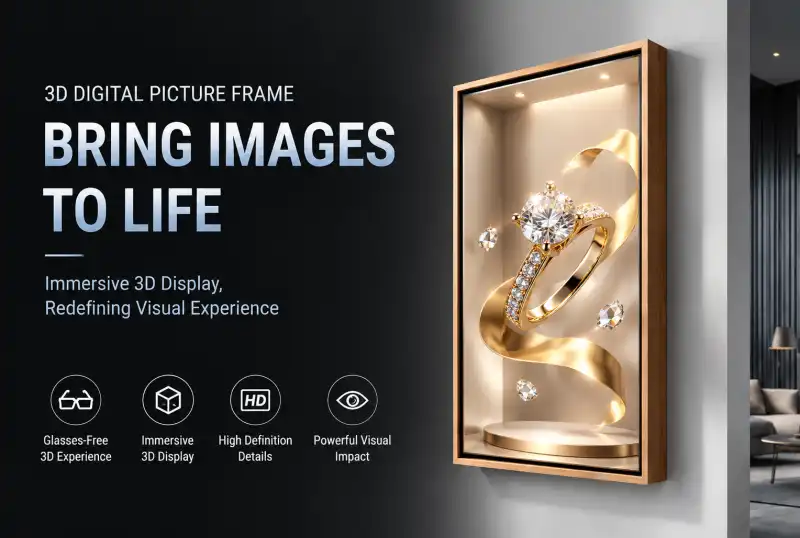
Spatial displays change how people interact with commercial environments. A 3d spatial signage display goes beyond traditional screens by projecting depth-rich visuals that the human brain perceives as real, three-dimensional space — no glasses required. Research from the Digital Signage Federation shows that dynamic digital displays increase viewer attention by up to 400% compared to static signage. When a product appears to float in mid-air, or a brand story unfolds in volumetric depth, people naturally stop, look, and stay longer. That extended dwell time directly connects to higher purchase intent and stronger brand recall across retail, exhibitions, and public venues.
Understanding 3D Spatial Displays and Their Impact on Engagement
You should know exactly what makes spatial displays work differently from other display technologies on the market before you choose one for a business project.
What Makes Spatial Displays Different
Binocular parallax lets a 3D advertising display work by showing different images to the left and right eyes without glasses. The brain naturally builds a sense of depth by comparing these two slightly different images. This works without a wearable device or special viewer, so it can be used in busy business spaces where asking people to wear items wouldn't make sense.
The "2D Subject, 3D Background" Rendering Method
Topview's spatial display uses a certain rendering method: the subject in the foreground is shown in clear 2D, while the background has a depth effect. It is well known that glasses-free 3D technology has a flaw in that images are soft and sweet spots are small. This method fixes that problem. As a result, the center is clear and bright, and the background has real depth, making the image feel both clear and engaging.
Why Does Depth Perception Extend Dwell Time?
The 3d spatial signage display leverages the way our eyes work to make viewers pay attention to depth cues. The brain sees a display as a real thing instead of flat media when it develops real spatial depth. Studies in retail sensory marketing, such as ones that were published in the Journal of Retailing, show that visual stimuli with three dimensions keep people's attention for a much longer time than two-dimensional material. When people pay more attention, they stay in a store or at a show longer.
Limitations of Traditional Signage and How 3D Displays Overcome Them
Flat LCD screens or printed graphics are still used in many business settings. There are real problems with these forms that affect how people react.
Static Content and Viewer Fatigue
Visitors who come often can't see the flat signs that have repeated 2D videos on them. It's called habituation, and it happens when the brain blocks out things that it knows will happen. As soon as a show is just background noise, it stops changing how people act. When buying displays for shopping malls, airports, or retail chains, purchasing managers often say that static forms don't bring in more foot traffic after the initial installation time.
How 3D Depth Breaks the Habituation Cycle
When someone looks at a volumetric advertising show from a slightly different angle, it gives them a real new visual experience. Topview's spatial display has a 60-degree depth-of-field view with a 500mm depth space. This means that as people walk by, the visual experience changes a little. This keeps things interesting and keeps people interested for longer than a flat screen could.
Strategic Placement for Maximum Impact
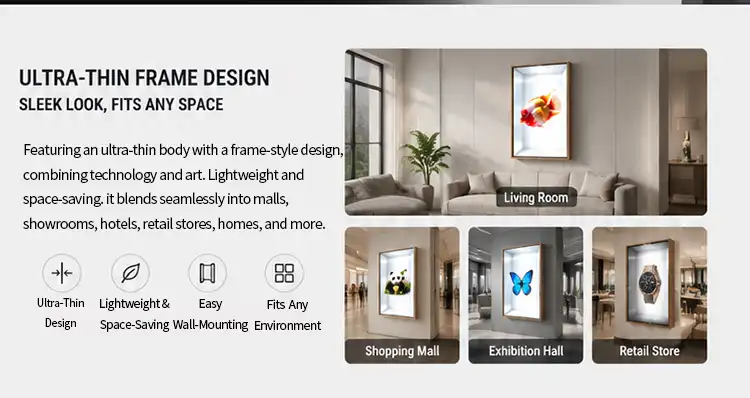
Putting a glasses-free 3D display at the entrance to a store, at the end of a mall corridor, or in the middle of an exhibition hall makes it more likely to stop people in their tracks. Topview's unit has a brightness level of up to 1000 cd/m², which makes it easy to see even in well-lit commercial areas. With a 178-degree viewing angle, the screen looks good whether you look at it from the side or straight on.
Comparing 3D Spatial Displays With Other Signage Technologies
When both cost and performance are important, procurement teams need a clear way to compare the different choices they have.
Glasses-Free 3D vs. Holographic Film Displays
Holographic projection films and Pepper's "ghost" works give the impression of depth, but they need controlled lighting, dark rooms that are closed off, and a lot of space to set up. A 3D LCD screen that doesn't need glasses works in normal lighting, can be mounted on the wall or on a floor stand, and doesn't need any special room setup to work. This operational flexibility is a big plus for most commercial settings, like store floors, airport hallways, and corporate lobbies.
Energy Efficiency and Operating Costs
A lot less power is used by the 3d spatial signage display, an LED-backlit spatial display, than by projection-based ones. The Topview unit works on AC 110–220V and has LED backlighting, so it can be used with normal business power outlets in the US. Lower working costs are important for clients who run displays 12–18 hours a day in various places.
Technical Integration for AV Projects
For AV technicians, technical compatibility that works perfectly is often what makes the difference. The spatial display from Topview comes with HDMI input and can be set up for either Android or PC. It can be mounted on walls or floor stands and works with both 2K (1920x1080) and 4K (3840x2160) resolutions. These specs make it possible for the display to work with existing AV systems without needing any special interface work.
Practical Applications and Design Ideas for Enhancing Engagement
Any display technology's worth is based on how well it works in real-world business situations. Here are the main areas of use where spatial screens give us measurable results.
People stay longer and interact with your content more when you use these strategies in retail, exhibition, and public venues:
- Luxury Retail: Jewelry and watch brands can show products rotating in volumetric 3D, highlighting surface texture and dimension that flat photography cannot replicate. A customer who spends 30 additional seconds examining a product display is statistically more likely to request assistance from staff.
- Fashion Stores: Virtual model presentations on a 55" or 86" spatial screen show clothing in motion with genuine depth, extending browse time and reducing the cognitive effort needed to imagine how a garment fits.
- Museums and Exhibition Halls: Artifacts presented as if floating in space generate visitor curiosity and slow foot traffic naturally, increasing average visit duration without requiring interactive touchscreens.
- Shopping Malls and Airports: High-brightness spatial displays running brand advertising in public corridors attract attention from greater distances and hold it longer than standard digital posters.
The results of this practice are not academic. A report from 2022 from Retail Dive showed that immersive displays in stores made customers stay in the stores 30% longer on average. When material is created for the spatial format, clients who are looking for displays for projects in these areas can expect similar improvements.
Hardware is important, but content quality is even more so. The spatial display needs material that was made just for it; regular video files can't be turned straight into 3D spatial content. Working with a content company that knows how to use the "2D subject, 3D background" format will make sure that the show works right from the start.
Future Trends and Strategic Considerations for Procurement Managers
For the next five to seven years, display infrastructure, particularly the 3d spatial signage display, will be shaped by the purchases that are made today. Before finalizing specifications, it's a good idea to keep an eye on a few trends.
AR Integration and Hybrid Experiences
It is getting easier to tell the difference between augmented reality content and physical displays. Displays that work with Android OS can already run AR-related apps on their own. When purchasing units that can run Android, purchasing managers can now choose to use more involved content forms as the software develops.
AI-Driven Content Scheduling
AI-based content management tools are starting to change what's shown on screens in real time based on things like foot traffic, time of day, or the presence of an audience. These platforms can work with a spatial display that has HDMI or Android input, so it's a good long-term investment for people who are setting up intelligent sign networks.
Supplier Reliability and OEM Flexibility
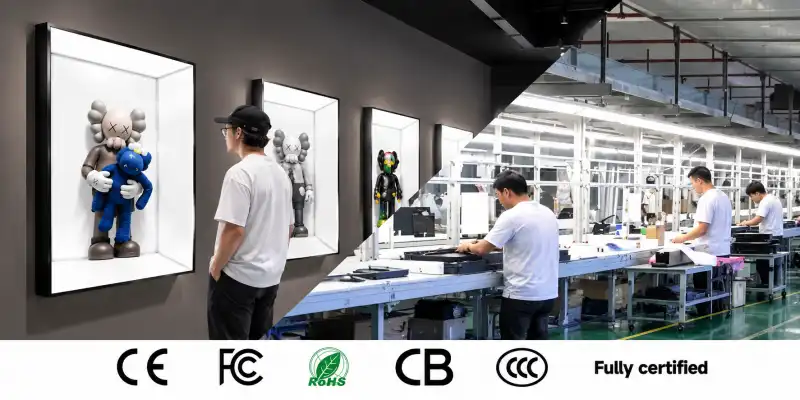
When digital signage solution providers buy a lot of displays, the security of the seller is just as important as the product specs. Topview has been running its factory in Shenzhen for more than 13 years. It has three production lines and can make 100 units per day. We accept OEM and ODM projects, and there are no minimum order quantities for customization. You can choose from different color options, custom branding, logo silk-screening, and power-on logo configuration.
Conclusion
The 3d spatial signage display gets people to stay longer and interact with your brand more by giving images more depth that flat screens can't match. They also break viewers' habitual patterns of ignoring regular signs and create real stopping moments in busy commercial areas. The technology can be used in stores, trade shows, airports, and corporate showrooms. With well-thought-out placement and custom content, a business 3D show can increase both attention span and brand recall in a measured way. Spatial displays are a useful improvement that makes sense from a performance point of view for procurement managers and project teams looking at display technology for future installs.
FAQ
Q1: How long do these displays typically operate before requiring maintenance?
Topview's spatial display uses LED backlighting with an operational life that supports long daily operating hours across commercial deployments. For high-traffic environments running 12–18 hours per day, the LED backlight is designed for extended commercial use consistent with industry standards.
Q2: Can existing video content be used on a spatial display?
Standard video files cannot be directly converted into spatial 3D content. The display requires content produced using the "2D subject, 3D background" format. Topview's team can advise on content production requirements during the project consultation phase.
Q3: What customization options are available for B2B buyers?
OEM and ODM projects are accepted with no minimum order requirement. Options include custom brand logos (silk-screen or LED backlit), power-on logo configuration, custom enclosure colors, and software customization. Screen sizes available are 21.5", 32", 55", and 86".
Q4: Is the display compatible with existing AV infrastructure?
Yes. The standard configuration supports HDMI input, with Android and PC options available. The display operates on AC 110–220V, compatible with standard US commercial power. Wall-mounted and floor-standing installation methods are both supported.
Partner With Topview for Your Next 3D Spatial Signage Display Project
Topview's 2,000-square-meter Shenzhen factory makes glasses-free 3d spatial signage displays. The company has more than 13 years of experience making LCD displays and a specialized R&D team. As a certified 3d spatial signage display manufacturer, our team can help with OEM/ODM projects, technical integration, and after-sales service after the sale, whether you need a single unique unit or a lot of them. You can talk about your project details and get a quote by emailing us at market@tviewdisplay.com.
References
1. Digital Signage Federation. State of the Digital Signage Industry Report. 2022.
2. Puccinelli, N. M., et al. "Customer Experience Management in Retailing." Journal of Retailing, 2009.
3. POPAI (Point of Purchase Advertising International). Shopper Engagement Study. 2014.
4. Retail Dive. Immersive Retail Technology and Dwell Time Performance. 2022.
5. Huang, Y., & Kuo, F. "The Effects of 3D Displays on Consumer Attention and Purchase Intention." International Journal of Human-Computer Studies, 2021.
6. Nielsen. The Science Behind What Attracts Consumers in Retail Environments. 2020.
YOU MAY LIKE
 VIEW MORE55″ Portrait Transparent OLED Touch Kiosk
 VIEW MOREFree Design Good Quality Solar Bus Shelter
 VIEW MORE55 Inch Curved Smart Oled Video Wall
 VIEW MORE77″ transparent OLED
 VIEW MORE30inch Portrait T-OLED Touch Kiosk
 VIEW MOREAndroid Industrial Tablet PC
 VIEW MOREFloor Stand Digital Advertising Signage
 VIEW MOREOutdoor Wall Mounting Advertising Totem