



Are OLED Screens Easy to Use? What are Their Advantages?
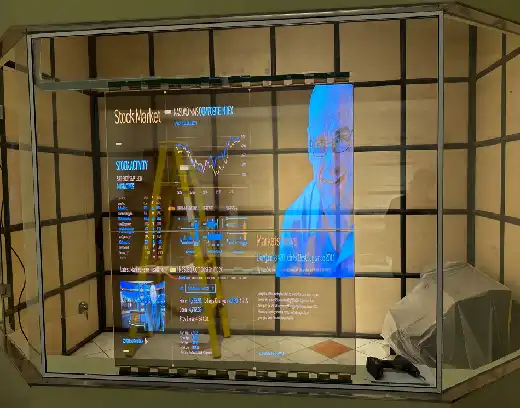
This new technology, called OLED, is a big step forward in visual communication because it can do things that regular screens can't. Due to their seamless integration into real places and high-definition digital material, Transparent OLED Displays are becoming more and more popular among B2B procurement workers. Because these screens are easy to set up and use, they are a valuable tool for stores, command centers, and smart building projects. Self-emitting pixels and advanced touch integration make these screens' interfaces sophisticated and easy to use, which improves brand connection and operational efficiency in many global industries.
Introduction
Modern strategies for buying things need visual solutions that strike a mix between style and long-term functionality. Transparent OLED technology connects digital information to the real world by letting people see through the glass while also viewing bright, high-contrast digital information. When planning smart infrastructure, high-end store settings, or business digital signage projects, global procurement managers need to know a lot about these displays. When you compare these systems to regular LCD or LED panels, you can see that they have unique cost savings and performance advantages. By choosing the right technology, companies can greatly improve how they design their spaces and how they connect with customers.
Understanding Transparent OLED Screens: How Do They Work?
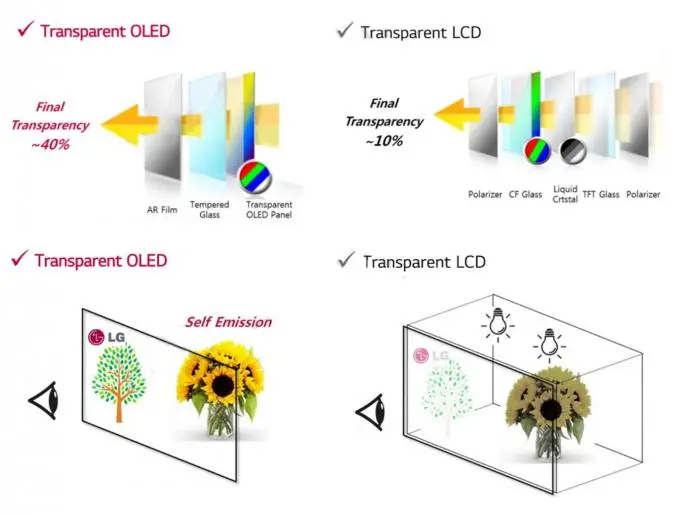
Every pixel in a Transparent OLED panel works as its own light source, thanks to technology called self-emissive. In this case, the screen doesn't need the big LED units that are common on LCD screens. This makes the screen smaller and clearer.
When electricity flows through Transparent Displays' organic light-emitting diodes, they give off light. This system gives you an endless amount of contrast and true black levels, since pixels that aren't being used just turn off and become clear. Because of this one-of-a-kind quality, it can be easily integrated into glass walls and showcase boxes. These panels have a high pixel density compared to regular LED displays that use grids. This means that images stay clear even when viewed up close, which is important for interactive business uses.
Are OLED Screens Easy to Use? Key Considerations for B2B Clients
In business settings, usability depends on how easy it is to install and how well it works with other control systems. Most new units have plug-and-play modules or full PC/Android interfaces, which makes the rollout process a lot easier.
Uptime-minimizing systems are often given top priority by integration teams. This is shown by the T30OF 1.32" display, which has many useful features, such as plug-and-play, Android, and PC support. These screens have sensitive capacitive touch technology that lets you connect with them quickly. They are covered by 4mm tempered glass. This design makes it last a long time and keeps the surface from getting damaged in public or retail places with a lot of foot traffic. When picking a partner, make sure they offer professional help and local maintenance. These are important parts of the total cost of ownership that make sure your investment keeps working even after years of use.
Advantages of Transparent OLED Displays in Various Industries
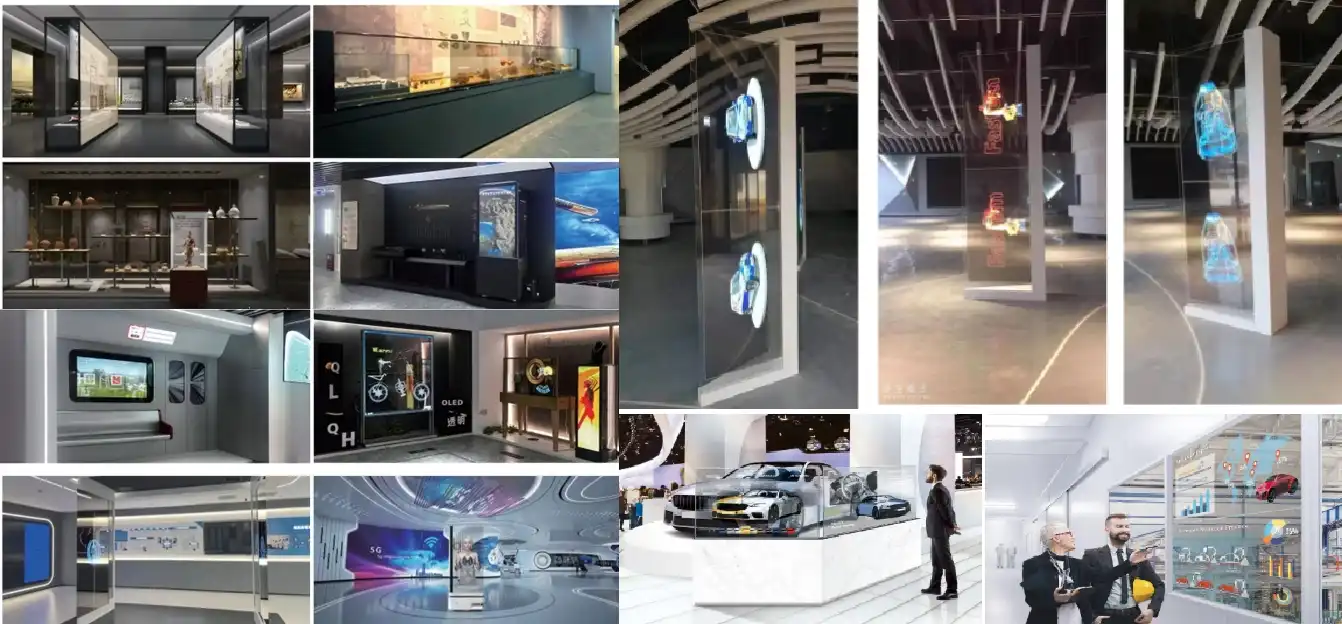
This technology can be used for more than just signs because it is so flexible. A wide range of businesses, from transportation hubs to high-end stores, use these screens to make settings that are more realistic.
Core Advantages of Transparent OLED Technology
Here are the core advantages of this device, which make it a superior choice for professional display needs:
- Self-Luminous Pixel Dimming: These screens use advanced control at the pixel level to make sure the picture quality is perfect, and there are no halos. This keeps every brand image, name, or piece of data clear, bright, and easy to read, no matter how busy the background is. This gets rid of the problem of washed-out images that come with older, backlit display technologies.
- High Light Transmissivity and Transparency: At 45% transparency, natural light can pass through, blending digital material with real space. This feature is necessary for smart building projects because it improves the viewing experience while preserving the area's original atmosphere and look. It also solves the issue of visual obstruction.
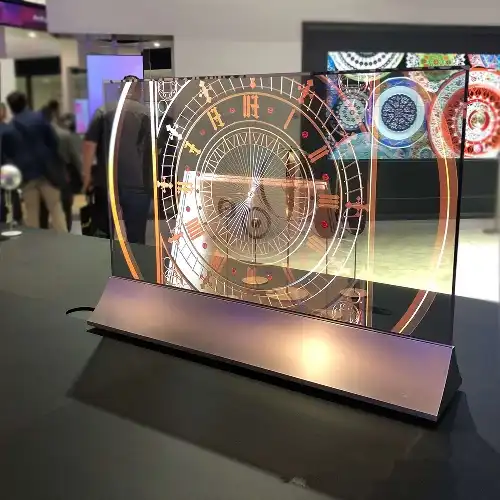
- Borderless 3D Design: The innovative bezel-less structure gets rid of visible boundaries, making the picture go all the way to the screen's edge. This merging of style is important for high-end stores and museum displays because it gives them a clean, modern look that makes digital content stand out more without the distraction of thick plastic frames or physical edges.
- Responsive Capacitive Touch: These screens have high-performance capacitive touch sensors that make it easy for users to connect with them quickly and smoothly. This feature is especially helpful for interactive booths and information systems in transportation hubs, making sure that tourists can get the information they need as easily as they would on a modern smartphone.
These advantages of Transparent OLED Displays can successfully solve a wide range of industrial production issues by lowering the need for expensive building upgrades and offering a flexible, interactive platform that can instantly adjust to new business needs.
How to Choose the Right Transparent OLED Display for Your Business?
To choose the right device, you have to weigh technology requirements against long-term project goals. Ratings for resolution, brightness, and sturdiness are important factors that affect how well a rollout goes.
To make sure the product lasts, procurement teams should pay attention to the image density and the quality of the tempered glass security. The best IPS screen technology has an ultra-wide viewing angle of 178°, which makes sure that pictures don't get distorted from any angle. For government and local projects, it's also important to make sure they meet world standards like CE, FCC, and RoHS. If you buy from a reputable company like Topview, you can be sure that they will do a lot of research and development. This will let you change the sizes of the screens, the ways they are mounted, and even the 3D booth designs so that they fit in any space.
Future Trends and Innovations in Transparent OLED Technology
The way this technology is going, it will get stronger over time and connect to the Internet of Things more easily. These screens will go from being simple signs to active, data-driven platforms as smart building solutions become the norm.
In later versions of the 30-inch Portrait T-OLED Touch Kiosk, the glass will probably be even thinner, and the power economy will be better. This will lower the cost of running large operations. As R&D keeps pushing the limits of color gamut—premium models already reach 108%—we think these screens will become the standard for high-end store branding and control room info systems. When businesses buy these solutions now, they put themselves at the center of digital change. They also get a big boost in how they talk to customers and handle complex data flows in real time.
Conclusion
Transparent OLED Displays represent a transformative advancement in modern visual communication, combining self-emissive pixel technology with high transparency and interactive capabilities. Their ability to integrate seamlessly into retail, transportation, and smart building environments makes them a powerful tool for B2B procurement professionals seeking both aesthetic impact and operational efficiency. With features such as high contrast, capacitive touch interaction, and flexible customization, these displays deliver strong performance in diverse applications. As the technology continues to evolve toward smarter, IoT-connected systems, investing in Transparent OLED Displays today positions businesses for enhanced customer engagement, improved space utilization, and long-term digital transformation success.
FAQ
Q1: How does the lifespan of a transparent OLED compare to traditional displays?
Transparent OLEDs are made to last for a long time in business settings. When used within the suggested temperature range, they keep their brightness and color accuracy for thousands of hours, which is about the same as high-end LCD options.
Q2: Can I order customized transparent OLED displays for large-scale projects?
Yes, makers like Topview allow full customization, which includes different mounting frameworks, software integration, and the ability to add your own logo. Our production capacity lets us take large orders without lowering the quality of each unit or the accuracy of the assembly.
Q3: Are these displays suitable for high-ambient light environments?
Because OLED cells are self-emitting, they have better contrast even when the light is bright. You can make sure clarity in almost any store or office by adding anti-reflective coatings to these signs or placing them in a smart way.
Q4: What is the typical weight and installation difficulty?
Professional collaboration is what units like the T30OF are made for. The thin design makes them easier to place than traditional, bulky cabinets, as long as the installation follows standard engineering rules for heavy-duty display support. They come with protective tempered glass.
Partner with Topview for Superior Outdoor Display Solutions
Are you ready to change the way you look with professional-grade display options? Topview is a reliable company that makes Transparent OLED Displays. They offer expert R&D, special OEM/ODM services, and reliable, high-quality production for buyers all over the world. We give your projects the professional help and reliable supply chain they need to thrive. Contact us today at market@tviewdisplay.com to request a quote or samples, and discover how our advanced screen solutions can optimize your next installation for maximum impact.
References
1. The Evolution of Self-Emissive Display Technologies in Commercial AV.
2. Comparative Analysis: Transparent OLED versus LCD in Digital Signage.
3. Ergonomics and User Interaction in Capacitive Touch Display Systems.
4. Future Trends in Smart Building Visual Infrastructure.
5. Best Practices for B2B Procurement of High-Resolution Display Hardware.
6. The Impact of Display Transparency on Modern Retail Architectural Design.
YOU MAY LIKE
 VIEW MORESingle Sided High Brightness Windows Facing Displays
 VIEW MOREAdjustable Smart Digital Podiums
 VIEW MOREDrive Thru Menu Board Display
 VIEW MOREOutdoor Double Sided Digital Signage
 VIEW MOREOutdoor LCD Totem Signage
 VIEW MOREUlta Slim Wall-Mounted Outdoor Displays
 VIEW MORESmall size display
 VIEW MOREOutdoor Horizontal Freestanding Digital Signage