



What is outdoor IP66 optically bonded digital signage, and how does it work?
Outdoor IP66 optically bonded digital signage refers to a weatherproof display system built for permanent exterior use. The IP66 rating means the enclosure is fully sealed against dust and resists powerful water jets from any direction — a standard defined by IEC 60529. Optical bonding is the process of laminating the protective glass directly onto the LCD panel, eliminating the air gap between layers. This eliminates internal condensation, cuts surface glare, and improves sunlight readability. For procurement managers sourcing outdoor digital signage at scale, these two technologies together define a reliable, low-maintenance display investment.
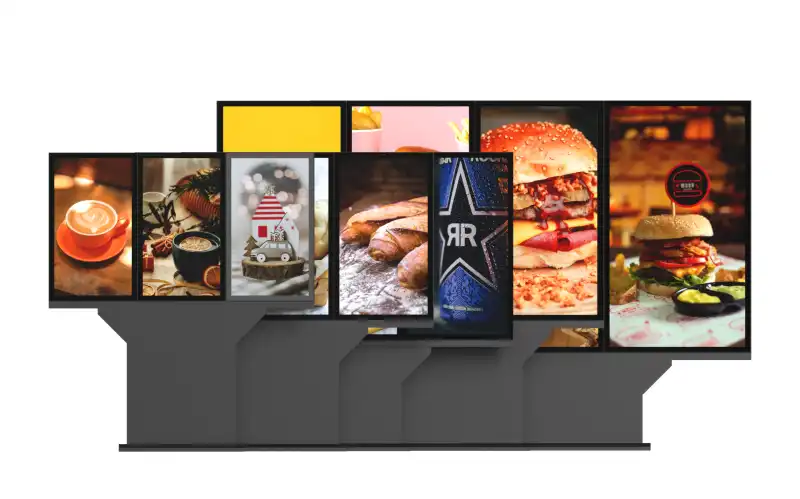
Understanding Outdoor IP66 Optically Bonded Digital Signage
What Does IP66 Actually Mean?
IEC 60529 sets the rules for IP grades. The first number, "6," confirms that there is no dust at all. The second number, "6," proves that high-pressure water jets from any direction are safe. In this way, IP66 is better than IP54 or IP65 enclosures, which are often used in semi-sheltered applications. IP66 is the practical minimum standard to meet for installations near the coast, in shopping mall parking lots, at transit hubs, or on the outside of stadiums.
What Is Optical Bonding?
With optical bonding, optically clear adhesive (OCA) or resin is used to fill the air gap between the display panel and the front glass. Without bonding, that air gap causes internal reflections that lower the contrast and let water build up. Bonding makes the display much more immune to physical shock and increases light transfer to over 97%. It also lowers surface reflectivity to below 3%. The process also makes touch screens more accurate on interactive devices.
Why These Two Technologies Work Together
For professional outdoor digital signage, the IP66 covering keeps water and dust from getting inside. Optical bonding keeps the optical stack from breaking down on the inside, which can happen because of humidity, delamination, and UV-related panel yellowing. Together, they deal with both threats from the outside world and ways that structures can fail from the inside. This mix is what makes professional-grade business displays different from cheap waterproof screens that stop working 18 to 24 months after being put outside.

How Does Outdoor IP66 Optically Bonded Digital Signage Work?
Display Panel and Optical Stack
An industrial-grade LCD panel made of high-Tni liquid crystal is what the system is all about. Up to 110°C, high-Tni panels don't break down due to thermal transition, which is what causes consumer screens to fail in direct sunlight (the "black spot" failure). Topview's T-series models (T32SO, T43SO, T49SO, and T55SO) have LED-backlit LCD screens with brightness ratings of 1,500 to 2,000 nits and 6–10 mm thick AR glass from the US that blocks UV light and infrared light. The bonded glass lets more than 97% of light through and reflects less than 3%.
Thermal Management and Enclosure
Heat is the main reason why outdoor displays don't work. The T-series from Topview uses military-grade heat absorption technology and a clever temperature control system to keep the inside temperature between 5°C and 25°C, even when the outside temperature reaches 45°C. The cabinet is made of 1.5 mm galvanized steel and has an outdoor powder coating that is meant to last at least 7 years. Particulate entry is stopped by an intelligent air-cooling system with precision screens that keep airflow going.
Content Management and Power System
Each unit has a network-based media player built in that can play pictures, videos, and text. Through server management software, content delivery can send content over a cable network and play documents offline. The T-series also has an automatic sensor probe that changes the brightness of the lighting based on the amount of light in the room. This saves power during times of low light and makes the panels last longer. A full-circuit breaker, segmented timer controls, and automatic power scheduling are all part of the electric control system.
Benefits of Outdoor IP66 Optically Bonded Digital Signage for B2B Procurement
IP66 optically bonded outdoor digital signage displays always do better than normal options when buying teams look at the total cost of ownership instead of just the unit price. When you look at the practical statistics over a 3–5 year deployment run, the reasons become clear.
Here are the main benefits that matter to B2B buyers:
- Weather durability with zero compromise: The IP66 enclosure and vandal-proof 6mm double-sided laminated glass protect the unit from rain, hail, UV exposure, and physical impact. The glass alone prevents 99.99% of UV radiation and 52% of solar radiation heat from reaching the panel.
- Solar-powered operation (T-series): The T32SO through T55SO series run entirely on solar energy, requiring no wiring or external electrical connection. The deep-cycle gel battery handles high-altitude and high-temperature environments without performance loss.
- Certifications that clear customs and meet project specs: All T-series units carry CE, FCC, and RoHS certifications — required for projects in the US, EU, and most government tender specifications.
- Low operational overhead: Intelligent brightness adjustment, automatic power scheduling, and the efficient cooling system reduce energy consumption and service call frequency. Topview provides lifetime technical support, with a standard one-year warranty extendable to three years.
These benefits directly cut down on the unplanned downtime and emergency maintenance costs that make long-term outdoor display projects more expensive. That operating steadiness is worth a certain amount of money to procurement managers who run advertising networks, store chains, or public signage programs.

Comparison: IP66 Optically Bonded Signage vs. Traditional Outdoor Displays
Brightness and Visibility
Standard commercial displays that are standard make 300 to 500 nits. Outdoors, especially in the south of the United States, there is often more than 100,000 lux of natural light. With AR glass and optical bonding, Topview's T-series provides 1,500–2,000 nits, so you can read it in full sun. When the brightness of two non-bonded screens is the same, the effective contrast drops because of surface reflections alone.
Protection Rating and Maintenance Frequency
There are a lot of "outdoor" displays on the market that have IP54 or IP65 ratings. IP54 doesn't protect against splashes and dust very well, so it's not good for systems that get hit by rain or pressure washing. Both risks are gone with IP66. Over the course of three years, IP66-rated enclosures usually need 60–70% fewer service visits than IP54-rated equivalents in places like transportation hubs and retail forecourts.
Total Cost of Ownership
At the time of purchase, a lower unit price on an IP54-rated monitor that is not joined may seem appealing. When repair costs, service calls, and early panel failure are taken into account, however, the lifetime cost is often 30–50% higher than that of an IP66 bonded unit. This gap is big when buying a lot of things at a lot of different sites.

Procurement and Installation Guide for Outdoor IP66 Optically Bonded Digital Signage
Selecting the Right Supplier
Make sure the supplier has the right CE, FCC, and RoHS certifications for the outdoor digital signage models you want to buy, not just a general factory certificate. Check the output ability against the lead time you need. Topview sends T-series units in strengthened wooden cases within 5–15 business days. You can pay with TT, and the price terms are EXW, FOB, or DDP, depending on how you want to handle logistics.
Site Assessment Before Installation
Before installing, check the unit's fixing surface to see if it can handle its weight and the wind load. Also, look at the angle of the sun's rays and the direction of the wind. For solar-powered units, find out how many hours of sun the placement site gets on average each day. The T-series can work in temperatures ranging from -30°C to +45°C, which is pretty much all of the US's climate zones.
Maintenance Protocols
Use a soft, wet cloth to clean the front glass. Do not use rough materials, as they can damage the AR layer. Through the embedded network player, you can regularly update the content management software. In places with a lot of dust, like construction zones or factories, the filters in the smart cooling system should be checked and cleaned every three to six months.
Conclusion
One of the few types of displays where the engineering specification directly leads to real-world cost savings is IP66 optically bonded outdoor digital signage. A fully protected case, a bonded optical stack, a high-brightness panel, and smart heat management work together to make a display that works reliably even after years of being outside. For procurement managers, AV installers, regional distributors, and EPC contractors, these aren't extra features; they're things that every major outdoor installation needs to have. If you know exactly what each standard gives you, you can base your buying choice on performance data instead of marketing speak.
FAQ
Q1: What does IP66 mean for an outdoor display?
IEC 60529 sets the rules for IP66. The first "6" means that the enclosure doesn't let any dust in. The second "6" means it can handle strong water jets coming from any direction. This means that IP66 enclosures can withstand situations like direct rain, high-pressure cleaning, and dirty industrial settings that would damage IP54 or IP65 enclosures.
Q2: What is optical bonding, and why does it matter?
Clear glue is used in optical bonding to fill the space between the LCD screen and the front glass. This gets rid of internal reflections, stops condensation between layers, and lets more light through 97% of the time. The picture is brighter and clearer in direct sunlight, and it needs less maintenance over time.
Q3: Are the Topview T-series units compatible with remote content management?
Yes. Each unit has a network media player built in that can play pictures, videos, and text. The system can send data over a cable network and play music when you're not online. It is controlled by server software. Content can be changed in real time from afar.
Q4: What certifications do Topview's outdoor displays carry?
The T32SO, T43SO, T49SO, and T55SO series are all certified by CE, FCC, and RoHS, which are the usual requirements for business use in the US and EU and for government projects.
Get a Direct Quote from Topview — Outdoor Digital Signage Manufacturer
Topview Technology has been making commercial LCD screens in Shenzhen for more than 13 years. The factory has a 2,000-square-meter workshop, three production lines, and can make 100 units per day. Solar-powered outdoor digital signage units in our T32SO, T43SO, T49SO, and T55SO lines are built to CE, FCC, and RoHS standards. We offer OEM/ODM options, and there is no minimum order number for custom projects. To get prices and details, you can email our team at market@tviewdisplay.com.
References
1. International Electrotechnical Commission. IEC 60529: Degrees of Protection Provided by Enclosures (IP Code). IEC, 2013.
2. Society for Information Display. Information Display Magazine: Outdoor Display Technology Review. SID, 2022.
3. Digital Signage Federation. Digital Signage Best Practices Guide. DSF, 2021.
4. Invidis Consulting. Global Digital Signage Yearbook. Invidis, 2023.
5. Display Supply Chain Consultants (DSCC). Annual Display Industry Report: Commercial & Industrial Panels. DSCC, 2022.
6. AVIXA. AV Industry Outlook and Compensation Study: Digital Signage Segment. AVIXA, 2023.